Apparel Search»Rugby Kits»New Zealand
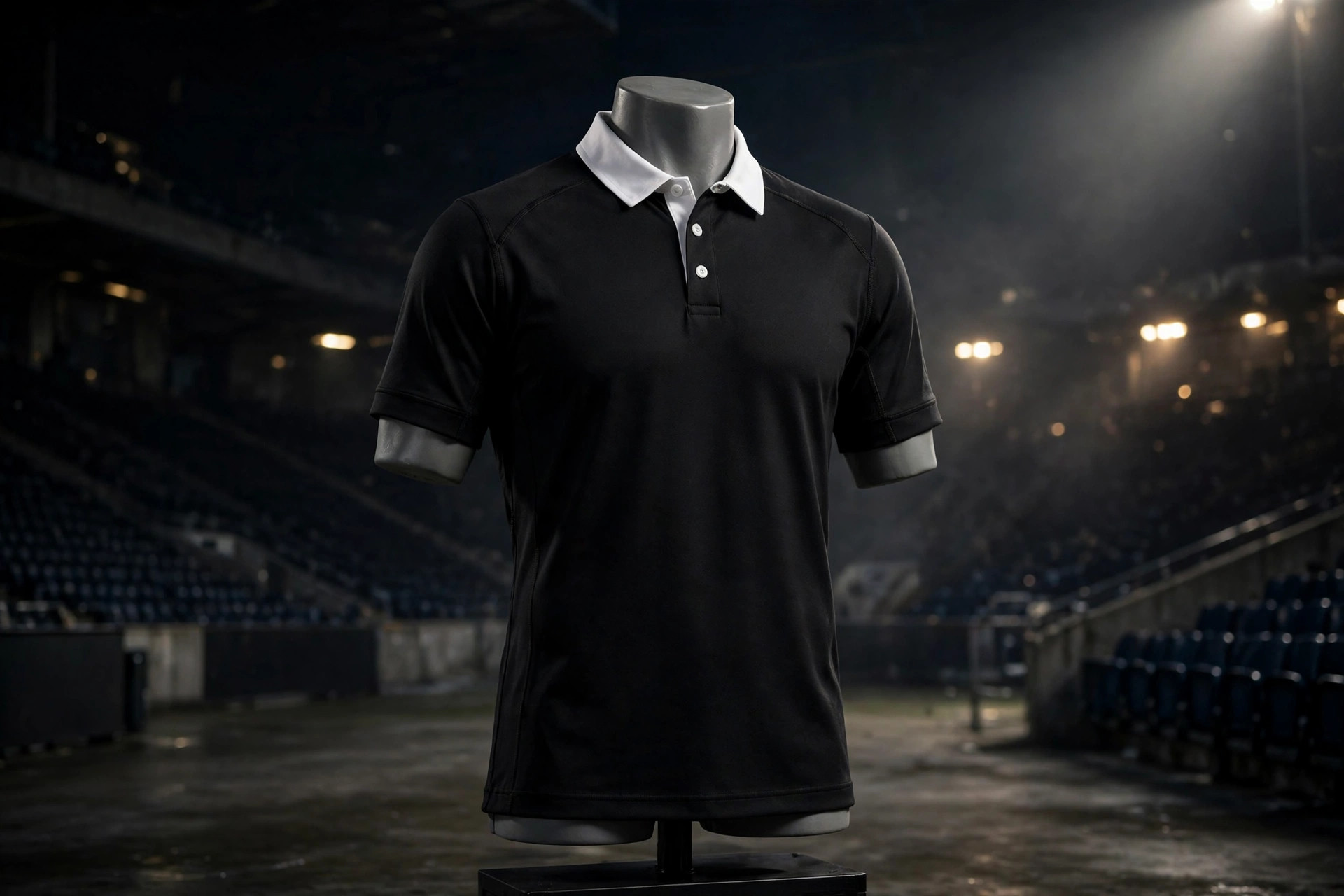
Illustrative image created for this guide by Apparel Search designers, closely following the team's current kit — team logos, sponsor logos and manufacturer marks have been removed, so small details may differ from the official shirt.
New Zealand Rugby Kit — The All Blacks
There is no more famous garment in rugby — arguably in any sport — than the All Blacks' jersey. It is black: black jersey, black shorts, black socks, with a silver fern on the left of the chest and, in the modern era, a maker's mark and a sponsor that the black absorbs without surrendering to either. The design brief has not changed in a hundred and twenty years, and that is the point. This guide follows the black jersey from the 1905 Originals who made it famous, through Canterbury's near-century of making it, into the adidas era that began in 1999, and explains what to look for when you buy one — including why the 2025-26 home jersey's tonal fern print and white collar matter to the people who collect them.
Black and the Fern: Colours and Identity
New Zealand's first representative sides in the 1880s and 1890s wore black with a silver fern — the fern drawn from the native tree fern that had already become a national symbol — and the 1905-06 Originals tour of Britain, Ireland and France fixed the combination in the world's imagination. The team that won 34 of its 35 matches was christened 'All Blacks' on that tour, and whether the name came from the kit or from a typesetter's error for 'all backs' has been argued ever since. Either way, the kit and the name became the same thing.
The discipline of the identity is what designers notice. Where other unions periodically flirt with new shades, patterns or change strips, New Zealand treats black as non-negotiable and confines design to texture: tonal prints woven into the fabric, the collar's cut, the fern's rendering. The 2025-26 home jersey carries an all-over tonal fern print set into the cloth and a crisp white polo-style collar shaped with input from the players — a design that reads as plain black from the stands and rewards a closer look, which is exactly the All Blacks aesthetic.
The silver fern itself is rendered in silver-grey embroidery or print on the left chest. It is never recoloured, never moved and never joined by decoration. Sponsorship, when it arrived — Steinlager's small breast logo in 1994, AIG's front sponsorship from 2012, Altrad's from 2022 — has always been fitted around the black and the fern, never the other way round.
The Maker: From Canterbury's Century to adidas
Canterbury of New Zealand made the All Blacks' kit from 1924 to 1999 — seventy-five years in which the Christchurch company's heavy cotton jerseys defined what a rugby shirt was. The partnership ended in 1999 when adidas took over in a landmark deal that signalled the professional era's new economics, and adidas has dressed the team ever since: through the 2011 and 2015 World Cup wins, the figure-hugging jerseys of the 2000s, and the modern performance era. NZR renewed the partnership again in 2023, taking it past a quarter of a century.
The current (2025-26) adidas home jersey pairs the tonal fern print with AEROREADY moisture management and a ripstop-strength performance fabric in the match version. Uniquely in world rugby, the All Blacks' deal extends to footwear — every player wears adidas boots regardless of position — which makes the kit, head to toe, the most completely single-maker strip in the international game. Special editions mark the calendar: a dedicated home kit was produced for the 2026 'Greatest Rivalry' tour of South Africa, the two nations' celebration of the game's oldest heavyweight rivalry.
Iconic All Blacks Kits
The 1905 jersey is the founding artefact — long-sleeved, heavy, with the fern worked in silver thread — and original examples are museum pieces. Its direct descendant, the plain black cotton jersey of the mid-twentieth century, is the shirt most classic ranges copy: the 1987 World Cup winners wore its last great version, long sleeves and all, at the first tournament.
The adidas era has its own landmarks. The 2011 home World Cup jersey, worn when New Zealand ended a 24-year wait in Auckland, is the modern supporter's essential shirt. The 2015 jersey, worn through an unbeaten title defence in England, refined the black-on-black approach with a fern worked subtly into the chest panel. And the black jersey's most famous single outing may be a match it lost: the 1995 final in Johannesburg, where the all-black strip against South Africa's green and gold produced the most reproduced colour contrast in the sport's history — the subject of our South Africa kit guide.
Buying an All Blacks Jersey
The adidas range runs in the three versions our buying guide describes. The performance (player) version is the match garment — slim, technical, the most expensive — while the replica is cut for supporters and is the sensible default. All Blacks classics in heavy cotton, copying the pre-1999 Canterbury shirts, are sold through heritage ranges and are the choice of buyers who want the jersey as clothing rather than kit.
Two buying notes are specific to this team. First, the black shows every design subtlety differently in person than on screen — the tonal fern print of the 2025-26 jersey is deliberately quiet, so check product photographs closely if a bolder look is what you want. Second, All Blacks jerseys hold their value and their counterfeit market is the largest in rugby: buy from the official All Blacks shop, adidas or authorised retailers, and be suspicious of prices far below the range's standard. For fit and care guidance, see the rugby shirt buying guide.
Shop All Blacks Jerseys
Look for the current adidas 2025-26 home jersey in performance and replica versions, the change jersey, and heritage cotton editions of the classic black shirt. Official kit is sold through the All Blacks shop, adidas and authorised sports retailers. Use the search below to compare current All Blacks jerseys, sizes and prices before you buy.
Shop All Blacks jerseys on AmazonAs an Amazon Associate, Apparel Search earns from qualifying purchases made through this link. Prices and availability are set by Amazon and its sellers.
Common Questions
Who makes the All Blacks' kit?
adidas has made New Zealand's kits since 1999, succeeding Canterbury, who supplied the team from 1924. NZR renewed the adidas partnership in 2023, and the deal extends to boots — every All Black wears adidas footwear.
Why do the All Blacks wear black?
Black with a silver fern was settled by the 1890s and made famous worldwide by the 1905-06 Originals tour, after which the team took its name from the kit. The all-black strip has been treated as non-negotiable ever since; design changes are confined to texture, collar and trim.
What is the current All Blacks jersey?
The 2025-26 adidas home jersey: all black with an all-over tonal fern print set into the fabric and a white polo-style collar, worn with black shorts and socks. A dedicated home kit was also produced for the 2026 Greatest Rivalry tour of South Africa.
Related Reading
Search Apparel Search