Apparel Search»Rugby Kits»Buying Guide
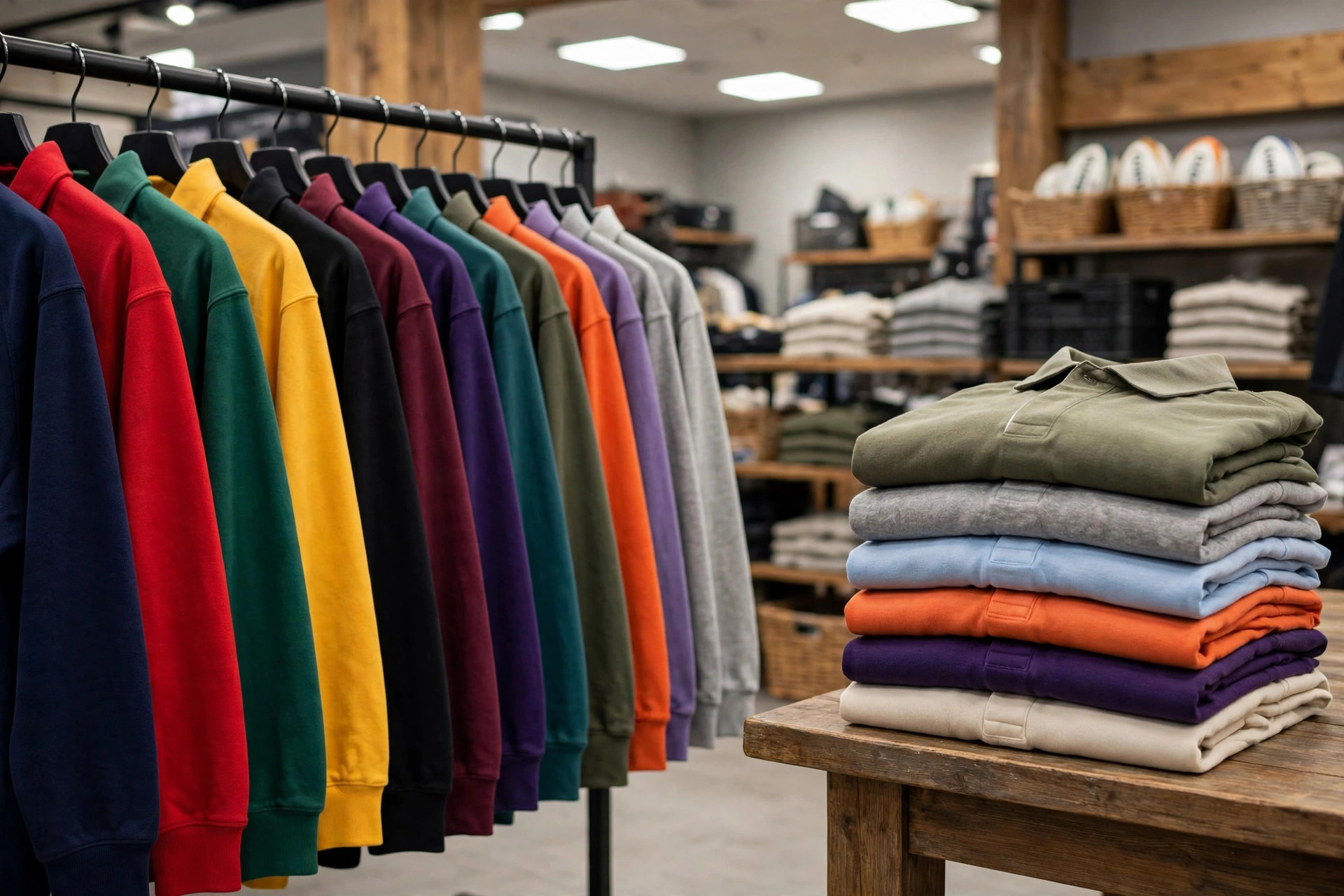
Illustrative image created for this guide by Apparel Search designers — the designs are shown without team logos, sponsor logos or manufacturer marks, so details may differ from the official shirts.
Rugby Shirt Buying Guide
Buying a rugby jersey is not like buying a football shirt. The same design is sold as three different garments — a technical player version, a supporter's replica and a heavy cotton classic — in two different fits, and the differences are big enough that the wrong choice is a wasted purchase. This guide walks through the decision in six steps: version, fit, sizing, the details that date a shirt, when to buy, and how to care for it once it is yours.
Choose your version
Three garments share one design. The player (authentic) version is the match garment: lightest fabric, athletic cut, printed details, highest price. The replica is the supporter's version: regular fit, sturdier fabric, embroidered emblem on most ranges, and the one to buy for match days and travel. The classic cotton version copies the amateur-era shirt — heavy cotton, long or short sleeves, a proper collar — and is bought as much as clothing as as kit. Decide which of the three you are actually shopping for before you compare prices, because the price gaps between them are large.
Pick your fit
Rugby sells two silhouettes. The modern athletic fit follows the player jersey: close through the chest and shoulders, shorter in the body. The classic fit is the traditional shirt: straight, roomy, made to go over a jumper in winter. Neither is better — but they wear completely differently, and a supporter who wants the terrace look should not buy the athletic cut by accident. Product pages usually name the fit ('performance', 'test', 'replica', 'classic'); if they do not, the fabric tells you: elastane blends are athletic, 100% cotton is classic.
Size honestly
Measure your chest and compare it with the maker's size chart rather than trusting your usual letter size — charts differ between Canterbury, Macron, adidas and the rest. For player versions, size up once as a rule and twice if you are between sizes. For classics, remember cotton's first-wash shrinkage and choose the fit you want after washing, not before. Junior ranges are cut by age and height, and women's ranges are cut separately by the major makers — buy the range made for the wearer rather than sizing down a men's shirt.
Check the details that date a shirt
A rugby jersey is dated by its details: the sponsor on the chest (or its absence on a World Cup version), the collar style, the maker's current logo treatment and the tournament or tour patches on the sleeve. If you are buying a shirt to mark a specific season or tour — a Lions tour, a World Cup — check those details against the edition you mean to commemorate. Emblems are embroidered on most replicas and heat-applied on player versions; neither is a sign of a fake, but a misspelled sponsor or a blurred emblem is.
Buy at the right moment
National jerseys launch on a rhythm: new designs appear ahead of the autumn internationals and the Six Nations, and World Cup and Lions editions launch in their tournament year and are not restocked forever. The best prices on a standard replica usually come at the end of a cycle, when the next design is due. Heritage and classic ranges, by contrast, are steady lines — there is rarely a reason to rush, and the 1995-style commemorative editions appear around anniversaries.
Care for it like a garment, not a costume
Wash performance jerseys cold, inside out, and line-dry them: heat is the enemy of printed sponsors, namesets and grip panels. Cotton classics wash warm but shrink and fade if tumble-dried, so line-dry those too. Never iron directly over a printed emblem or sponsor. Stored folded away from sunlight, a good replica will outlast the design cycle that produced it — which is why terraces are full of jerseys from World Cups long past.
Numbers, Names and the Position You Choose
Football shirts are personalised with names; rugby shirts are personalised with positions. Because the number belongs to the position rather than the player, a number 10 marks you as a fly-half's supporter and a number 3 as a front-row loyalist, whatever the current team sheet says. Replica numbering is printed or heat-applied by the retailer; official numbering services at union shops use the maker's own typeface for the season. If you are buying for a player rather than a supporter, the front-row numbers (1 to 3) and the half-back numbers (9 and 10) are the perennial favourites, with 15 close behind.
A word on World Cup and tour editions: tournament jerseys carry no sponsor and add the event badge, and Lions jerseys exist only in tour years — the 2025 Australia tour shirt is already a closed edition. If an edition matters to you, buy it in its year; the secondary market for closed tour editions is active and prices rise.
Women's and Junior Jerseys
Every major maker now cuts the leading national jerseys for women as a separate range rather than a scaled-down men's shirt, with the same versions logic — player, replica and classic — and the same launch calendar, increasingly tied to the women's internationals and the Women's Rugby World Cup. Junior ranges run from toddler sizes to teenage cuts and are the safest place to apply this guide's sizing step literally: measure, consult the chart, and leave growing room, because a cotton classic bought a size up will be worn for years.
Ready to Shop?
Replica jerseys, classic cotton shirts and team training wear for most of the teams in this section are sold through Amazon. The Apparel Search Amazon guide keeps the shopping links in one place.
Shop on Amazon via the Apparel Search GuideThis link opens the Apparel Search shopping guide for Amazon, where the product links are kept in one place.
Common Questions
Should I buy the player version or the replica rugby jersey?
Buy the player version if you play in it or want the exact garment the team wears — it is lighter and more technical, but cut very slim. Buy the replica for supporting, travelling and everyday wear: it fits like a normal shirt, costs less and lasts longer. Buy the classic cotton version if what you love is the traditional heavy shirt with a collar.
Do rugby jerseys run small?
Player versions run very small — many buyers go one or two sizes up from their usual. Replica versions run close to standard sizing. Classic cotton jerseys are cut loose, like the shirts of the amateur era, and cotton shrinks a little on the first wash, so a relaxed fit is the right starting point.
Why does the World Cup version of a jersey have no sponsor?
Rugby World Cup rules keep team jerseys sponsor-free during the tournament, so the World Cup edition of a shirt carries only the emblem, the maker's mark and the tournament badge. Supporters who prefer the clean look often choose the World Cup version; those who want the shirt exactly as worn in the Six Nations or the Rugby Championship choose the standard season version.
Related Reading
Search Apparel Search