Shrink Wrap or Strap Pallets
Or should you use both? Guidelines for film, strapping — and the combination — by cargo, handling and cost
The decision to use shrink wrap or straps for securing pallet loads depends on various factors, including the type of cargo, transportation method, storage conditions, and handling requirements. Neither method is simply better: film and strapping hold a load together in different ways, cost different amounts per load, and fail in different ways when they are badly applied. This page runs through the guidelines for when to use shrink wrap, when to use straps, and the considerations that apply to both — because for many apparel loads the honest answer is a combination of the two.
Whichever method is chosen, it secures a load that first has to be built properly: Properly Palletizing Cartons covers the layout, interlocking and weight distribution that give wrap or straps something stable to hold, and Floor Loading Verse Palletizing compares palletized loads with the floor-loaded alternative. The main Shipping and Warehousing guides cover the operations on either side of the journey.
Palletizing Guides
Use Shrink Wrap When
Securing loose or small items: shrink wrap is particularly effective for stabilizing loose or small items that may shift or fall off pallets during transit. It creates a tight, protective seal around the entire load, so individual cartons cannot work their way out of the stack one at a time. Weather protection: shrink wrap can provide some protection against moisture, dust, and other environmental factors, making it suitable for outdoor storage or shipments exposed to the elements — a wrapped load shrugs off the rain of a wet loading dock in a way a strapped load cannot.
Unitization: when you need to treat multiple pallets as a single unit for easier handling, storage, or transportation, shrink wrapping them together can be an efficient method. Reducing load shifting: shrink wrap helps prevent load shifting, which is crucial for ensuring the stability and safety of palletized goods. Load containment: if you need to contain and secure a load with irregular shapes or protruding edges, shrink wrap can conform to the contours of the load, where a strap would bridge across the high points and leave the rest loose. Tamper-evident packaging: shrink wrap can serve as tamper-evident packaging, making it clear if the load has been tampered with during transit or storage — a cut or re-sealed film shows, while a re-tensioned strap may not.
Use Straps When
Heavy loads: strapping is often preferred for securing heavy or bulky loads that require extra reinforcement to prevent shifting or damage during transit. High tension strength: straps offer high tensile strength and are suitable for loads that need strong and reliable containment — a strap under tension clamps the load down onto the pallet rather than just holding it together sideways. Edge protection: if you want to protect the edges of the load from damage or abrasion, using edge protectors with straps can be effective; the protectors spread the strap's pressure so it holds firmly without cutting into the cartons beneath it.
Reusable packaging: straps are reusable and can be more cost-effective over time, especially if you have a consistent need for load securing — the same strap can secure load after load on a regular route. Easy inspection: straps provide a visible means of load security, making it easier to inspect for proper tension and ensuring that the load is secure; a slack strap is obvious at a glance. Heavy machinery and equipment: in industrial settings, such as manufacturing or construction, strapping is commonly used to secure heavy machinery and equipment to pallets, where film alone would tear or stretch under the weight.
Considerations for Both Methods
Regulatory requirements: some industries and regions have specific regulations governing load securement — ensure compliance with any applicable regulations before settling on a method. Handling and storage: consider how the palletized load will be handled and stored; factors such as stacking, forklift handling, and storage conditions can influence your choice, since a load that will be double-stacked needs its securing to survive pressure from above, not just movement from the side. Cost: evaluate the cost of materials and labor associated with both methods; strapping may have a higher upfront cost due to the purchase of strapping tools, but it can be cost-effective for repeated use, while film is bought by the roll and consumed on every load.
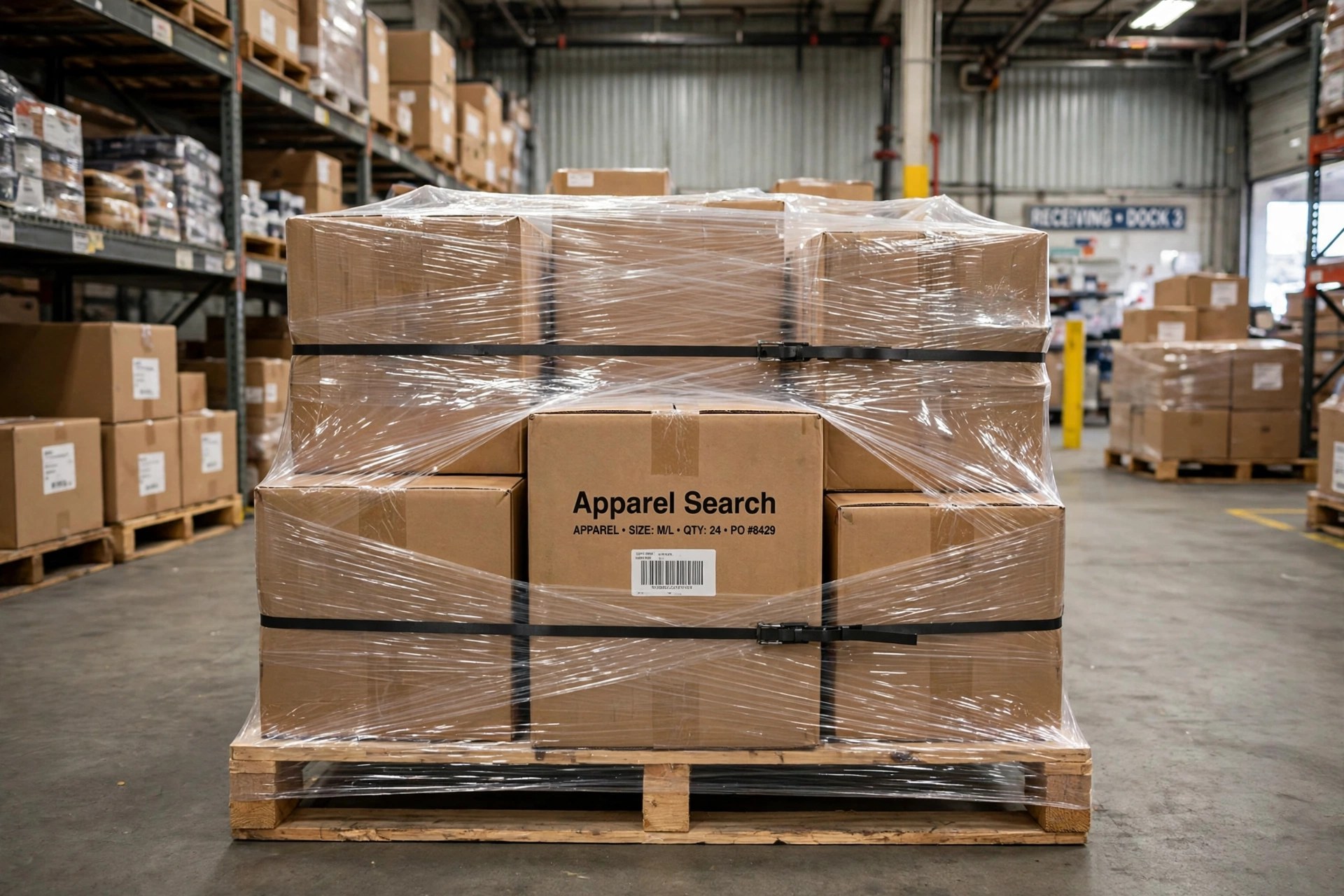
Load characteristics: assess the size, shape, weight, and fragility of the cargo — some loads may benefit from a combination of both shrink wrap and straps for optimal security, typically a strapped load wrapped over the top so the straps carry the tension and the film keeps the cartons contained. Environmental impact: consider the environmental impact of your choice; shrink wrap is often less environmentally friendly than reusable strapping, because the film is single-use plastic while a strap can make many trips. Ultimately, the decision to use shrink wrap or straps should be based on the specific requirements of your pallet load, as well as your logistics and supply chain considerations — and in many cases, a combination of both methods may provide the most effective load securing solution. To plan the load itself, see the Pallet Sizes chart and the Pallets guide.
Common Questions
When is shrink wrap the better way to secure a pallet load?
Shrink wrap — stretch or shrink film wound around the whole load — wins when the load is loose or made of small items that could shift or fall, when it needs some protection from moisture and dust, when several pallets or cartons must be treated as one unit, and when a tamper-evident seal matters. The film conforms to irregular shapes and protruding edges, holding the load together as a single block.
When should a pallet load be strapped instead?
Strapping is preferred for heavy or bulky loads that need extra reinforcement, because straps offer high tensile strength and strong, reliable containment. Straps are also the choice when edges need protecting with edge protectors, when the visible tension of the securing should be easy to inspect, and in industrial settings for heavy machinery and equipment. Because straps are reusable, they can also be the more cost-effective method over repeated use.
Can shrink wrap and straps be used together?
Yes — in many cases a combination of both methods provides the most effective load securing solution. A common pattern is to strap the load first for strength, then wrap it for containment and weather protection, so the straps carry the tension and the film keeps cartons from walking out from under them. Loads whose size, shape, weight or fragility point both ways are the usual candidates.