Apparel Search · Seasonal Color Analysis
Spring Color Palettes: Light, True & Bright Spring
Warm, light and bright: the three Spring sub-season palettes, with swatches, best neutrals, the right metals, and the colors that drain this coloring.
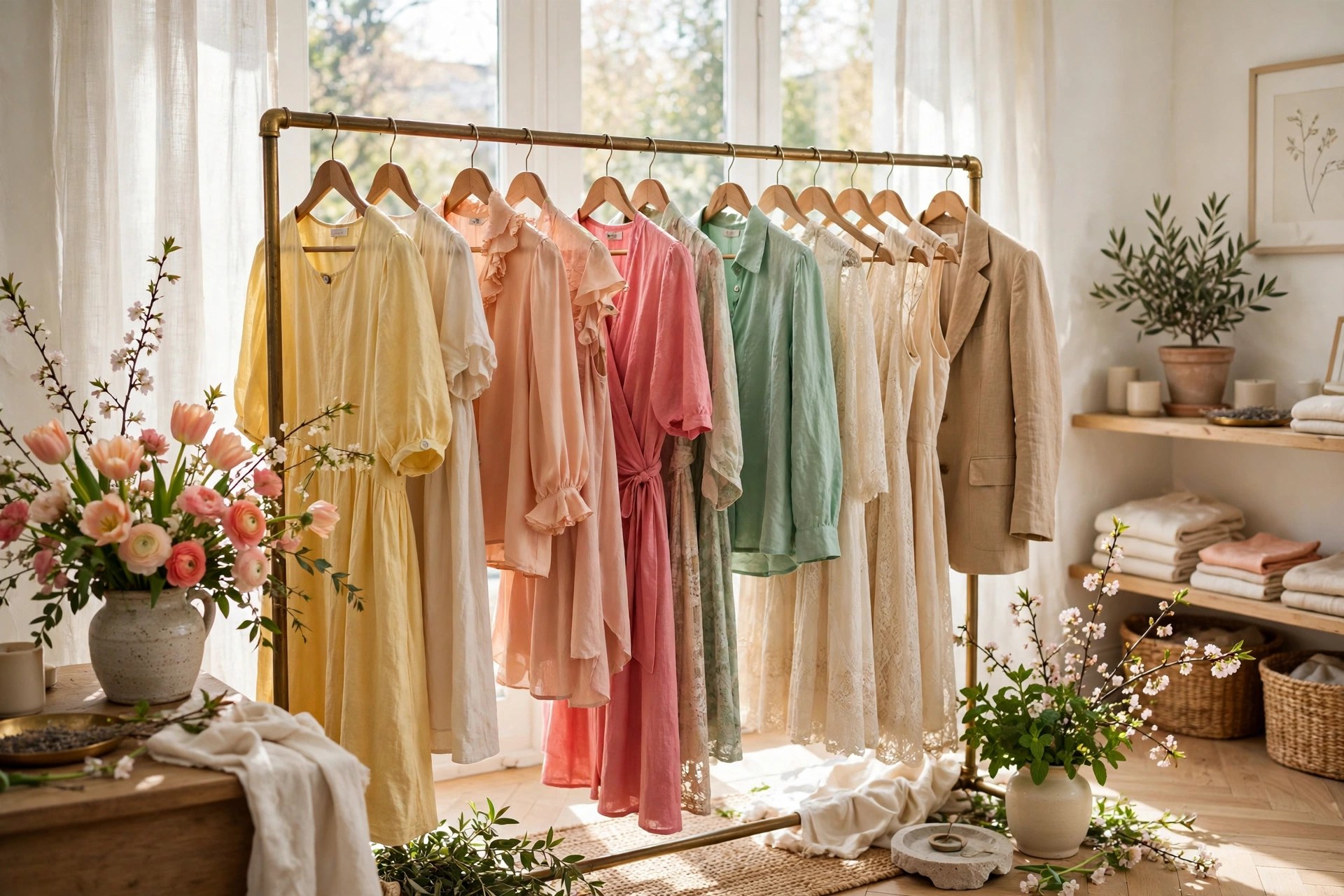
Spring is the warm, light, bright season of the Seasonal Color Analysis Guide — colors that look like the season itself: fresh, clear and sunlit, with a golden undertone in everything. Springs have warm skin with a golden or peachy glow, light to medium hair with golden or red tones, and eyes that tend to be clear blue, green, aqua or light warm brown. The palette below is organized by the three Spring sub-seasons; if you have not confirmed yours yet, start with How to Find Your Color Season.
Light Spring — light first, then warm and bright
Light Spring is the most delicate palette in the system, leaning toward Summer. Light Springs have very light hair, skin and eyes, with low contrast and a warm-neutral glow. Their colors are the palest warm shades: light peach, soft coral, mint, light aqua, butter yellow, warm light grey and ivory. Depth is the enemy — dark, heavy colors overpower this coloring, so even "dark" wardrobe staples are better in warm medium tones like light camel or soft teal than in black. Light gold and light, warm metals suit best.
True (Warm) Spring — warm first, fully golden
True Spring is the warmest palette of all twelve: every color carries a clear yellow undertone, and nothing is muted, dusty or blue-based. True Springs typically have distinctly golden or red hair and warm, clear eyes. Their best colors are saturated and sunny — coral, poppy, leaf green, warm turquoise, golden yellow — and their neutrals are warm too: ivory instead of white, golden brown instead of black, camel instead of grey. Gold jewelry is the natural metal. The colors to treat with care are cool and dusty ones: powder blue, mauve and grey-beige tend to drain this coloring.
Bright Spring — bright first, high clarity and contrast
Bright Spring leans toward Winter, and it shows in the contrast: Bright Springs often have dark hair with bright, sparkling eyes, or the kind of clear coloring that makes neon-adjacent shades look normal. This is the only Spring that can borrow Winter's playbook — clear brights, strong color combinations and even a softened black. Their palette is the most saturated of the Springs: bright coral, clear turquoise, watermelon pink, acid-bright yellows and greens, always with warmth underneath. Icy or dusty colors are the ones that fall flat here.
Shopping Your Spring Palette
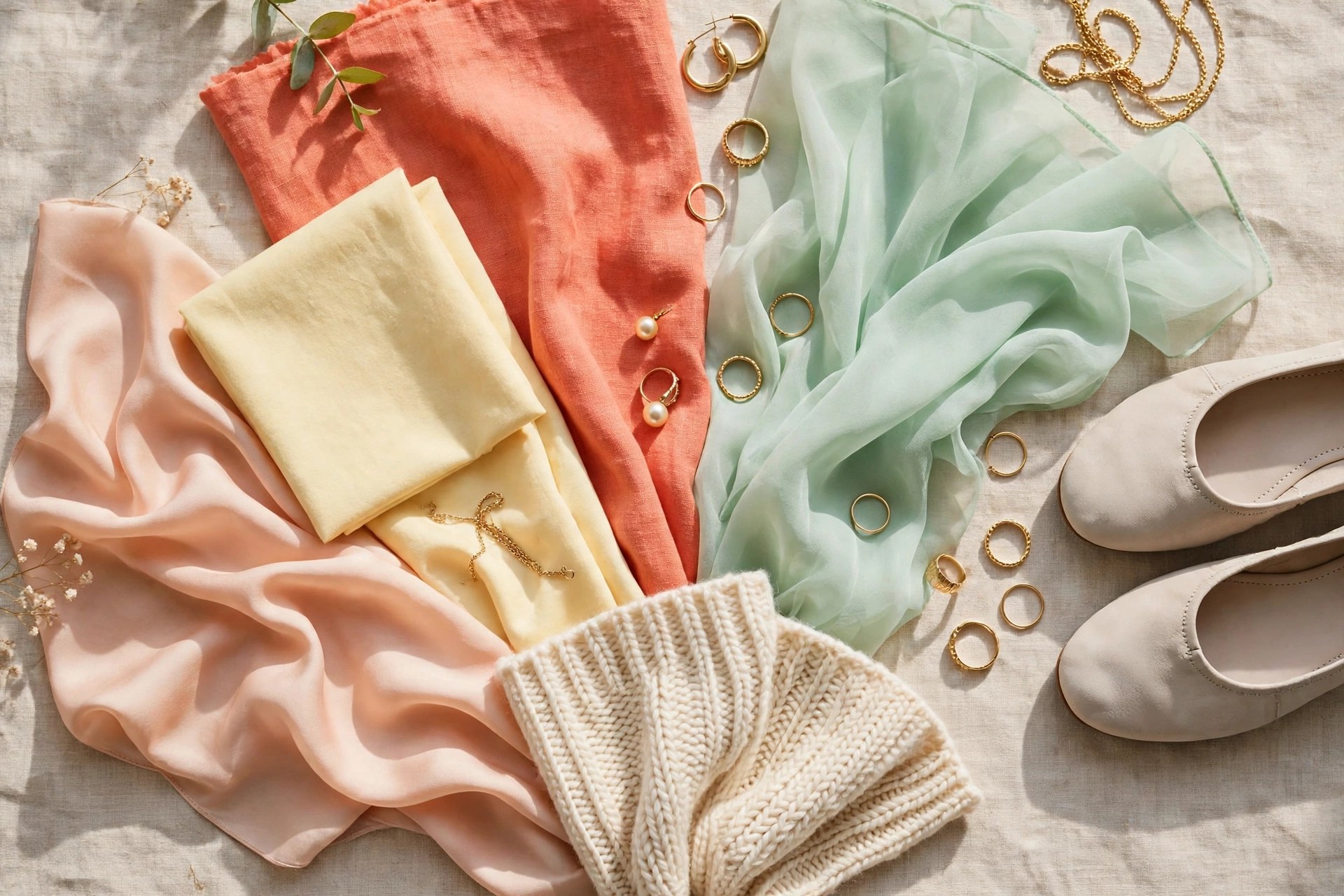
Spring shades of the classic colors are easy to find in the Apparel Search by-color guide families. Look at yellow clothing for your butter and golden yellows, pink clothing for coral and peach pinks (skip the blue-pinks), and green clothing for mint, leaf and warm aqua-greens. When a garment color sits between seasons, hold it near your face in daylight: the right Spring shade seems to light your skin from within, while a Summer or Winter version of the same hue will look oddly separate from you. Springs building a capsule wardrobe do well to anchor on ivory, camel and warm navy and let coral, turquoise and leaf green rotate as the accent colors.
Common Questions
What colors should Spring seasons avoid?
Springs are most drained by cool, dusty and very dark colors: powder blue, mauve, burgundy, charcoal and stark black-and-white contrast can all overwhelm warm, light coloring. If you love a cool color, choose its warm version — teal instead of powder blue, coral instead of fuchsia.
Can a Spring wear black?
True and Light Springs usually look better in warm dark neutrals — cocoa, camel, warm navy — than in black. Bright Spring, which leans toward Winter, is the exception and can wear black well, especially paired with one of its bright warm accents near the face.
What is the difference between Light Spring and Light Summer?
Both are light and delicate, but Light Spring is warm and Light Summer is cool. The draping test decides it: warm peach and mint flatter Light Spring, while cool powder pink and dusty blue flatter Light Summer. Their metals differ too — light gold for Spring, silver for Summer.
Which metal jewelry suits Spring seasons?
Gold — especially light, yellow and rose gold — is the Spring metal, echoing the warm undertone of the whole palette. Bright Spring can also carry shiny, lighter metals well, but yellow gold remains the safest choice across all three sub-seasons.
Back to the Seasonal Color Analysis Guide
The Seasonal Color Analysis Guide hub maps the whole twelve-season system — all four seasons, every sub-season palette, and how the pieces of this cluster fit together.