Apparel Search Consumer Guides
Starting a Clothing Rental Business
Inventory that survives fifty wears, a cleaning operation that never slips, and pricing and terms that protect both sides.
Every garment in a rental business leads a harder life than a garment in a shop: it is worn by strangers, cleaned after every outing, shipped or carried back and forth, and expected to look new the fiftieth time as it did the first. Running a rental service is therefore less like running a boutique and more like running a small logistics and laundry operation with a fashion front end. This page covers the operating essentials — inventory, cleaning, logistics, pricing and insurance — for readers thinking of starting one, and it sits in our clothing rental guide alongside the consumer pages it serves. If you are earlier in the journey, our start a clothing line guide covers the general business groundwork this page assumes.
Choose the Model First
Rental businesses take three main shapes, and they have different economics. The occasion boutique — local, appointment-friendly, built around events — lives on high per-rental fees and fitting service, and its calendar is the wedding and prom seasons. The online occasion service trades the fitting room for reach, and inherits shipping costs and fit risk on every order. The subscription service sells ongoing rotation for a monthly fee: smoother revenue, but a far larger inventory and a cleaning-and-shipping machine that never stops. Niche focus helps all three — maternity rental, plus-size occasion wear, workwear and interview clothing, costumes, and children's occasion wear are all categories where the customer's need is intense, temporary, and poorly served by ownership.
Inventory: Buy for the Fiftieth Wear
Inventory is the business. Stock depth in the sizes customers actually need matters more than breadth of styles: one dress in one size can serve exactly one customer per weekend, so core styles need multiples across the size range. Choose garments the way a uniform supplier would — durable fabrics, construction that survives repeated professional cleaning, closures and seams that can be repaired, and styles classic enough to rent for several seasons rather than several weeks. The clothing line startup costs guide gives the budgeting frame; in rental, add the discipline that every garment must earn its purchase price several times over in fees before cleaning and repairs consume the margin. Retire pieces honestly: a tired garment damages the reputation every other garment depends on, and retired stock can be sold off — which connects rental to the wider circle of reuse described in our page on circular fashion and textile recycling.
Cleaning, Inspection and Repair: The Real Operation
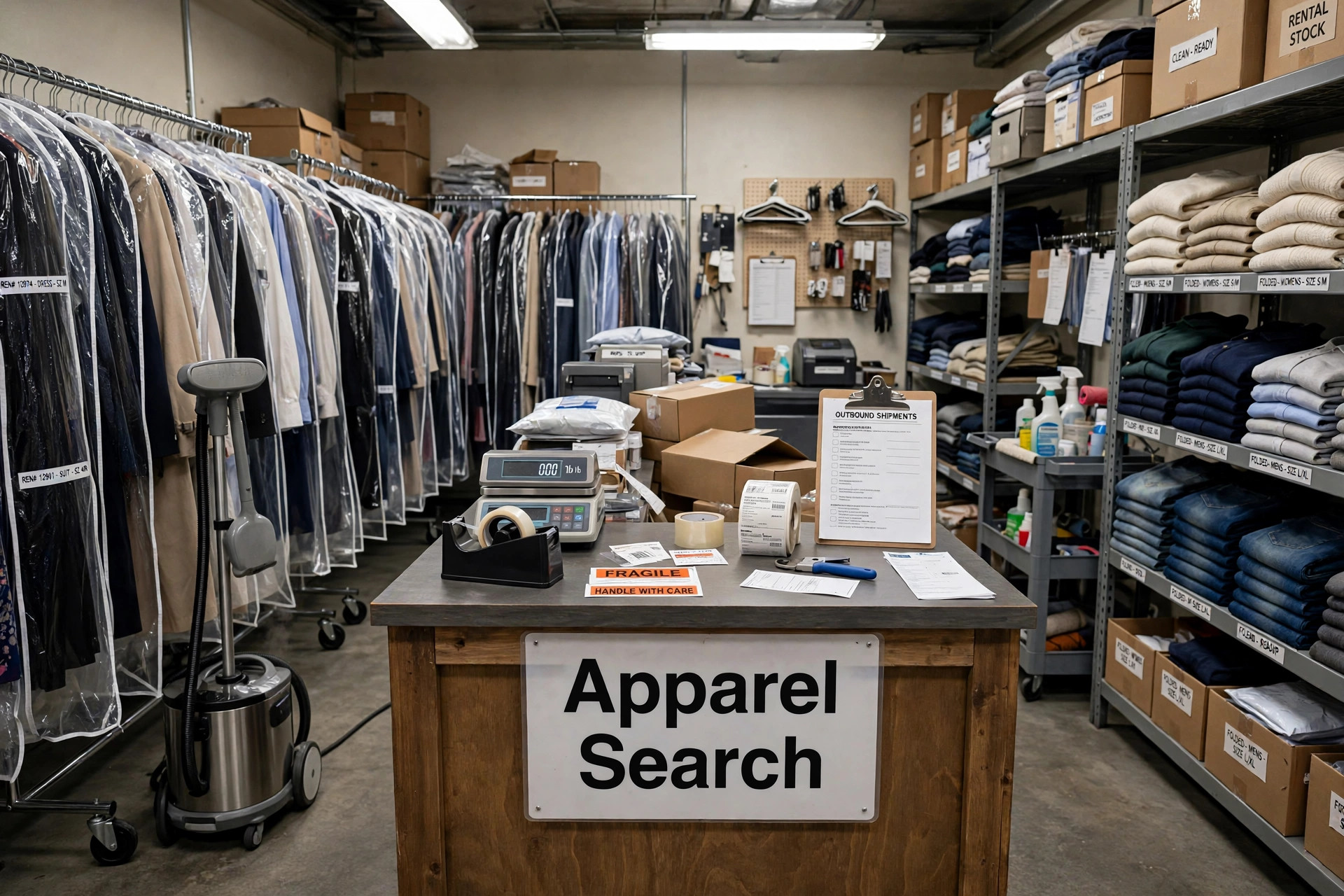
Between every two rentals stands the same unglamorous sequence: inspect under good light, treat marks and damage, clean professionally, press or steam, inspect again, and return to the rail. Most small services partner with a professional cleaner rather than building laundry in-house — what matters is turnaround reliability, since a garment stuck at the cleaner over a weekend is a cancelled reservation and a refunded fee. Repair capacity — a seamstress for zips, hems, buttons and straps — is not optional overhead; it is what keeps inventory rentable. Track each garment's history: rentals completed, incidents, repairs. The data tells you what to buy more of, what to stop buying, and when a piece has earned its retirement.
Logistics and Turnaround
For a local boutique, logistics is the calendar: fitting appointments, collection and return times, and enough slack between rentals for the cleaning sequence. For an online service, logistics is shipping in both directions, packaging that protects garments and reads as care rather than freight, and turnaround buffers — never promise a garment for a date that assumes the previous customer's return and the courier both behave perfectly. Late returns from customers are the eternal friction; structure the rental window, reminders and late-fee terms so a late garment is an inconvenience, not a cascade of failed bookings.
Pricing, Deposits and Damage Terms
Rental fees are conventionally set as a fraction of the garment's retail value — enough that a modest number of successful rentals recovers the purchase cost, low enough that the customer clearly wins against buying. On top of the fee, three instruments protect the business: a card hold or deposit against loss, a published damage ladder (minor repair at cost, major damage higher, loss at replacement value), and an optional damage waiver the customer can buy, which converts an argument into a priced product. Publish the whole structure plainly. Customers accept firm terms they have read; they fight surprises, and they review surprises loudly.
Insurance and Legal Groundwork
A rental business needs its own cover as much as its customers need terms: business liability insurance, cover for inventory against fire and theft, and advice on the local requirements for deposits, consumer terms and hygiene standards, which vary by jurisdiction. Written rental terms — what counts as damage, the late policy, the loss charge, the cleaning rule — are a legal document, not a webpage nicety; have them reviewed, keep them short enough that customers actually read them, and apply them consistently. Consistency is what makes terms defensible, in disputes and in reviews alike.
Common Questions
How much inventory do you need to start a clothing rental business?
Enough that your core styles exist in the sizes customers actually ask for, in multiples — one garment in one size can only serve one customer per rental window. Start narrower and deeper: fewer styles, full size runs, multiples of proven pieces. Inventory software or even a disciplined booking calendar per garment will tell you within a season which pieces earn and which hang; reinvest in the earners.
How are clothing rental prices usually set?
Most services price a rental as a fraction of the garment's retail value, set so that a realistic number of rentals recovers the purchase price with margin left for cleaning, repair and eventual retirement of the piece. Subscription services price the month instead — the fee must cover the average member's shipping, cleaning and wear across their rotations. In both cases, test the arithmetic against your true per-rental operating cost, not just the garment price.
Who pays for cleaning in a clothing rental business?
The business does, always — cleaning between rentals is an operating cost built into the rental fee, and customers are instructed not to clean garments themselves. The operator's real decisions are whether to clean in-house or partner with a professional cleaner, and how to guarantee turnaround: the cleaning chain is where rental schedules succeed or fail, especially across a busy weekend.
What insurance does a clothing rental business need?
At minimum, general business liability cover and insurance on the inventory itself against fire, theft and major loss; businesses with premises or staff need the corresponding property and employer covers. Customer damage is handled primarily through your rental terms, deposits and optional damage waivers rather than insurance. Requirements vary by location — take local professional advice before the first rental, not after the first loss.
Back to the Clothing Rental Guide
The consumer side of the same industry: the three rental models and the questions customers are asking about your terms.