Fashion Job Listings
Apparel Search fashion summary — a short guide to fashion job listings.
A listing is a list or catalogue of information, printed consecutively one item below the other — and fashion job listings are exactly that applied to work: catalogues of available fashion jobs. Job seekers visit employment websites to search through the opportunities those listings collect, which makes the listings themselves the basic tool of every fashion job hunt.
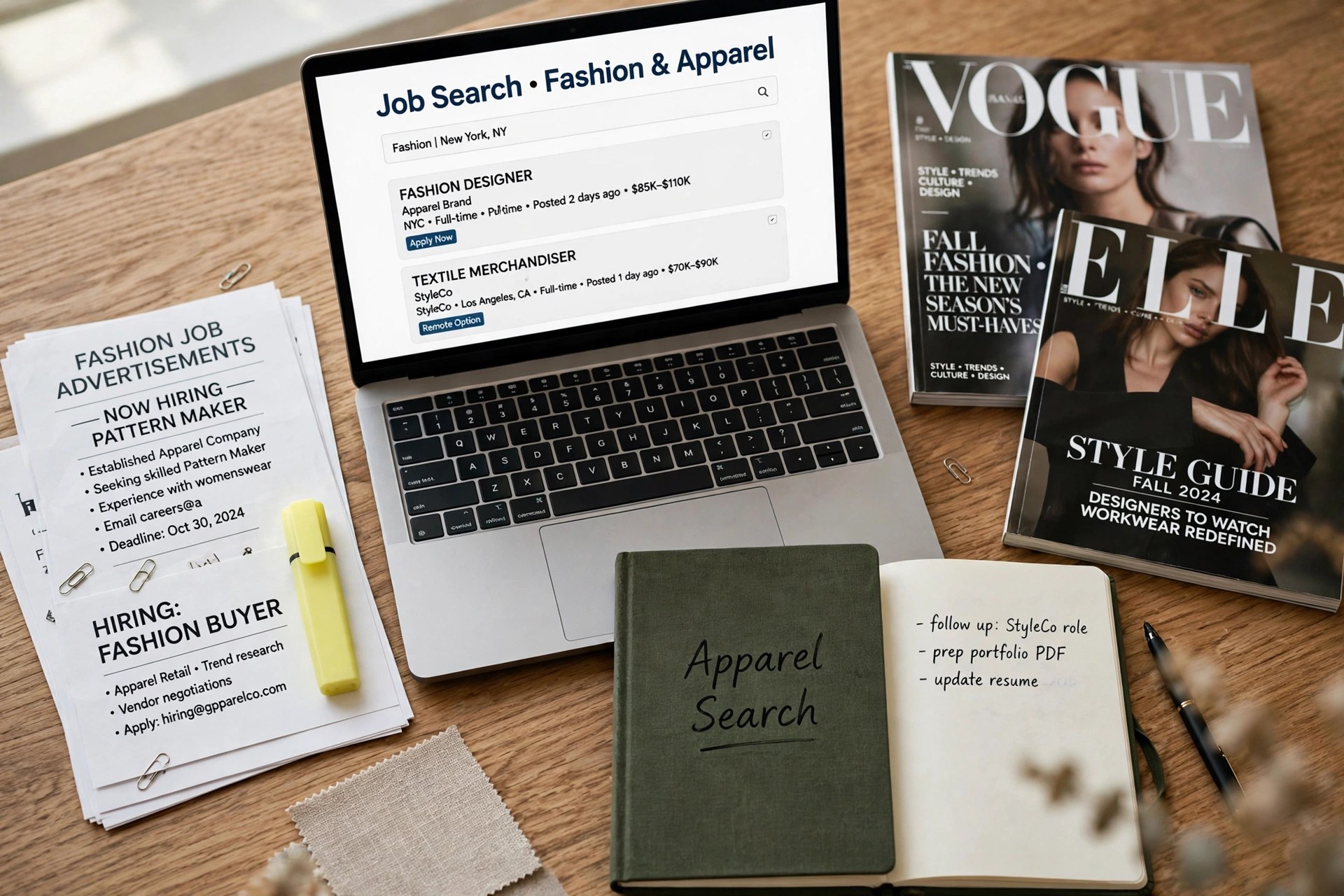
Fashion Job Listings — Explore & Resources
The Listings Themselves: Boards, Publications and Employers
Fashion job listings live in several places at once. General employment boards carry fashion categories — CareerBuilder's fashion job listings are a standard example — while industry publications run dedicated boards of their own, including the WWD and Business of Fashion job listings linked from this page. Employers list directly as well: the Fashion Institute of Technology's own job listings, for example, are the route for readers who want to work at the school itself, including in education.
No single list is complete, because employers choose different boards for different roles. Whether you are breaking into the industry for the first time or moving further along an existing career path, browsing several websites rather than one gives the best chance of finding a position that fits your skills — the same opening may appear on one board and never reach another.
Using Listings Well
A listing is data, and it rewards systematic reading: job title, employer, location, contract type and the requirements that filter who should apply. Saving searches and checking back regularly matters because fashion listings turn over quickly in season, and the newest postings are where competition is thinnest. The fashion careers summary linked below covers choosing a career path itself — salary matters, but happiness in the work matters alongside it.
Listings also teach the shape of the industry to newcomers. Reading a hundred listings across design, retail, merchandising, marketing and production shows which skills employers actually ask for, which software and qualifications recur, and where the openings concentrate geographically. That education is free, and it should happen before applications begin, so that effort goes to the roles a candidate genuinely fits.
Reading a Listing Like an Employer Wrote It
Every listing is written from the employer's side of the desk, and reading it that way improves applications. The requirements list is a filter the employer will actually apply, usually in order — the first two or three requirements are the ones a hiring manager checks before reading further. The duties list, by contrast, is a map of the job's real week, and it deserves more trust than the job title, which varies wildly between companies: the same title can mean a junior shop-floor role in one listing and a senior studio role in another. Applying to the duties you can genuinely do, rather than the titles you would like to hold, is the fastest route through the listings to an interview.
Common Questions
What are fashion job listings?
Catalogues of available fashion jobs — lists of openings published by employment boards, industry publications and employers themselves, which job seekers search to find positions that fit their skills.
Where are fashion jobs listed?
On general boards such as CareerBuilder and Indeed, on industry boards such as the WWD and Business of Fashion listings, and on employers' own pages such as the Fashion Institute of Technology job listings.
Should I search more than one job board?
Yes. Employers post on different boards, so browsing multiple websites gives a much better chance of finding a suitable opening than relying on a single list.