Fashion Logos
Apparel Search fashion summary — a short guide to fashion logos.
A logo is a graphic mark, emblem or symbol used to aid and promote public identification and recognition — and few industries lean on it harder than fashion. Fashion brand logos appear on garment labels, on shopfronts, and often printed or embroidered directly onto the clothing itself, where they turn a garment into an advertisement for its own brand.
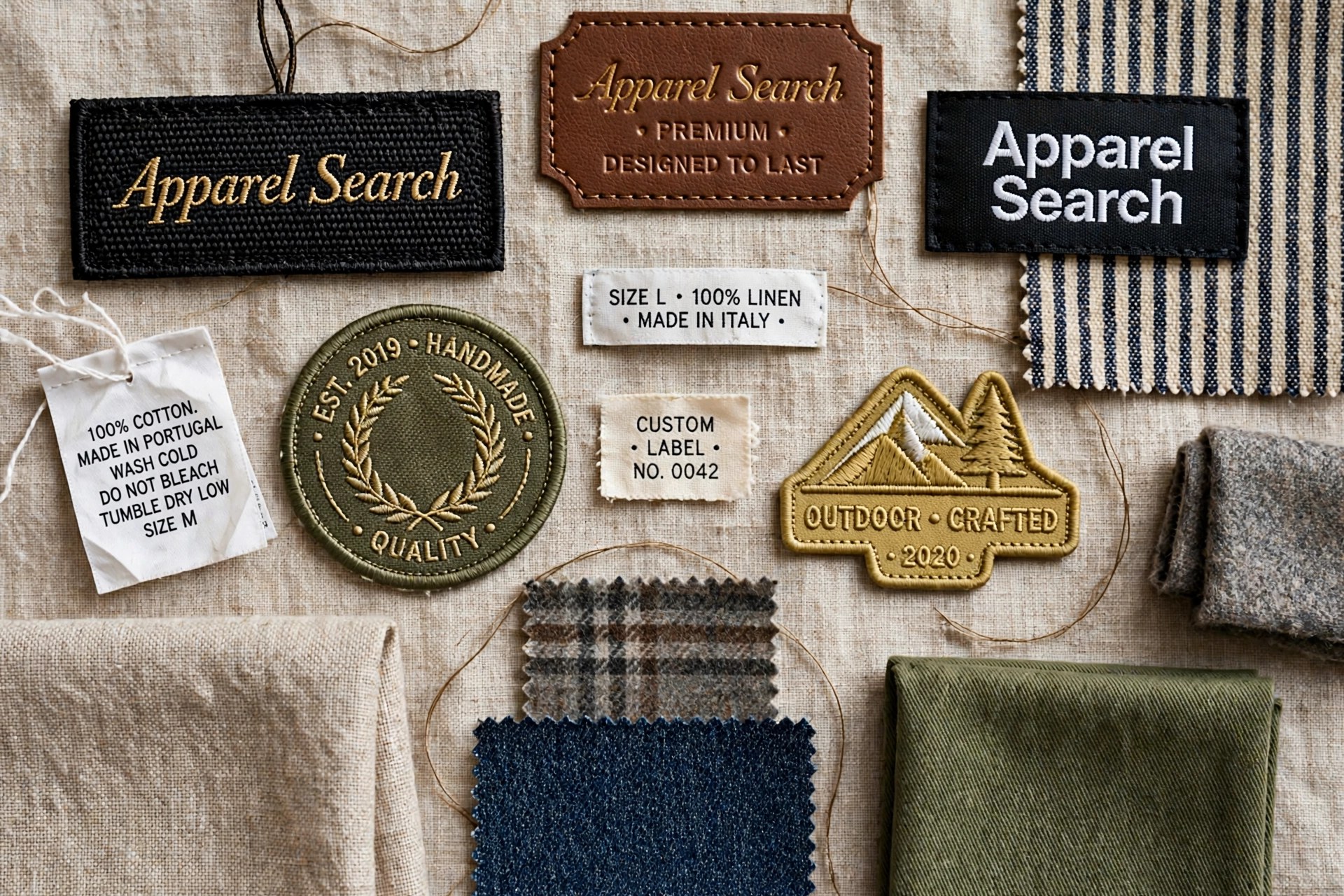
Fashion Logos — Explore & Resources
Designing a Logo for Clothing
Since a logo is the visual entity signifying a brand or organisation, logo design is an important area of graphic design, practised by graphic designers who assemble images, typography or motion graphics into a finished design. Clothing imposes practical constraints most design work never meets: the artist generally works with limited space and a limited number of colours, because the logo must survive being woven into a small label or stitched in thread.
Those constraints shape what works. A photo-realistic logo is rarely practical for embroidery or a woven label, so fashion logos favour strong simple marks and letterforms that stay legible at label size and in a single colour. Logos and their designs may be protected by copyright and trademark through intellectual property organisations worldwide, with application procedures to register a design and give it protection at law — the United States Patent and Trademark Office, linked from this page, handles American registrations.
Recognition: The Test of a Fashion Logo
Logos are a critical component of fashion brand identity. The most popular fashion brands tend to have logos that are instantly recognisable — a monogram, an animal, a pair of interlocked letters — recognisable enough that games can be built on identifying brands from their marks alone, as the fashion logo game linked from this page demonstrates.
That recognisability is commercial value. A known logo reassures a buyer about fit, quality and status before a garment is touched, which is why logo protection connects directly to the fashion law summary linked below and why the fashion brands directory is, in large part, a directory of logos and the identities they carry. Designers creating a mark for a new label should test it the way the industry will use it: tiny, in one colour, stitched — not only large on a screen.
When Logos Do the Wearing
Some fashion uses the logo not as a label but as the garment's main decoration — monogram patterns, chest logos and branded trims where recognition is the design. The approach cycles in and out of fashion: logomania periods treat the mark as a badge of belonging, while quiet periods push logos back inside the garment to the label. Both positions rest on the same fact this page began with — the logo identifies. Whether a brand shouts or whispers its mark is a styling decision; that the mark must be instantly readable, legally defensible and reproducible in thread is the permanent design brief underneath.
Common Questions
What is a fashion logo?
A graphic mark, emblem or symbol that identifies a fashion brand to the public, used on garment labels, storefronts and often printed or embroidered directly onto clothing.
Why do fashion logos need simple designs?
Because they must work at very small sizes and in few colours — woven into garment labels or embroidered in thread — where detailed or photo-realistic designs become illegible.
How are fashion logos protected?
Through copyright and trademark registration with intellectual property offices such as the United States Patent and Trademark Office, which gives the design protection at law.