Cartons for Shipping Clothing
The box every garment travels in — the directory hub for cartons in the apparel warehouse.
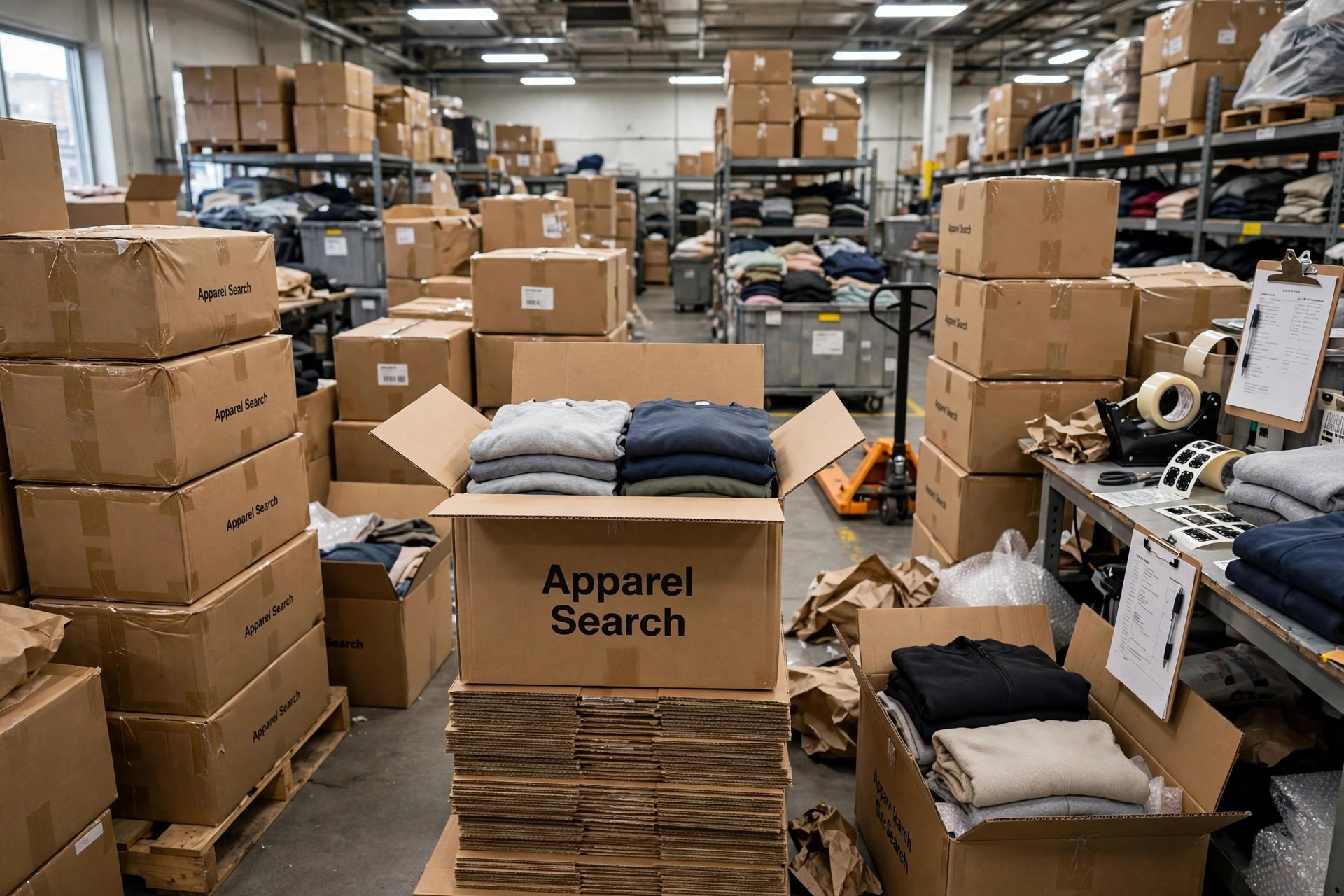
Cartons are the apparel industry's universal container. All clothing factories and clothing warehouses need cartons for shipping product: garments are folded, bagged, counted into cartons, and the carton — labelled, taped and strapped — becomes the unit that trucks, containers and couriers actually move. This page is the directory hub for that subject, introducing the carton family and pointing to the detailed topics: corrugated cartons and boxes, heavy-duty corrugated shipping boxes, and the strapping that secures a closed carton.
Carton Topics
Why the Carton Rules Apparel Shipping
A carton does four jobs at once. It protects: a rigid wall between the garments and the crush, scuff and weather of transit. It organises: a counted quantity of one size and colour becomes a tradeable, checkable unit. It informs: the carton carries the labels — style, size breakdown, destination, bar codes — that warehouses and stores work by. And it stacks: cube after identical cube, filling a container or a truck with almost no wasted air.
No rival container does all four as cheaply. The carton is light for its strength, arrives flat and stores flat until the moment it is erected, and can be cut to the exact cube a garment programme needs. For export work especially — the export cartons this directory exists to help buyers find — the carton is sized to the container as much as to the clothing, so that a shipment cubes out a box or a container precisely.
The definitions linked below — cardboard, the cardboard carton, and the box itself — give the vocabulary of the subject, and the industry alliance listed here represents the corrugated packaging industry that stands behind the carton's manufacture.
Choosing Cartons for Garments
Start with the contents' weight and the journey's length. A carton of folded knitwear on a domestic truck route asks far less of its walls than the same carton exported, double-stacked in a container, through a humid port. Board grade, flute and construction — single wall for the light and near, double and triple wall for the heavy and far — follow from that judgement, and the heavy-duty page in this section takes the subject further.
Size is an economy, not a detail. A carton half-filled with air ships air at freight rates and lets garments shift and crease; a carton strained at its seams fails at its tape line. Programmes settle on a small family of carton sizes matched to their garment families and counts, and pack to them exactly — the same standard-fold discipline that governs bagging, applied one level up.
Finally, the carton is a labelled surface before it is a container: plan the label positions, the carton labels themselves, and the handling marks at specification, not at the shipping bench. The terms pages linked in the references cover carton labels and fashion industry packaging in full.
Cartons — Suppliers & Manufacturers
Corrugated Packaging Alliance
The Corrugated Packaging Alliance (CPA) is an industry initiative jointly sponsored by the American Forest & Paper Association (AF&PA) and the Fibre Box Association (FBA), representing the corrugated packaging industry behind the manufacture of shipping cartons.
Supplies: Industry resources for corrugated packaging
Cartons in the Warehouse Workflow
Flat cartons are stored by size near the packing benches, erected and taped as needed, and filled to their count before the tape and strapping finish them. A filled apparel carton should be firm without bulging — the garments support the walls as much as the walls protect the garments — and a carton that rattles was underfilled or oversized, either of which the next journey will punish.
If you own or operate a carton factory, you can be added to this section of the directory: the manufacturers of corrugated and heavy-duty cartons are listed on the pages linked above, and new carton manufacturers serving the apparel trade are welcome to join them.
Common Questions
Why do clothing companies ship garments in cartons?
A carton protects garments from crush, scuff and weather, organises a counted quantity of one style, size and colour into a checkable unit, carries the labels and bar codes that warehouses and stores work by, and stacks into exact cubes that fill trucks and containers without wasted air. It is light, stores flat until erected, and can be cut to the exact size a programme needs.
What is an export carton?
An export carton is a shipping carton specified for international movement: stronger board and construction for long, double-stacked, containerised journeys, and dimensions planned against the shipping container as much as against the garments, so a shipment cubes out its space precisely.
How is a carton size chosen for garments?
By the garment family and its standard count per carton, matched to a small family of standard sizes for the programme. A carton should finish firm without bulging; a half-filled carton ships air at freight rates and lets garments shift and crease, while an overfilled one strains its seams and tape line.
Photos
