Apparel Search · Seasonal Color Analysis
Winter Color Palettes: Bright, True & Deep Winter
Cool, deep and bright: the three Winter sub-season palettes, with swatches, best neutrals, the right metals, and the warm earth colors that clash with this coloring.
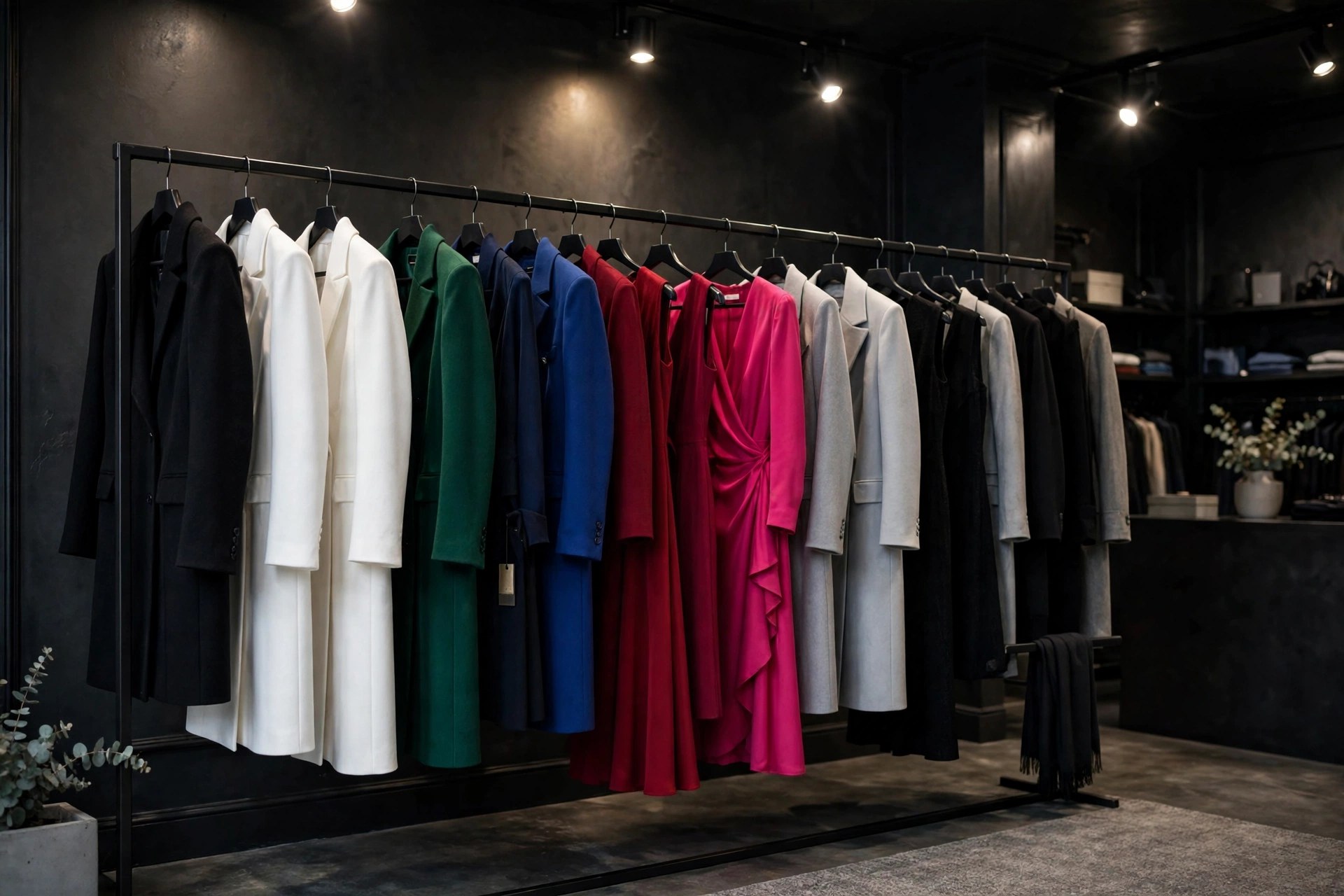
Winter is the cool, deep, bright season of the Seasonal Color Analysis Guide — the high-contrast palette of black, pure white and jewel tones, worn by people whose own coloring is equally striking. Winters have cool skin, often with a porcelain or olive-cool depth, dark or dramatically silver hair, and clear, intense eyes; the defining feature is contrast between hair, skin and eyes. This is the only season that contains true black and optical white. If you are deciding between Winter and its neighbors, the draping comparisons in How to Find Your Color Season will settle it.
Bright Winter — bright first, maximum clarity
Bright Winter leans toward Spring and has the most electric palette in the system. Bright Winters have brilliant, sparkling eyes and a clarity that makes saturated colors look balanced rather than loud. Their palette pairs Winter's black, white and royal shades with a Spring-like brightness: bright turquoise, fuchsia, lemon, watermelon. They are the only sub-season that can genuinely borrow from two seasons' brights. What fails here is muting: dusty, earthy or greyed colors — the whole Autumn and Soft Summer ranges — dampen this coloring visibly.
True (Cool) Winter — cool first, icy and classic
True Winter is the classic Winter: fully cool, fully bright, no warmth anywhere. Royal blue, emerald, ruby, true red, fuchsia and royal purple are its jewels, set against pure white, black and navy. True Winters usually have strong contrast — dark hair against cool fair skin, or deep skin against dark hair — and their coloring can carry the most saturated palette of any season. They are also the season of icy pastels: baby blue, icy pink and pale lavender worn as light versions of the jewel tones. Warm earth colors — rust, mustard, camel, olive — are the ones that look wrong here, turning cool skin yellow by contrast.
Deep Winter — deep first, the darkest cool palette
Deep Winter leans toward Autumn and is the darkest of the cool palettes. Deep Winters have deep hair and eyes with cool skin and strong — but slightly softer than True Winter — contrast. Their colors are the jewel tones taken down to their richest register: dark emerald, midnight navy, burgundy, deep aubergine, charcoal, with black fully at home. They can borrow Deep Autumn's darkest shades if coolness stays dominant, and their metals are silver, platinum and darker gunmetal. Pale, washed-out colors are this palette's weakness: pastels and dusty shades disappear against deep coloring.
Shopping Your Winter Palette
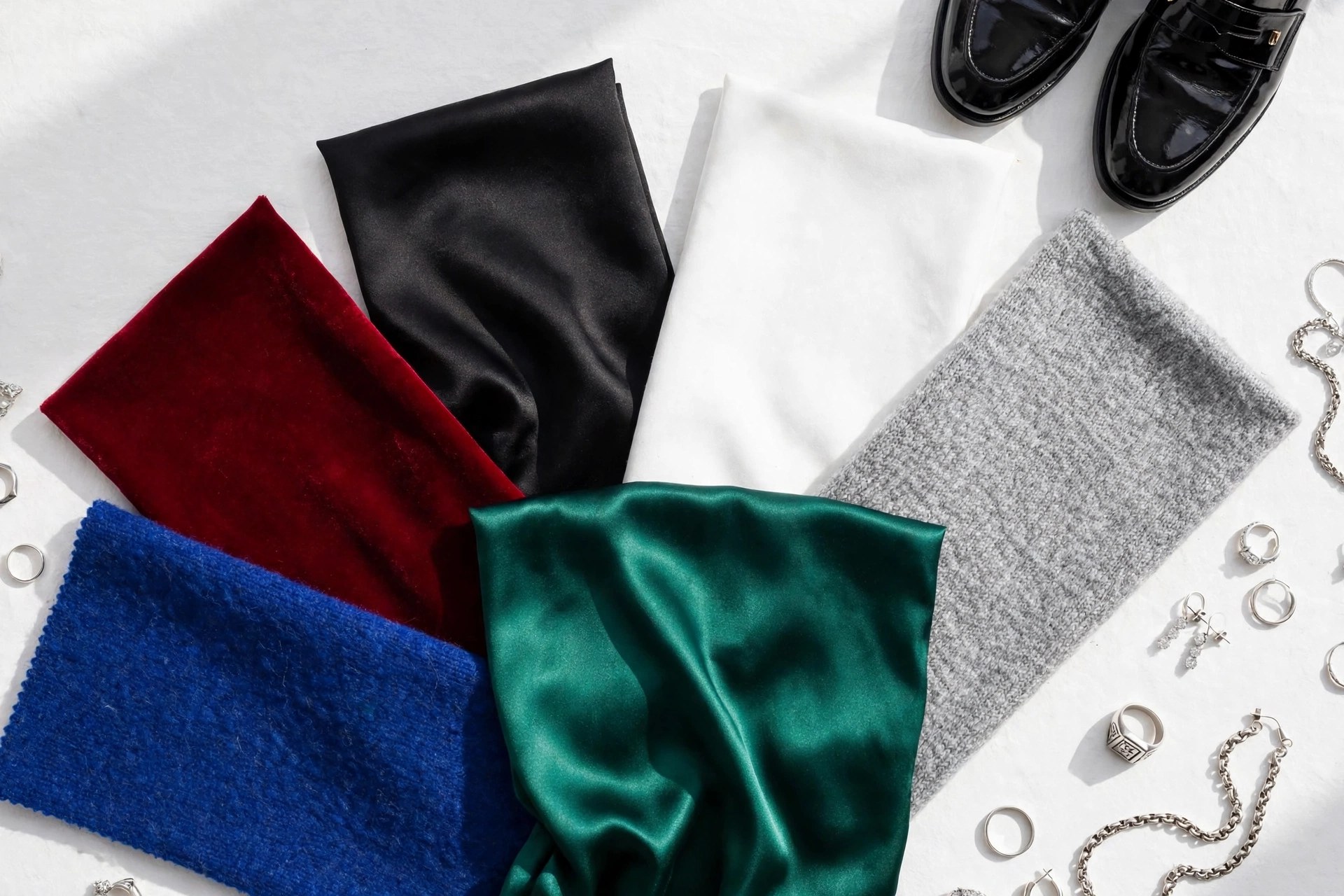
Winter shopping is the most dramatic in the by-color families. The black clothing guide and white clothing guide are your home territory — no other season wears that pairing as well. Add red clothing for true red and ruby, and blue clothing for royal and navy blues. A Winter capsule wardrobe is famously efficient: black, white, navy and charcoal neutrals with two jewel accents create strong outfits from very few pieces — and the how-to-style guides show those high-contrast pairings on specific garments.
Common Questions
What colors should Winter seasons avoid?
Warm, muted and earthy colors: rust, mustard, camel, olive, peach and golden browns all clash with cool, bright coloring, and dusty or pastel-washed shades lack the saturation Winter needs. Choose the clear, cool version of any hue — royal blue instead of slate, true red instead of brick.
Can every Winter wear black and white?
Yes — Winter is the only season whose palette includes true black and optical white, because cool, high-contrast coloring can carry that extreme pairing. Bright and True Winters wear it most starkly; Deep Winter wears black equally well but pairs it best with its deep jewel tones.
What is the difference between Deep Winter and Deep Autumn?
Both are deep and dark; Deep Winter is cool and Deep Autumn is warm. Drape burgundy (cool) against brick rust (warm), and silver against antique gold: the pair that makes your skin look clearer decides it. The two sub-seasons can borrow each other's darkest shades more than any other cross-season pair.
Which metal jewelry suits Winter seasons?
Silver, platinum and white gold — cool, bright and polished to match the palette's clarity. Bright Winter can experiment with shiny light metals of any temperature, but yellow gold in warm, antique finishes is the one most likely to clash.
Back to the Seasonal Color Analysis Guide
The Seasonal Color Analysis Guide hub maps the whole twelve-season system — all four seasons, every sub-season palette, and how the pieces of this cluster fit together.