Stovepipe Hat
Hat & Headwear Definitions — the straight-sided, extra-tall top hat, from Apparel Search
Search Apparel Search
At a Glance
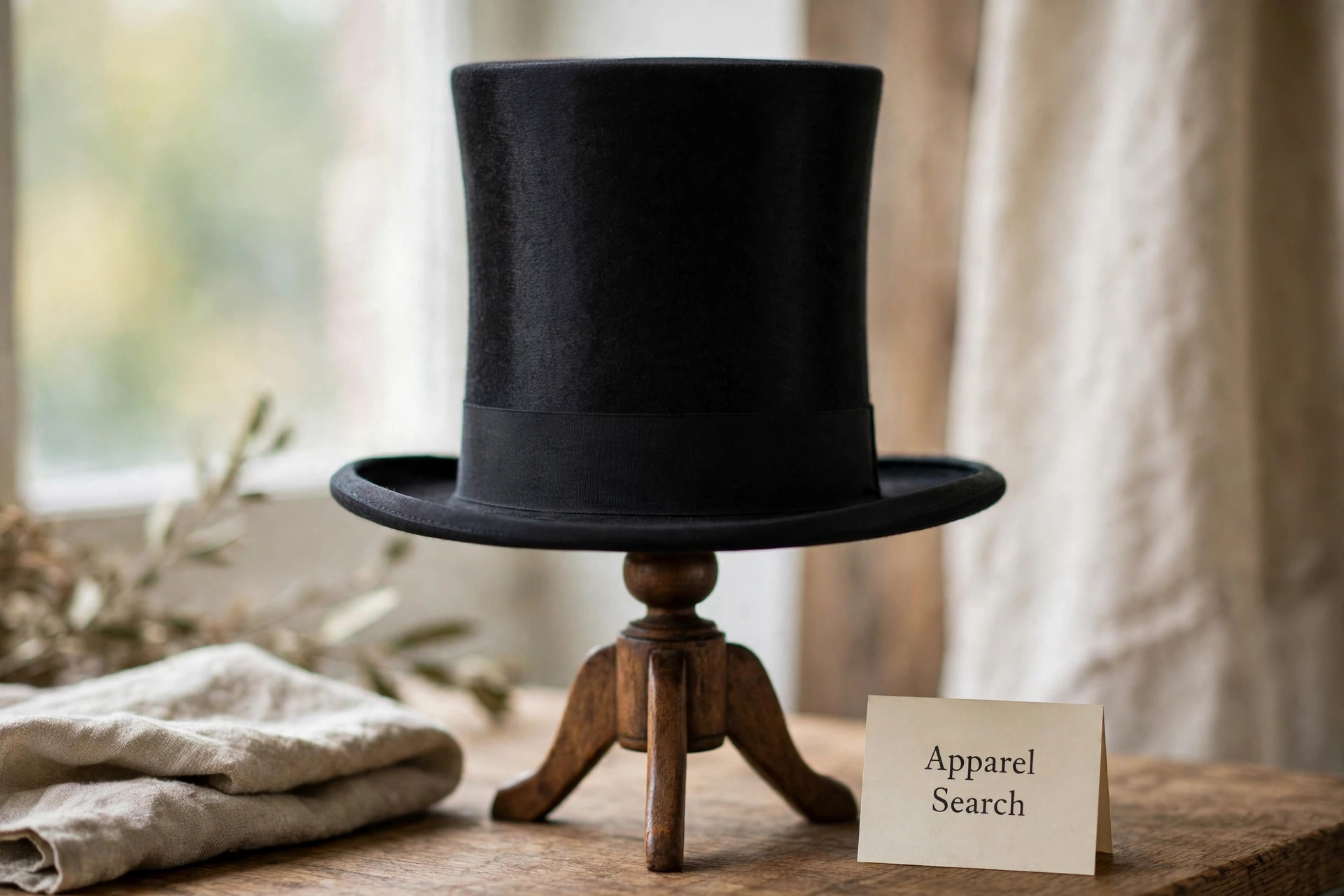
Definition: A stovepipe hat is a popular nineteenth-century version of the top hat, particularly in the United States: straight-sided like piping, not wider at the top or bottom, and often taller than the typical top hat.
Category: Hat & Headwear Definitions
The stovepipe hat is a version of the top hat — the tall, flat-crowned, broad-brimmed hat worn by men and especially common in the nineteenth century. The stovepipe was a popular version of it, particularly in the United States in the nineteenth century, and its difference is one of line: where many top hats widen at the top or bottom, the stovepipe is straight, like piping, and it was often taller than the typical top hat as well. This page covers that straight, extra-tall silhouette, the stiffened materials that made it possible, and the collapsible opera hat that later softened the family's rigidity. For the parent style in full, see the top hat page.
Straight Sides and Extra Height
The stovepipe's identity is visible at a glance. Unlike many top hats, this version was straight, like piping, and was not wider at the top and bottom: the crown rises in one even vertical line from brim to flat top, so the hat reads as a length of pipe set on a brim — the comparison its name makes. Add the second trait, that stovepipes were often taller than the typical top hat, and the style becomes the most emphatic silhouette in the family: the straightest sides carried to the greatest height.
That architecture had to be built, not draped. Top hats were made from stiffened felt made from beaver fur, or from silk. Stiffening is what lets a tall crown with a flat top and straight sides hold its shape through wearing, handling and storage; in a soft material the pipe-like line would collapse. The beaver fur felt gave the hat a dense, firm body, while silk gave it the formal surface of dress wear — either way, the wearer carried a constructed object, and the care such hats needed followed from that construction.
Collapsible Heirs and Stage Associations
Later on, top hats were sometimes given an internal hinged frame, making them collapsible. Such hats are often called opera hats — though the term can be synonymous with any top hat, or any tall formal men's hat, so it needs care in use: it may name the hinged, folding design specifically, or tall formal headgear in general. The folding idea answered the stiff hat's great inconvenience, its awkwardness to hold or store during a performance. The stovepipe itself belongs to the rigid tradition: its unbending straight line is exactly what defines it, and it does not fold.
One association follows the whole family into the present: top hats are sometimes associated with stage magic, where a tall crown, a flat top and a clearly read brim serve a performer well. For identifying a stovepipe today, the checks are simple and visual. Look first at the sides — straight, like piping, with no widening at top or bottom. Look next at the height — often taller than the typical top hat. Then confirm the shared top hat family features: the flat crown, the broad brim, and the stiffened construction in beaver fur felt or silk.
Common Questions
How does a stovepipe hat differ from other top hats?
Unlike many top hats, the stovepipe version was straight, like piping, and was not wider at the top and bottom. Often stovepipe hats were taller than the typical top hat, which gives the style its pipe-like silhouette.
What were top hats made from?
Top hats were made from stiffened felt made from beaver fur or from silk. That stiffened construction is what allowed the tall, flat crown and broad brim to hold their formal shape.
What is an opera hat?
Later top hats were sometimes given an internal hinged frame, making them collapsible, and such hats are often called opera hats. The term can also be synonymous with any top hat, or any tall formal men's hat.