Patchwork
Sewing Definitions — small pieces of fabric sewn together into a larger design, from Apparel Search
Search Apparel Search
At a Glance
Definition: Patchwork is a form of needlework or craft that involves sewing together small pieces of fabric into a larger design.
Also known as: Piecing
Category: Sewing Definitions
Patchwork is a form of needlework or craft that involves sewing together small pieces of fabric into a larger design. This larger design is then usually quilted, or else tied together with pieces of yarn at regular intervals, a practice known as tying. Patchwork is traditionally pieced by hand, although modern quilt makers often use a sewing machine instead. Patchwork is most often used to make quilts, but it is also used to make bags, wall-hangings, warm jackets, skirts and other items of clothing, and textile artists often combine it with embroidery and other forms of stitchery. This page covers how patchwork is pieced, its named blocks and types, its history of thrift and revival, and what it is used to make. See also the cloth definition and the clothing definitions.
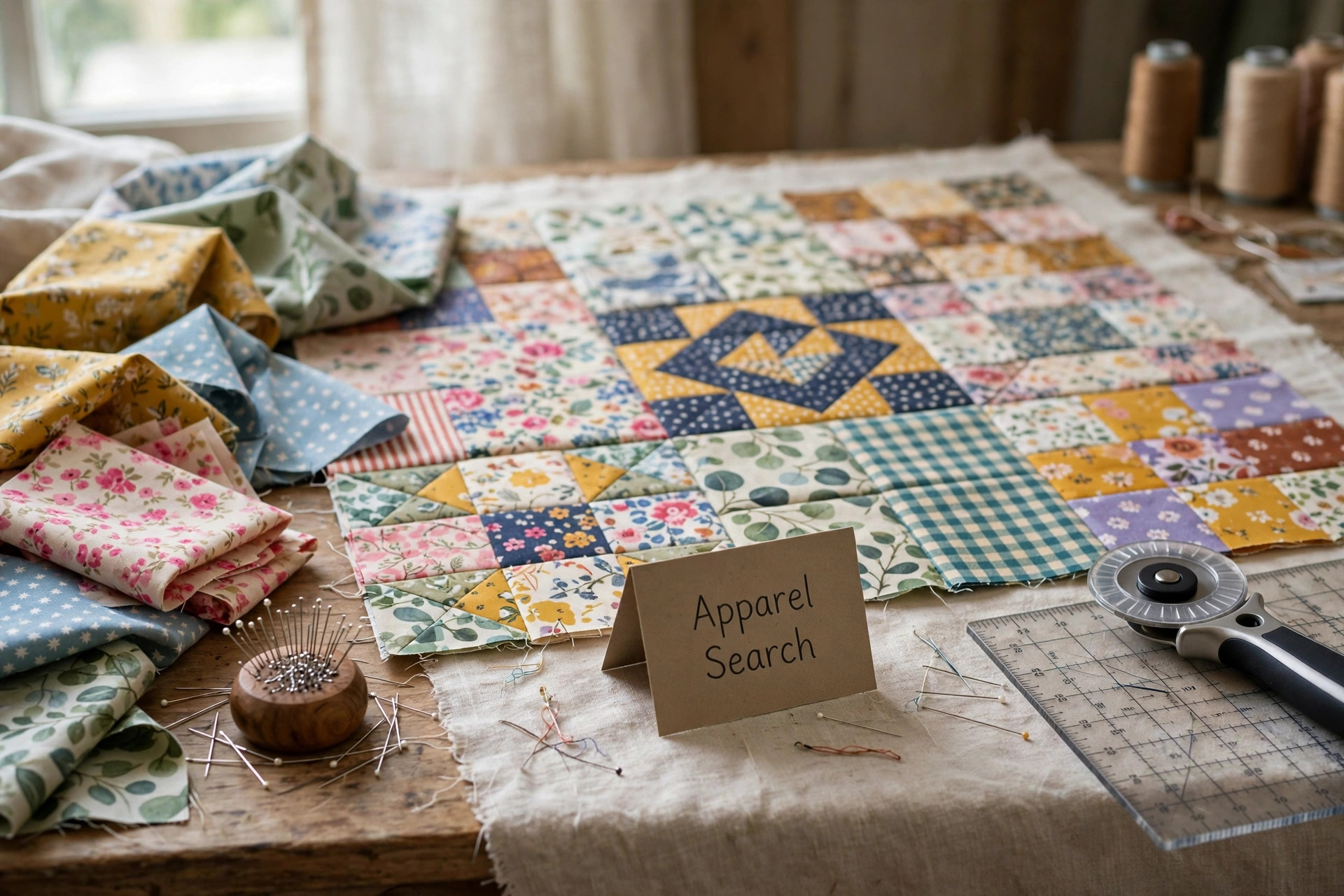
Piecing Small Cloth Into Large Design
Patchwork, also called piecing, treats fabric as a mosaic material. Instead of cutting a design from one large cloth, the maker cuts many small pieces, often from different fabrics, and sews them edge to edge so colour and pattern themselves form the design. The unit of construction is the block: a square of pieced work, perhaps a nine-patch of alternating light and dark squares, a log cabin block of strips around a centre, or a flying geese unit of triangles. Blocks are joined in rows, often separated by strips called sashing, to build a top of any size from a cushion to a bed quilt.
Accuracy is the craft's central discipline. Every piece carries a seam allowance, traditionally a quarter inch in quilt making, and small errors multiply across dozens of pieces until blocks refuse to match. Hand piecing, the traditional method, marks the stitching line and sews with a running stitch; machine piecing trades that portability for speed and is now the norm for most quilt makers. Pressing seam allowances consistently, usually toward the darker fabric, keeps the top flat and the intersections crisp. Crafters today more often use specially bought patchwork material as the basis for their designs, especially 100% cotton.
Named Blocks and Patterns
Generations of makers have named the blocks, and the names are a folk catalogue of American and household life. Among the many traditional blocks are Aunt Sukey's Choice, Baby Blocks, Barbara Frietchie's Star, Bear's Paw, Blazing Sun, Bow Tie, Bridal Wreath, Brown Goose, Cactus Flower, California, Clay's Choice, Crosses and Losses, Dolley Madison Star, Double Irish Chain, Double X, Dresden Plate, Drunkard's Path, Eccentric Star, Fish Block, Four-Patch, Flying Geese, Grandmother's Fan, Hen and Chickens, Hexagon, Hole in the Barn Door, Hovering Hawks, Jack-in-the-Box, Jacob's Ladder, Lincoln's Platform, Little Red School House, Log Cabin, Morning Star, Next Door Neighbour, Nine-Patch, Ocean Waves, Ohio Star, Old Maid's Puzzle, Old Tippecanoe, Pineapple, Prairie Queen, Rail Fence, Road to California, Rocky Road to Kansas, Schoolhouse, Shoo Fly, Spider Web, Star of Bethlehem, Steps to the Altar, Tree of Life, Tulip, Turkey Tracks, Wandering Foot, Water Wheel and Winding Ways — and many, many more.
Whole-top designs have their own named patterns, among them Trip Around the World and the Album Quilt. The finished patchwork design is then usually quilted, or else tied together with pieces of yarn at regular intervals — tying — to hold it to its backing.
Types of Patchwork
The named techniques show the range of the craft. Stained glass window patchwork, cathedral window patchwork and Somerset patchwork manipulate folds and layers. Trapunto, the stuffed or puff patchwork, stuffs areas for relief. Crazy quilting joins irregular pieces under decorative embroidery. Appliqué, often classed with patchwork, sews shapes onto a ground rather than piecing them edge to edge.
Economy, Revival and Art
Patchwork's history is a history of thrift turned into design. Patchwork enjoyed a widespread revival during the Great Depression because it was a way to recycle worn clothing into warm quilts; even very small and worn pieces of material are suitable for use in patchwork. Patchwork declined after World War II, but was again revived during the American bicentennial.
Patchwork and quilting are both enjoying a huge resurgence in popularity around the world, particularly in the United States and Japan. A survey in America identified quilting as a multi-million dollar industry. International quilting exhibitions attract thousands of visitors from around the globe, while countless smaller exhibitions are held every weekend in local regions; active cyber-quilting communities abound on the web, books and magazines on the subject are published in the hundreds every year, and there are many active local quilting guilds and shops in different countries. Quilt art is established as a legitimate artistic medium, with quilted works of art selling for thousands of dollars to corporate buyers and galleries. Quilt historians and quilt appraisers are re-evaluating the heritage of traditional quilting and antique quilts, while superb examples of antique quilts are purchased for large sums by collectors and museums.
In clothing, patchwork appears in jackets, skirts and bags both as genuine pieced construction and as a design language signalling handwork and reuse, a meaning it has carried since its Depression-era revival made a virtue of using every scrap. Some textile artists work with patchwork combined with embroidery and other stitchery, extending it well beyond the bed quilt.
Not to Be Confused With
Not to be confused with quilting. Patchwork is the joining of fabric pieces into a designed top. Quilting is the stitching that holds a top, a layer of batting and a backing together. A patchwork top becomes a quilt when it is layered and quilted or tied. See the quilt definition and quilting.
Common Questions
What is patchwork?
Patchwork is a form of needlework that involves sewing together small pieces of fabric into a larger design. The design is then usually quilted, or tied together with yarn at regular intervals.
What is patchwork used to make?
Patchwork is most often used to make quilts, and also bags, wall-hangings, warm jackets, skirts and other items of clothing. Some textile artists work with patchwork combined with embroidery and other stitchery.
What is the difference between patchwork and quilting?
Patchwork is the joining of fabric pieces into a designed top. Quilting is the stitching that holds a top, a layer of batting and a backing together. A patchwork top becomes a quilt when it is layered and quilted or tied.