Foundation Guide
Types, finishes, undertones and shade matching, prep, application and setting — explained.
Foundation is the base coat of a makeup routine: a tinted product worn over most of the face to even out skin tone, soften the look of redness and uneven patches, and give everything applied afterwards — blush, bronzer, powder — a smooth canvas to sit on. It is not meant to mask the skin or change its color. A good foundation looks like your own skin on a rested day, and choosing one comes down to three decisions: formula, finish and shade. This guide works through all three, plus the prep, application and setting steps that decide whether a foundation looks fresh at noon or tired by ten. It sits within our Makeup Guide, and it pairs naturally with the Concealer Guide.
Face Makeup Guides
The Short Version
- Match undertone first, depth second — warm, cool, neutral or olive decides whether a shade looks like skin.
- Test on the jawline in daylight and wait ten minutes for oxidation before you judge the color.
- Prep decides the finish: moisturize, let sunscreen set, and use primer only where it has a job to do.
- Apply in thin layers with fingers, a damp sponge or a brush, and set only where the base moves or shines.
What Foundation Does in a Routine
Think of foundation as evening-out, not covering-up. Its jobs are to unify color across the face so redness, uneven patches and calmer areas all read as one complexion; to provide a consistent base so blush and bronzer blend predictably; and to offer a chosen level of polish, from a sheer wash to a full, even coat for photographs and events. Foundation goes on after skin care and sunscreen, and after primer if you use one. The same bottle can look smooth over well-moisturized skin and patchy over dry, unprepped skin, which is why prep matters as much as the formula itself.
Foundation Types and Coverage Levels
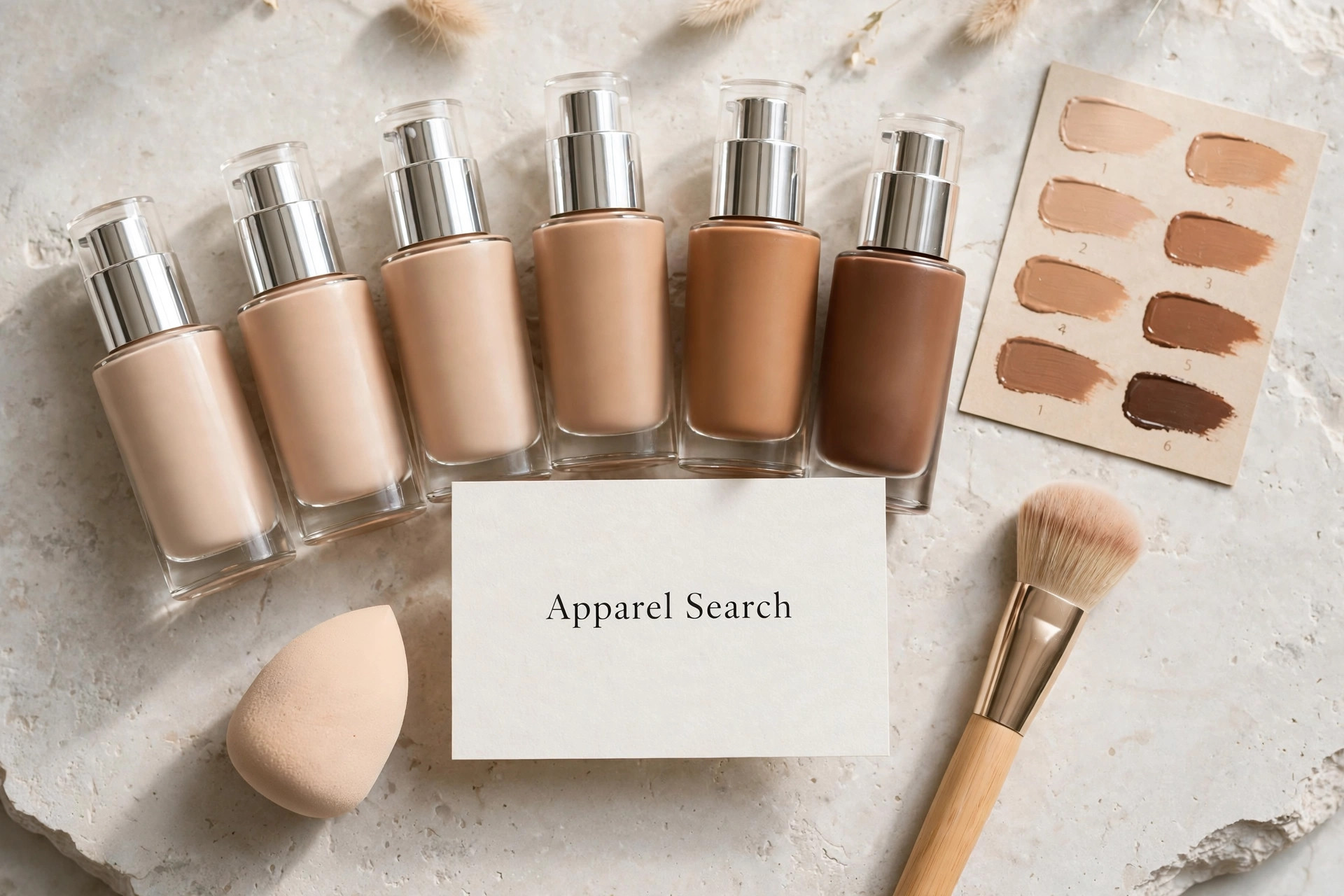
Formulas differ mainly in texture and in how much pigment they carry. Coverage is usually described as sheer, light, medium or full, and most modern formulas are buildable — a medium-coverage liquid applied thinly behaves like a light one, and applied in two layers approaches full.
Liquid foundation
The most versatile and common type, sold in every finish and coverage level. Liquids blend easily, layer well and suit most skin types, and a pea-to-coin-sized amount is a normal starting point for the whole face.
Cream foundation
Richer and thicker, usually in a jar or compact, with medium-to-full coverage. Creams suit dry and mature skin because their emollient base resists settling into fine lines, but they can feel heavy on oily skin and usually need setting in the T-zone.
Powder foundation
Pressed or loose pigmented powder that doubles as its own setting step. Powders are quick, portable and friendly to oily skin, but they can emphasize dry patches and texture, so they reward well-prepped skin and a light hand.
Stick foundation
A solid stick swiped on and blended out with a brush or sponge. Sticks give medium-to-full coverage, travel well and double as spot coverage, though their thicker texture needs thorough blending.
Serum foundations and skin tints
The lightest family: fluid, skincare-textured formulas with sheer-to-light coverage that even tone without looking like makeup. They suit everyday wear and anyone who dislikes the feel of a traditional base, but they will not cover pronounced blemishes on their own — that is concealer territory.
Finishes: Matte, Satin, Natural and Dewy
Finish describes how the dried-down surface catches light, and it changes how skin reads as much as color does.
- Matte: a flat, shine-free surface. Best for oily skin, humid climates and long wear, because it resists the shine skin produces later. On dry or textured skin it can look flat and emphasize flakes, so prep and restraint matter.
- Satin: the middle ground — mostly matte with a soft sheen, like real skin in good light. Satin is the safest all-round choice and flatters combination and mature skin in particular.
- Natural: designed to mimic un-made-up skin, neither matte nor glowing. A good default for everyday and office wear across most skin types.
- Dewy: a luminous, light-reflecting finish that reads as healthy and hydrated. Lovely on dry and mature skin; on oily skin it can tip into looking greasy by midday unless the T-zone is powdered.
Choose the finish by your skin type first and your taste second: a finish that fights your skin loses by lunchtime, while one that works with it looks intentional all day.
Finding Your Shade: Undertones First
Shade has two parts: depth (how light or deep the color is) and undertone (the hue underneath the surface). Depth is easy to see; undertone is where most mismatches come from, because a foundation of the right depth but the wrong undertone looks orange, pink, grey or ashy even though the lightness seems correct.
The four undertone families
- Warm: golden, yellow or peachy undertones. Gold jewelry tends to flatter, and skin often tans readily.
- Cool: pink, rosy or slightly blue undertones. Silver jewelry tends to flatter, and skin may burn before it tans.
- Neutral: a balance of warm and cool, with no obvious gold or pink cast. Both metals look fine, and neutral shades are the easiest match.
- Olive: a muted, slightly green or grey-green cast that is easy to miss. Olive skin is often matched badly by both warm shades (too orange) and cool shades (too pink); look for shades described as olive or muted.
How to identify yours
No single test is decisive, so combine two or three. Look at the veins inside your wrist in daylight: greenish suggests warm, blue or purple suggests cool, and hard-to-call suggests neutral or olive. Hold plain white paper beside your clean face in a mirror: skin that looks yellowish against it leans warm, pinkish leans cool, and grey-green leans olive. Then confirm with how shades behave: if golden shades melt in and pink shades sit on top, you have your answer.
Testing: the jawline swatch
Always test on the jawline, not the hand — hands are a different color from faces. Paint stripes of two or three candidate shades from cheek to just under the jaw, then step into natural light. The right shade all but disappears against both face and neck. Check again after ten to fifteen minutes, because of oxidation: some formulas dry down noticeably darker or warmer, and the shade that looked perfect wet is not always the shade you will wear. If you fall between two shades, the slightly lighter one is usually easier to warm up with bronzer than a too-deep shade is to fix.
Foundation shade vs concealer shade
Foundation should match your skin as exactly as you can manage. Concealer plays by slightly different rules: for blemishes it should match the foundation exactly so the patch disappears, while under the eyes many people choose a shade a touch lighter to brighten. Our Concealer Guide covers that balancing act in detail.
Choosing by Skin Type
- Oily skin: oil-free or matte liquid and powder foundations wear longest. Set the T-zone, and blot rather than add powder during the day so layers do not build up.
- Dry skin: hydrating liquids, creams and serum formulas in satin or dewy finishes. Avoid heavy matte powders, moisturize well first, and apply with a damp sponge, which adds a little water back as you blend.
- Combination skin: a satin or natural-finish liquid is the flexible middle. Powder only the oily zones and leave the drier cheeks unpowdered.
- Mature skin: light-to-medium coverage in satin or lightly dewy finishes, applied thinly. Heavy full-coverage matte formulas settle into lines and add years; a thinner base plus targeted concealer looks fresher.
- Sensitive skin: fragrance-free formulas with short ingredient lists are the usual starting point, and patch-testing a new foundation along the jaw for a few days is a sensible habit. If a formula stings or itches, stop using it and let your skin settle.
Skin Prep: The Step That Decides Everything
Foundation shows whatever is underneath it, so prep is not optional polish — it is half the result. Cleanse gently, moisturize for your skin type and give the moisturizer a few minutes to absorb; foundation spread over still-wet cream slides and sheers out unevenly. Morning sunscreen likewise needs a few minutes to set into an even film before makeup. Gentle exfoliation a couple of times a week keeps flakes from giving foundation something to cling to. Primer is the optional final prep step: a face primer can smooth pores, add grip for long days, mattify an oily T-zone or add hydration under a drier formula. Use it where you have a specific job for it, not automatically everywhere.
Application: Tools and Technique
All three classic tools work; they simply trade coverage and finish.
- Fingers: warmth softens the product and presses it into the skin. Best for sheer-to-medium liquids and skin tints, and for small areas. Wash hands first, and blend edges carefully.
- Damp sponge: a squeezed-out, damp sponge bounces product on in thin, even layers and leaves the most skin-like finish. It absorbs some product, so it naturally sheers coverage — ideal for building gradually and for dry or mature skin.
- Brush: a dense buffing brush gives the fullest coverage and a polished finish; a stippling brush gives a lighter, airier one. Work in small circular motions and finish with a sponge press if brush marks show.
Whichever tool you choose, start at the center of the face, where most people need the most evening-out, and blend outward so the edges of the face carry the least product. That gradient keeps foundation from looking like a mask. Build in thin layers: a light coat everywhere, then a second pass only where redness or unevenness still shows through. Two thin layers always look better than one thick one. Blend past the jawline a little, check the hairline and around the nose, and look at the result in daylight before powdering.
Setting and Making It Last
Setting is about placing hold only where you need it. A light dusting of translucent powder through the T-zone and anywhere foundation tends to move extends wear for hours, while leaving the cheeks unpowdered keeps a satin or dewy finish alive. Oily skin may powder all over; dry skin may skip powder entirely. Setting spray is the finishing alternative: it removes the powdery look, melds the layers together and, in long-wear formulas, adds staying power. Through the day, blot shine rather than layering more powder, and press any creasing smooth with a clean fingertip instead of adding product.
Common Mistakes
- Testing shades on the hand or wrist and buying a color your face never wears.
- Judging a swatch immediately, before oxidation has had its say.
- Skipping moisturizer because skin feels oily, then wondering why foundation clings and separates.
- Applying one thick layer instead of building two thin ones.
- Stopping at the jawline, which leaves a visible edge in daylight.
- Powdering everywhere by habit, flattening a finish you chose on purpose.
- Expecting foundation to do concealer work — piling base over a blemish makes it more visible, not less.
Get the undertone right, prep well, build thinly and set selectively, and foundation becomes the easiest step in the routine.
Common Questions
How do I find my foundation shade?
Swatch two or three close shades in stripes along your jawline and check them in natural daylight, not store lighting. The right shade disappears into both your face and your neck without a visible edge. Let the swatches sit for a few minutes before deciding, because some formulas darken slightly as they dry down.
Should foundation match my face or my neck?
Match to your neck and upper chest, because those areas usually get less sun and show your truest depth of color. If your face is lighter than your neck, a neck-matched foundation evens everything out. If your face is deeper from sun exposure, meet in the middle and blend the edges well so there is no line at the jaw.
Which foundation finish is best for my skin type?
Oily skin usually wears matte or soft-matte finishes best, because they resist shine through the day. Dry skin is happier in satin, natural or dewy finishes, which do not cling to flaky patches. Combination skin often suits a satin finish, with powder only on the oily zones. Mature skin generally looks freshest in satin or lightly dewy formulas applied thinly.
Why does my foundation turn orange or darker during the day?
That shift is called oxidation. Ingredients in the formula react with air and with the natural oils on your skin, and the color deepens or warms after application. Testing a shade for ten to fifteen minutes before judging it reveals the true final color. A primer between skin and foundation can also slow the change on very oily skin.
How do I stop foundation looking cakey?
Use less product and build it in thin layers only where you need coverage, leaving clearer areas of skin with a sheer wash. Prep with moisturizer so the formula has no dry patches to cling to, apply with a damp sponge to press product in rather than pile it on, and skip heavy powder over the whole face. Cakiness is almost always too much product in one layer.
Do I need primer and setting powder with foundation?
Neither is compulsory, but each solves a different problem. Primer helps foundation grip, smooths texture and can add oil control or hydration underneath. Setting powder reduces shine and locks the base in place, especially through the T-zone. If your foundation wears well on moisturized skin alone, keep the routine simple and add steps only where you see a real need.