The Revival
The Oldest Jewel Is Back in Rotation
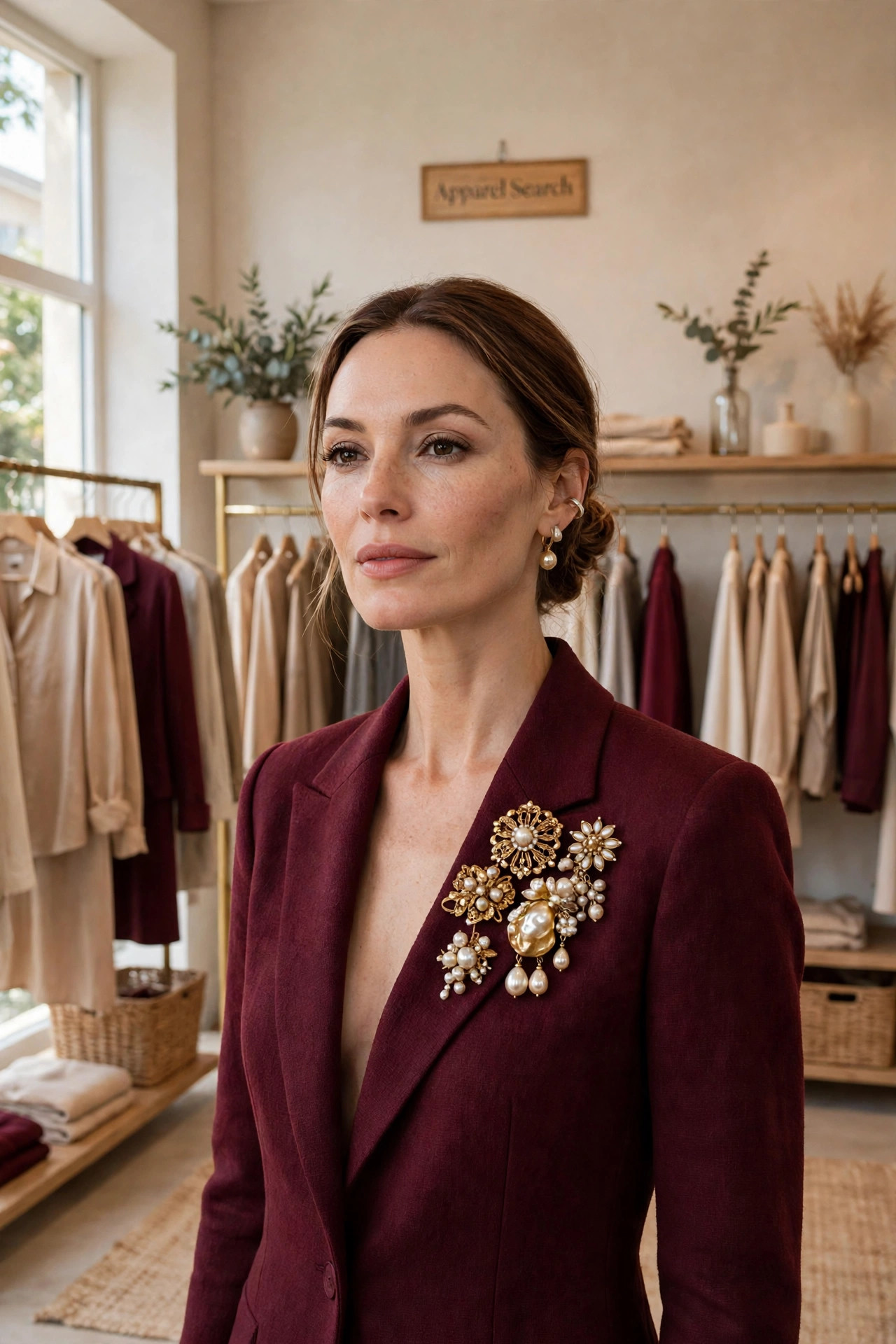
A brooch is a decorative pin fastened to clothing — one of the oldest forms of jewelry, as the brooch definition traces from ancient fibulae to the jeweled pins of today. After years when necklaces and earrings carried most outfits, brooches are back on runways and red carpets, pinned to lapels, necklines, scarves and bags, and worn by women and men alike.
The revival makes sense. A brooch works on clothes you already own: it changes a plain coat, rescues a simple dress and personalises a blazer without altering a seam. It is also movable — the same piece can sit at a shoulder one day and close a cardigan the next. This hub covers types and sizes, choosing by fabric weight, and one focal pin versus a cluster. For step-by-step placement, see how to wear a brooch.
Search Apparel Search
Types & Sizes
Types and Sizes: From Bar Pins to Statement Pieces
The family is wider than the classic round pin. Bar brooches are slim horizontal pins that suit lapels and necklines. Cameo brooches carry a carved profile and read vintage at a glance. Enamel and figural brooches — flowers, insects, animals, initials — bring colour and personality, and connect to the long tradition surveyed on the brooches and necklaces page. Scatter pins are small pins sold or worn in groups, while a statement brooch is one large, high-contrast piece designed to be seen across a room.
Size is a styling decision too. Small pins, roughly under an inch, read as punctuation — neat on a collar point or hat band. Medium brooches are the everyday workhorses for lapels and necklines. Large brooches need plain, structured fabric beneath them, so the eye lands on the jewel rather than a pattern fighting it. Weight follows size: a heavy piece asks for substantial cloth.
Fabric First
Choosing by Fabric Weight
Match the pin to what will carry it. Heavy brooches belong on coats, tweed, denim jackets and structured blazers — fabrics with body that will not sag under the metal. Medium brooches suit knitwear, shirt collars and the lapel of an unlined jacket, especially when the pin passes through two layers for support. Light, delicate pins are the only safe choice for silk, chiffon and fine jersey, and even then a backing pad behind the cloth spreads the load and protects the weave.
A quick test: pin the brooch on, then move. If the fabric pulls, puckers or the brooch tips forward, the pairing is wrong — choose a lighter pin or a stronger garment. The companion how-to page covers fastening methods, backings and magnetic converters for fragile fabrics.
One or Many
One Focal Point or a Cluster?
Choose a single piece when the outfit is already busy, when the brooch itself is large or sparkling, or when the occasion is formal. One pin at the lapel, shoulder or neckline creates a clear focal point and leaves necklaces — or a deliberately bare neck — to do the rest. If you do pair a brooch with a necklace, the spacing advice in the necklace layering guide applies in reverse: keep the two pieces clearly separated so neither crowds the other.
Choose a cluster when the pieces are small and share a theme — all gold, all pearl, all floral. Group three or five small pins close together on one lapel, one shoulder or one side of a neckline, arranged as a small constellation rather than a straight row. Clusters suit plain, solid-coloured garments best; on a printed fabric the group dissolves into noise. Odd numbers and varied heights keep the arrangement looking collected rather than matched.
Either way, restrain the rest of the jewelry. A brooch is a loud accessory; earrings can stay, but competing statement pieces nearby will fight it.
Heirloom vs New
Heirloom Pieces and New Brooches, Side by Side
The heirloom brooch
What it offers: history, sentiment and often craftsmanship — hand-set stones, enamel work and clasps from another era — that new pieces rarely match at the same price.
Handle with care: check the clasp before wearing; older rollover and C-clasps can loosen. A jeweler can add a safety catch. Wear heirlooms on structured garments, insure valuable pieces, and store them separately so stones do not scratch each other.
The new brooch
What it offers: secure modern clasps, lighter construction, magnetic converter options and freedom to experiment — a playful enamel pin costs little and risks less.
Choose well: look for a firm pin stem, a clasp that closes with a positive click and smooth edges that will not snag knitwear. Costume pieces benefit from the same cleaning basics as other fashion jewelry.
Many collections mix both: a grandmother’s cameo for formal days, new scatter pins for everyday jackets. Antique context is in the antique jewelry guide, and men have their own branch in the men’s brooches and lapel pins guide. However a brooch arrives in your drawer — wear it. A pin kept in a box decorates nothing.
Questions
Common Questions
What is the difference between a brooch and a pin?
A brooch is a decorative pin designed to be fastened to clothing, usually with a hinged pin stem and clasp on the back. In everyday use the words overlap: brooch tends to mean the larger, more ornamental or jeweled pieces, while pin covers smaller and simpler designs, including scatter pins and lapel pins.
Can a brooch damage clothing?
It can if the pairing is wrong. A heavy brooch on silk or fine jersey can pull the weave and leave pin holes, so match the weight of the pin to the weight of the fabric, pin through two layers where possible, and use a backing pad or a magnetic converter on delicate cloth.
How many brooches should you wear at once?
Either one focal brooch or a small cluster of three to five related small pins. One large piece makes a clear statement; a cluster works when the pins share a metal, colour or theme and are grouped closely on one lapel, shoulder or neckline rather than scattered across the outfit.