Apparel Search Business Guides
Choosing a Pop-Up Shop Location
Vacant storefronts, shop-in-shop corners, markets and mall kiosks — and why the right crowd matters more than the rent.
More pop-ups fail on location than on any other single decision — not because the space was ugly, but because the people walking past it were never going to buy. A pop-up has no time to build a reputation or be discovered gradually; it inherits, for a few days or weeks, the exact foot traffic of its address and its neighbors. Choosing well is therefore less about finding a pretty shop and more about matching a flow of people to a product. This page compares the main space types and the terms that come with each, as part of our pop-up shop guide.
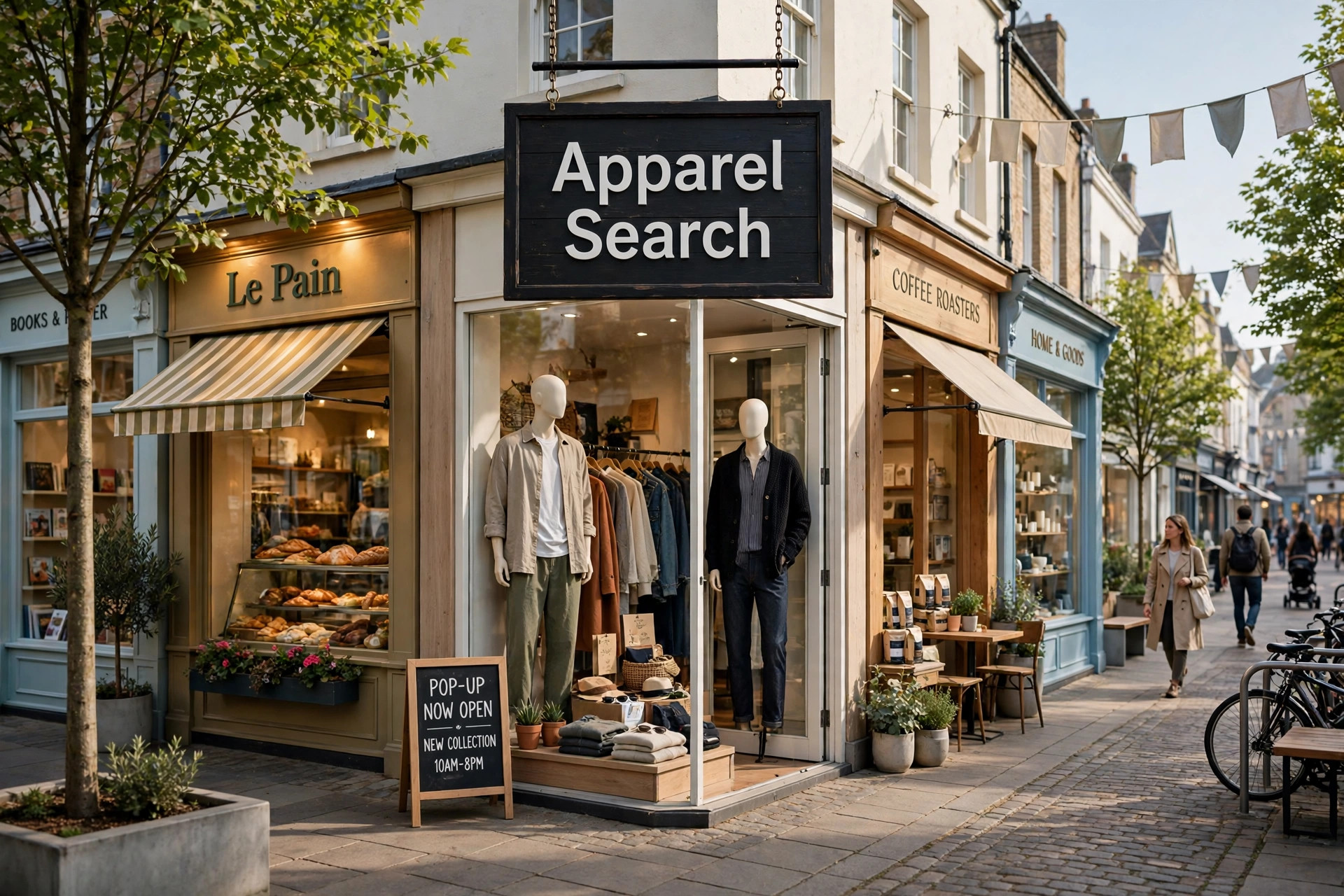
The Main Location Types
Vacant Retail Space
The classic pop-up: an empty shop, taken on a short license or short lease. You get a real storefront — window, door, your name over both — and full control of the interior, in exchange for doing all the fit-out yourself and carrying the highest costs of any format. Landlords with empty units often welcome short occupants: a trading shop makes the unit easier to let long-term, and some rent reflects that. Availability is best where vacancy is highest — which is not always where the shoppers are, so judge the street, not just the unit.
Shop-in-Shop: A Corner Inside Another Store
A defined space inside a trading shop whose customers already resemble yours. The host provides foot traffic, staff presence, power, often fixtures and a till arrangement; you provide stock, branding and usually a flat fee, a percentage of sales, or both. It is the lowest-risk way to learn physical retail — no lease, no empty-shop fit-out — and the audience research is built in: if the host's customers do not buy, that is a genuine finding about fit. The constraints are real too: the host's hours, the host's rules, and a ceiling on how much of the space your brand can claim.
Markets, Fairs and Event Stalls
The lightest format: a stall or pitch for a day, a weekend or a season of market days. Fees are the lowest in this guide, setup is measured in hours, and the crowd arrives in a buying mood. The trade-offs are weather, brevity and fit — a craft market crowd, a food-led festival crowd and a vintage fashion crowd are three different audiences wearing the word 'market' as a disguise. Choose the event by its established audience, not its pitch fee, and treat a good market as both a selling day and the cheapest customer research in retail.
Mall Kiosks and Common-Area Spaces
Malls sell certainty: enclosed traffic in all weathers, long hours and a shopper who arrived intending to shop. A kiosk, cart or small in-line unit on a short agreement puts you in that flow without a lease. The costs sit at the higher end for the space you get, and the rulebook is the strictest of any format — approved fixtures, signage limits, set hours, sometimes required staffing levels. For accessories, gifting-led ranges and anything bought on impulse, the mall's passing trade can outperform a quieter street at several times the rent per square foot.
Foot Traffic Is Not Enough: Fit Is What Counts
A busy pavement of the wrong people is worth less than a quiet one of the right people. Before signing for any space, stand outside it at your intended selling hours — a weekday lunch hour, a Saturday afternoon — and count honestly: who is walking past, at what pace, carrying which bags, going where? The neighboring shops are the best evidence available: businesses survive on the street's actual customers, so a street of shops serving your shopper is a street that can feed you, and a street of shops serving someone else is a warning no rent discount should override. Note the daypart pattern too — office districts empty on weekends, market streets peak on market days, and a pop-up's short life means a mistimed week cannot be averaged away.
The Short-Stay Terms to Nail Down
- License or lease, and exact dates. Which legal form, which days are yours — and whether set-up and teardown days are inside the paid period or added to it.
- The total money. Fee, deposit, cleaning, utilities and any percentage-of-sales clause, written as numbers, plus when each payment falls due and when the deposit returns.
- What is included. Power, lighting, heating, internet, fixtures, storage space, restroom access, parking or loading for stock deliveries.
- Signage rights. What you may put in the window, on the building and on the pavement — some districts and malls regulate all three, and signage is a pop-up's main advertising.
- Access and hours. When you can get in to build, the hours you must or may trade, and who holds keys and alarm codes.
- Extension and exit. What happens if it works — can you extend, at what price — and what condition the space must be returned in, with what notice if either side ends early.
Questions to Ask the Landlord or Host
- What was here before, and why did they leave? The honest answer — or the evasive one — tells you about the space, the street and the landlord in a single exchange.
- What foot traffic does the space see, and when? Landlords quote the best hour of the best day; ask for the pattern across the week, then verify it with your own visit at trading hours.
- What signage and window dressing am I allowed? Window rights, pavement boards, banners and hours of illumination decide how findable you are.
- What exactly is included in the price? Utilities, internet, fixtures, cleaning, storage and parking — itemized, so the comparison between two spaces is real.
- What are the set-up and teardown arrangements? Access times, loading, waste removal and the condition standard for handing the space back.
- If it goes well, can I extend or return? A successful pop-up often earns an invitation back for the next season — worth agreeing the shape of that while everyone is friendly.
The Cheap Space Trap
The most expensive pop-up space is the cheap one in the wrong place. Rent is a fixed number you can see; the wrong audience is a cost you pay in unsold stock, wasted days and a false conclusion — 'our product does not sell in person' — drawn from a street that never held your customer. If the budget forces a choice between a smaller presence in the right flow and a grand one outside it, choose the flow every time.
Common Questions
What is the best location for a clothing pop-up shop?
The location where your specific customer already walks, at the hours you will trade. That is usually a street or venue whose existing shops serve the same shopper — their survival is proof the audience exists there. Raw foot traffic misleads: a packed commuter pavement converts worse than a modest flow of people out shopping for pleasure. Visit candidate spaces at your actual selling hours, count the right people rather than all people, and let that decide.
Is a mall or a street storefront better for a pop-up?
Each has a genuine case. A mall offers enclosed, all-weather traffic of people who arrived to shop, at the price of higher fees for the space and a strict rulebook on fixtures, signage and hours. A street storefront offers character, window presence and control, but its traffic depends on the street, the weather and the neighbors. Impulse-friendly and gift-led ranges often do better in malls; distinctive brands with their own following usually do better — and learn more — on a street.
What is a shop-in-shop pop-up?
A shop-in-shop pop-up is a branded space inside an existing, trading store: a rail, a table or a defined corner, run for an agreed period in exchange for a flat fee, a percentage of sales, or both. The host store provides the foot traffic, the premises and often the till and staffing; the brand provides stock and presentation. It is the lowest-cost, lowest-risk format for testing physical retail and audience fit, in exchange for sharing control over hours, space and presentation.
How far ahead should I book a pop-up space?
For a good storefront in a good district, start looking eight to twelve weeks before your dates — landlords and space marketplaces handle short lets on that horizon, and the best units go early. Markets, fairs and malls often book a season or more ahead for peak dates. Booking late restricts you to what is left, which is usually what is left for a reason; the exception is a genuinely opportunistic vacancy, which rewards brands ready to move in days.
Back to the Pop-Up Shop Guide
Why brands open pop-ups, the planning timeline, and the cost and design guides that complete the project.