Children's Infant Boys Clothing Guide
Where the apparel guide treats the wardrobe as a department, this guide treats infant boys' clothing as the garments themselves: what a baby boy wears in a day, how the pieces go together, and which construction details decide whether a piece is a pleasure or a daily wrestling match. The day wardrobe has three layers of decision - the base that touches skin, the outfit that shows, and the warm or weather layer on top - and boys' clothing succeeds when all three are chosen for a baby who is dressed lying down, changed often, and carried against a shoulder.
Shop Children's Infant Boys Clothing Now
Shop Children's Infant Boys Clothing on Amazon Shop Children's Infant Boys Clothing on eBayThe Amazon and eBay links on this page are affiliate links. If you make a purchase through them, Apparel Search may earn a commission.
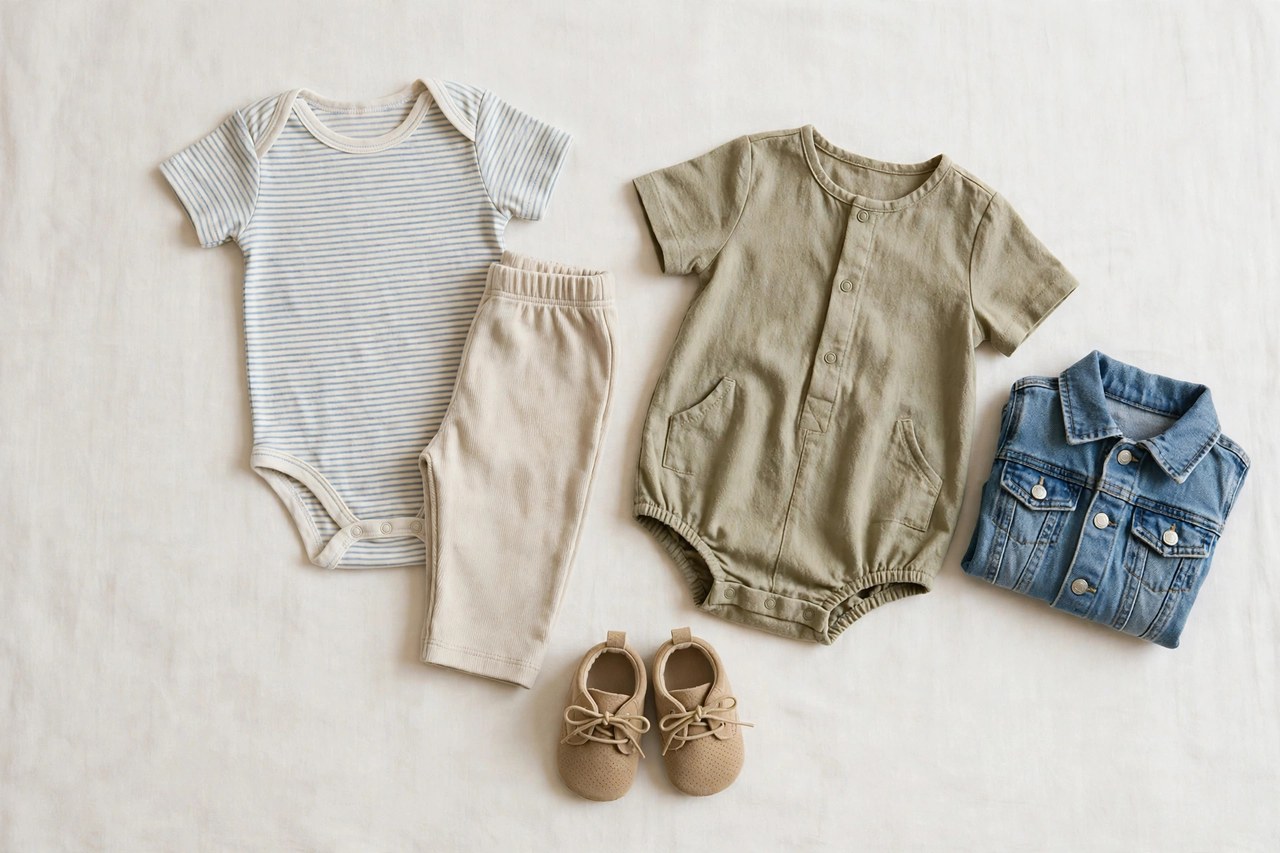
Where the apparel guide treats the wardrobe as a department, this guide treats infant boys' clothing as the garments themselves: what a baby boy wears in a day, how the pieces go together, and which construction details decide whether a piece is a pleasure or a daily wrestling match. The day wardrobe has three layers of decision - the base that touches skin, the outfit that shows, and the warm or weather layer on top - and boys' clothing succeeds when all three are chosen for a baby who is dressed lying down, changed often, and carried against a shoulder.
The base layer is the bodysuit or a soft tee, worn under everything and alone in warm rooms. The outfit layer for boys runs to rompers and one-pieces in the first year, then separates - tops with pants, shorts or overalls - as the baby sits, crawls and stands. The change from one-piece dressing to separates is the big clothing transition of the second year, and it is driven by mobility, not fashion.
Garment by Garment: What Works for Boys
Rompers and one-pieces dominate the crawling months because they cannot ride up, come apart, or leave a bare midriff on a cold floor. Look for inseam snaps that open the whole leg line for changes, shoulder snaps or envelope necks that pull down over the body after an accident instead of up over the face, and fabric with enough stretch to go over a cloth or bulky diaper. Overalls earn their place from about six months: denim or corduroy overall straps stay on shoulders better than most, and the garment survives crawling abrasion that destroys soft pants knees.
Tops for boys run from lap-shoulder tees to the small checked shirt for occasions; the practical rule is fastenings a parent can work one-handed and half-asleep. Pants need full elastic waists - mock flies and button fronts on baby boys' jeans are decoration that costs changing time - and reinforced or double-layer knees extend a crawler's pair from weeks to months. Socks with grip soles bridge the gap between socks and shoes for new standers on hard floors.
Sizing Boys' Clothing Honestly
Month labels are averages, and boys sit at the heavier, longer end of them more often than not. Dress the baby you have: if his length is at the top of the 3-6 month band, his bodysuits are already straining their snaps, and strained snaps are the signal to move up regardless of the calendar. Weight matters most for pants waists and bodysuit length; length matters most for one-pieces and sleepers, where toe room runs out first.
Buy clothing in band-complete mini-wardrobes and resist the single adorable outfit in every size - it photographs well and rotates badly. A working boys' wardrobe of seven bodysuits, four bottoms, three one-pieces, two warm layers and nightwear for a week of laundry cycles outperforms a drawer of twenty unrelated pieces, because every top already matches every bottom within the band's palette.
Washing, Wear and Passing On
Boys' infant clothing is washed on the family setting: warm, often, with stain treatment at the changing table rather than the laundry room - a rinse within the hour saves most weaning and crawling stains. Enzyme pre-treaters handle milk and food; sun-drying helps the rest. Avoid fabric softener on sleepwear, where it reduces the flame resistance the garment was sold with.
Condition checks before handing down concentrate on the boy-specific wear points: knees, seat, snap plackets and overall straps. A garment that passes those four points is genuinely reusable, and infant boys' clothing, outgrown on a three-month rhythm, usually passes - which is why a labelled storage box per size band is the last clothing purchase decision worth making carefully.
Common Questions
When do baby boys move from one-pieces to separates?
As they sit, crawl and stand - usually across the second half of the first year. Separates suit mobility and toilet-era dressing; one-pieces stay best for the pre-mobile months and for sleep.
What fastenings are best on infant boys' clothing?
Inseam snaps for changes, envelope or snap shoulders that pull down after accidents, and full elastic waists. Buttons and mock flies on baby garments cost time and add nothing.
How can you tell a baby boy has outgrown a size?
Snaps that strain or pop, bodysuits that pull at the shoulder, and sleepers with no toe room. Length and weight against the band chart - not the calendar - decide the move up.
More in Children's Clothes Guide I
The I letter hub and the guides closest to this one:
More to Explore on Apparel Search

Looking for Children's Clothing Stores?
This guide helps you choose children's infant boys clothing. To browse where to buy, visit our children's clothing store directory, where you can find retailers that carry them.