Children's Infant Boys Fashion Guide
Infant boys' fashion is the styling layer over the practical wardrobe: the colours, prints, outfits and occasion looks that turn the same bodysuits and rompers into a christening outfit, a photograph, or a miniature version of an adult trend. However wide the fashion industry's directory runs, discussing children's clothing is simply more fun than textile machinery and garment hangers - and boys' baby fashion, with its tiny waistcoats and bow-tie bodysuits, is where that fun concentrates.
Shop Children's Infant Boys Fashion Now
Shop Children's Infant Boys Fashion on Amazon Shop Children's Infant Boys Fashion on eBayThe Amazon and eBay links on this page are affiliate links. If you make a purchase through them, Apparel Search may earn a commission.
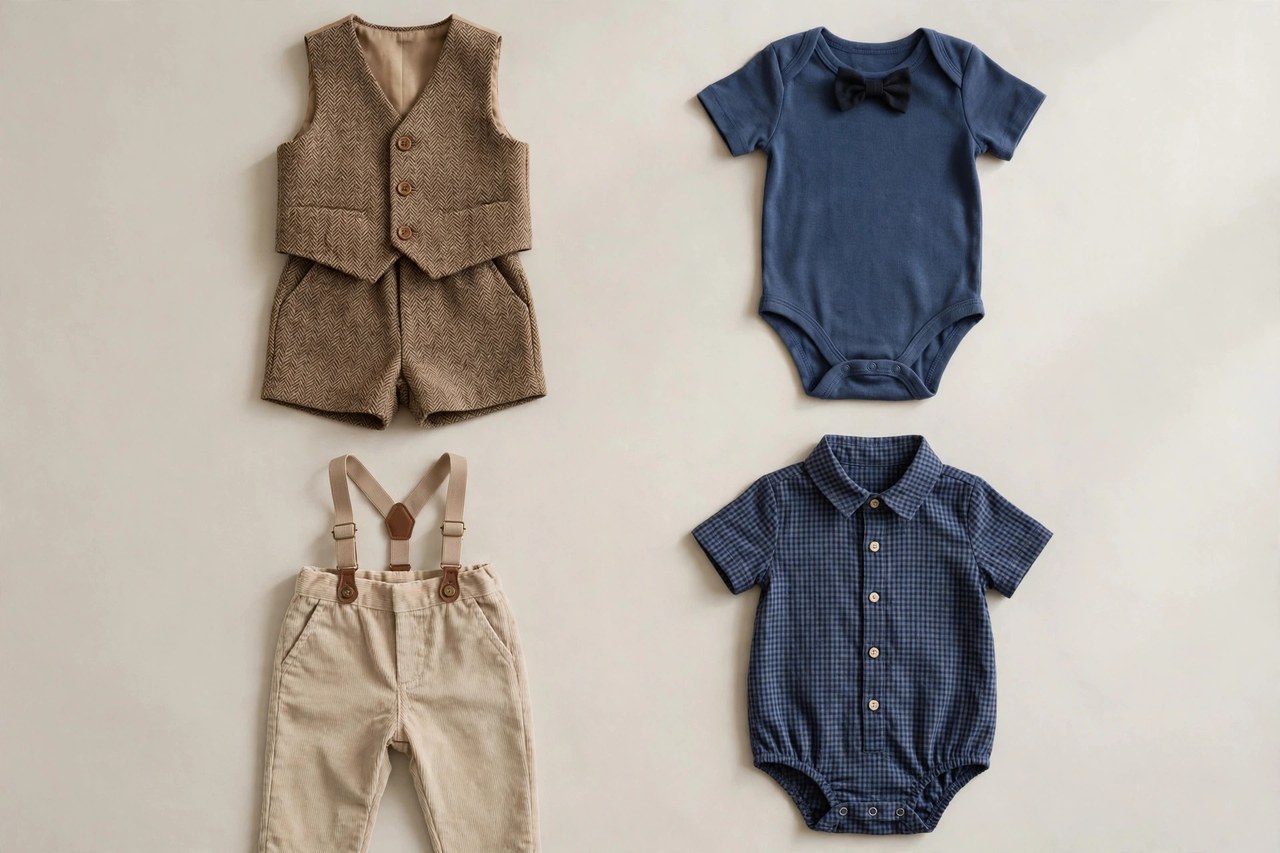
Infant boys' fashion is the styling layer over the practical wardrobe: the colours, prints, outfits and occasion looks that turn the same bodysuits and rompers into a christening outfit, a photograph, or a miniature version of an adult trend. However wide the fashion industry's directory runs, discussing children's clothing is simply more fun than textile machinery and garment hangers - and boys' baby fashion, with its tiny waistcoats and bow-tie bodysuits, is where that fun concentrates.
The fashion cycle for baby boys borrows from three sources: adult menswear shrunk down (checks, chinos, waistcoats, braces), the classic baby palette (blue, grey, sailor and stripe traditions), and character and animal prints from children's media. A season's rail mixes all three, and the parent's styling job is mostly editing: the practical core stays constant while the fashion pieces rotate around it.
Signature Boys' Looks and Occasion Dressing
The enduring boys' occasion look is the miniature gentleman: a bodysuit printed or built with a collar, tie or bow tie, worn with soft trousers, or a romper styled as a waistcoat set. It photographs beautifully precisely because it is a costume of adulthood at one-quarter scale, and it works because the construction is still baby clothing - snaps and elastic under the formality. For weddings and christenings, that hidden practicality matters more than the look: a baby in a scratchy real waistcoat will announce his opinion of fashion before the photographs finish.
Everyday boys' fashion plays with print families - vehicles, dinosaurs, sea creatures, woodland animals, sports motifs - and with stripe and check patterns that survive the whole infant period without dating. Colour fashion moves in waves beyond the blue default: mustard, rust, forest and grey marl have all had their seasons, and buying fashion pieces in the colours that already dominate the baby's practical wardrobe keeps every new piece outfit-compatible.
Photographs, Gifts and the Fashion Economy
Much infant boys' fashion is bought for an audience: the newborn photograph, the family event, the gift. That is a legitimate use - babies are photographed more in their first year than in the next five - but it argues for buying fashion pieces to be worn now, in the size the baby is, rather than as wardrobe building. The exception is the gift received: fashion gifts arrive in newborn sizes in quantity, so a parent registering or hinting should steer fashion givers to the 6-12 month bands, where the baby will wear the statement piece weekly instead of once.
Fashion also explains the second-hand opportunity in boys' clothing. Occasion and photo pieces are worn once or twice and resold in near-new condition at a fraction of their price; the savvy fashion budget buys basics new for wash endurance and fashion pieces second-hand for the camera, reversing the instinct most parents start with.
Keeping Fashion Comfortable
The rule that governs all of it: a fashionable baby garment must still pass the changing-table test - fast access, soft inside surfaces, nothing tight at neck, wrist or ankle, and no detachable small parts. Sequin, button and badge decorations belong on the photograph-only pieces and should be checked for security every wear; prints, colour and cut can carry fashion the rest of the time without any risk at all.
Styled well, infant boys' fashion is modest in cost and high in pleasure: one bow-tie bodysuit, one waistcoat-style romper, a good check shirt and the print families the family enjoys, rotated over a plain practical core. The baby will not remember any of it - the fashion is for the family's album, and the guides in this folder exist to make sure the comfort underneath the album is never traded away.
Common Questions
What is the classic occasion look for a baby boy?
The miniature gentleman: a collar-and-bow-tie bodysuit or waistcoat-style romper with soft trousers. The good versions keep snaps and elastic under the formal look.
Which sizes should fashion gifts for baby boys be bought in?
The 6-12 month bands. Newborn fashion arrives in quantity and is outgrown in weeks; a statement piece in a larger band gets a whole season of wear.
Can fashionable baby boys' clothes still be practical?
Yes, if they pass the changing-table test: fast access for changes, soft inside surfaces, no tight bands, and no detachable small parts. Print and colour carry fashion safely.
More in Children's Clothes Guide I
The I letter hub and the guides closest to this one:
More to Explore on Apparel Search

Looking for Children's Clothing Stores?
This guide helps you choose children's infant boys fashion. To browse where to buy, visit our children's clothing store directory, where you can find retailers that carry them.