Children's Infant & Toddler Dresses Guide
Dresses are the most traditional garment in the baby girl's wardrobe and the one whose practicality changes fastest with age. For a carried infant, a dress is a complete, comfortable outfit. For a crawler, it is an obstacle course worn around the knees. For a walking toddler, it becomes practical again over leggings and shorts. This guide follows that arc, because buying dresses well is mostly about timing them to the mobility stage rather than the calendar of occasions.
Shop Children's Infant & Toddler Dresses Now
Shop Children's Infant & Toddler Dresses on Amazon Shop Children's Infant & Toddler Dresses on eBayThe Amazon and eBay links on this page are affiliate links. If you make a purchase through them, Apparel Search may earn a commission.
Dresses are the most traditional garment in the baby girl's wardrobe and the one whose practicality changes fastest with age. For a carried infant, a dress is a complete, comfortable outfit. For a crawler, it is an obstacle course worn around the knees. For a walking toddler, it becomes practical again over leggings and shorts. This guide follows that arc, because buying dresses well is mostly about timing them to the mobility stage rather than the calendar of occasions.
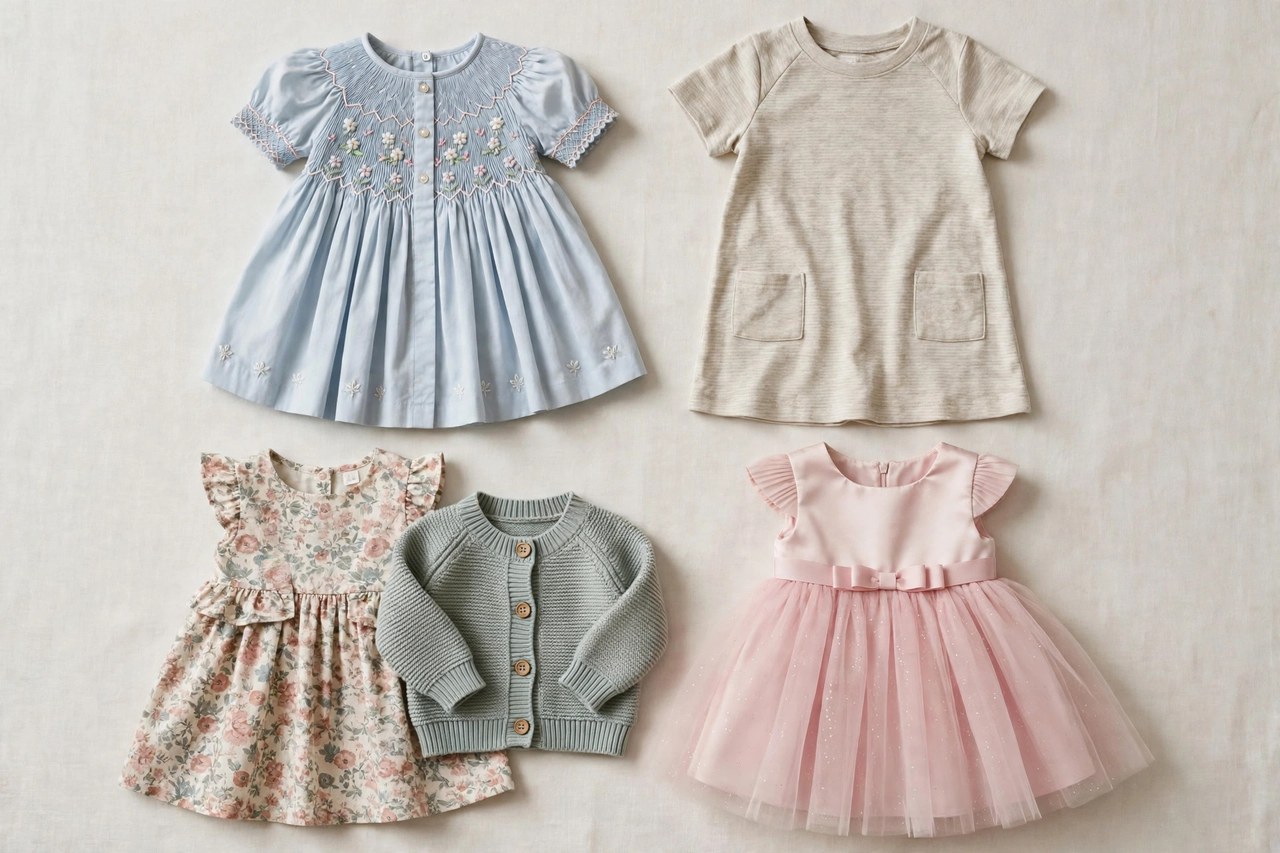
The forms repeat across the sizes: the bodysuit dress with its base built in, the classic dress with bloomers or a diaper cover, the jersey play dress cut like a long tee, and the occasion dress with its smocking, sashes and layers. Each form is a different answer to the same question - how a skirt garment works on a body that lies, crawls, sits and toddles.
Dresses by Mobility Stage
Before mobility, choose freely: long dresses, heirloom pieces and elaborate sets all work on a baby who is held, and this is the stage to wear the gifted finery while it fits. The crawling stage wants dresses short, soft and out of the knee line - or benched until walking. A dress that traps a crawler teaches her to hate the category, and the fix is a season of rompers and leggings, not a battle at every dressing.
Walkers reopen the wardrobe: dresses return with leggings, bike shorts or bloomers underneath for slides and climbing frames, and lengths settle at or above the knee for safe stairs. Twirl becomes a selection criterion the toddler applies herself, and a skirt that spins is, from the wearer's side of the transaction, a functional feature.
Construction and Fit
Empire waists dominate baby dresses because they fit every torso shape in the band and leave growth room below. Smocking adds elastic give across the chest; shirring and sashes forgive the rest. Necklines should open wide - back buttons, shoulder snaps - because a dress goes over the head of a child with opinions, and inside finishes at the waist seam and armholes decide whether she keeps it on.
Fabric divides the category: jersey and cotton lawn for play and everyday, poplin and seersucker for smart summer, velvet, taffeta and sateen for occasions. Judge occasion dresses by their inside, not their outside - a lined bodice with covered seams is comfort engineering, while a net overskirt joined with an exposed scratch seam is a dress that comes off before the cake.
Care and the Occasion Economy
Play dresses wash with the family laundry; occasion dresses go gentle and cold, inside out, with sashes and detachable bows removed first. Smocked and heirloom pieces earn a hand wash and flat dry - they are the wardrobe's keepsakes in waiting, and the one or two a family keeps should be cleaned before they are boxed, never after storage has set a stain.
Buy occasion dresses last in the size-band shop and closest to the event: they are the most gifted, the most photographed and the least re-worn category in the wardrobe, and their second-hand market - worn once, immaculate - is the smartest money in baby girls' clothing.
Common Questions
When are dresses impractical for babies?
During the crawling stage, when a skirt bunches under the knees. Rompers and leggings cover those months; dresses return, over leggings or shorts, once she walks.
What is the most practical baby dress style?
The bodysuit dress - a dress with the base layer built in - for infants, and the jersey play dress for toddlers. Both dress in one step and wash like everyday clothes.
How should an occasion dress for a baby be judged?
By its inside: a lined bodice, covered seams and soft armhole finishes. An exposed scratchy seam guarantees the dress comes off early, however pretty the outside.
More in Children's Clothes Guide I
The I letter hub and the guides closest to this one:
Looking for Children's Clothing Stores?
This guide helps you choose children's infant & toddler dresses. To browse where to buy, visit our children's clothing store directory, where you can find retailers that carry them.