Children's Infant Girls Clothing Guide
This guide is about the garments themselves in a baby girl's wardrobe: how dresses, rompers, bodysuits, leggings and layers actually work on a baby who is lying, sitting, crawling and standing across her first two years. Where the apparel guide counts the department, the clothing guide asks the wearing questions - what goes under a dress in January, which neckline survives a blowout, and why the romper, not the dress, is the true workhorse of the girls' baby wardrobe.
Shop Children's Infant Girls Clothing Now
Shop Children's Infant Girls Clothing on Amazon Shop Children's Infant Girls Clothing on eBayThe Amazon and eBay links on this page are affiliate links. If you make a purchase through them, Apparel Search may earn a commission.
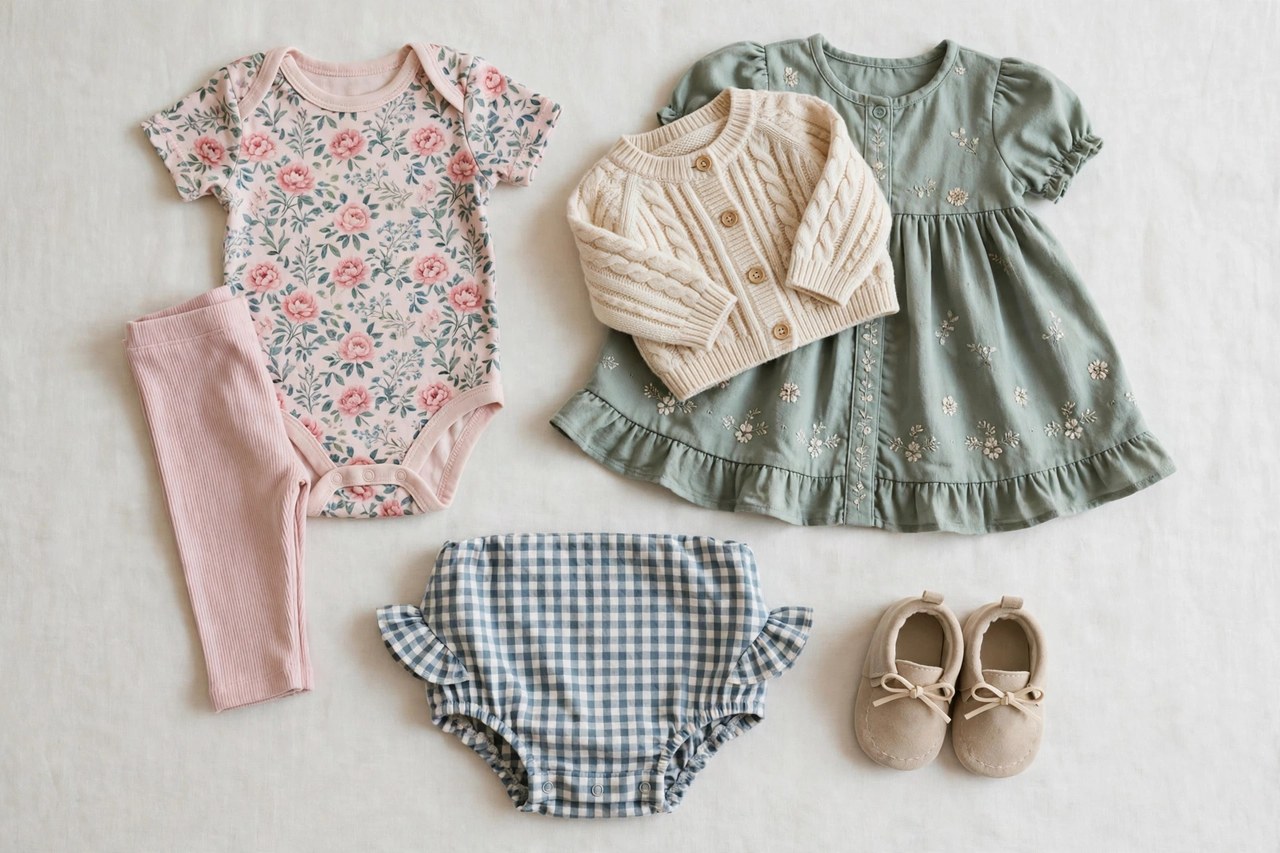
This guide is about the garments themselves in a baby girl's wardrobe: how dresses, rompers, bodysuits, leggings and layers actually work on a baby who is lying, sitting, crawling and standing across her first two years. Where the apparel guide counts the department, the clothing guide asks the wearing questions - what goes under a dress in January, which neckline survives a blowout, and why the romper, not the dress, is the true workhorse of the girls' baby wardrobe.
A girl's day clothing divides by mobility stage. The pre-mobile months allow anything soft, including long dresses and elaborate sets. The crawling months demand knees-down practicality: leggings, pants and rompers, with dresses shortened or saved for being carried. The standing and walking months bring back skirts and dresses with shorts or leggings beneath, plus shoes that change from decoration to equipment.
The Garments, Worn in Real Life
The bodysuit is the foundation, worn under dresses to keep them in place, under cardigans, and alone with leggings. Dresses for babies are built in three practical forms: the bodysuit dress, with the base built in, which never separates or rides up; the classic dress with bloomers or a diaper cover, the occasion standard; and the play dress in jersey, cut for movement and washed like a tee. Rompers do the dress's visual job - one piece, finished look - with a trouser bottom that crawls, climbs and sits in a highchair without negotiation.
Leggings are the girls' wardrobe multiplier: under dresses in winter, under tunics, alone with bodysuits, and as the layer that turns a summer dress into an autumn outfit. Buy them in the palette of the dresses they serve. Cardigans play the same role on top - one white or cream cardigan finishes every occasion dress a baby girl owns, and earns its drawer space weekly.
Fit Details That Matter for Girls
Necklines and fastenings follow the same baby rules as any infant clothing - envelope necks, back or shoulder snaps for pull-down changes - with two additions from the girls' rail. First, check decorative trims at the neckline and cuffs against skin: lace and embroidery that look soft can scratch a neck fold, and the inside finish is what the baby experiences. Second, waistlines on dresses should sit where the pattern intends across the size band; an empire line forgives everything, which is why it dominates baby dress design.
Sizing runs by the month bands and the baby's weight and length, with dresses the one category where buying a band ahead for a dated event is a calculated risk - take the style with smocking or a sash, and keep the receipt. Tights size by length and are the least forgiving item in the wardrobe; buy them last, in the current band, in pairs.
Washing and Rotation
Girls' infant clothing washes like all baby clothing - frequently and warm - with the delicate minority (occasion dresses, smocked pieces, anything with a bow that matters) diverted to a gentle cold cycle and flat or line drying. Turn printed and appliquéd pieces inside out; the appliqué edge is the first thing a hot dryer lifts.
Rotation is the quiet skill: with dresses especially, parents re-wear the favourite and strand the rest until it is outgrown unworn. A weekly pass through the drawer, promoting the unworn pieces to the front, gets the whole wardrobe worn - and the photographs varied - before the band changes and the drawer turns over again.
Common Questions
Are dresses practical for crawling baby girls?
Not for floor time - they bunch under the knees. Rompers and leggings outfits are the crawling wardrobe; dresses work for carried time and occasions, or with leggings as she begins to walk.
What is a bodysuit dress?
A dress with a bodysuit built into it, so the top, skirt and base layer are one garment. It never rides up or separates, which makes it the most practical dress form for babies.
Which single layer goes with every baby girl's dress?
A plain white or cream cardigan. It finishes occasion dresses, warms play dresses and gets weekly use across the whole size band.
More in Children's Clothes Guide I
The I letter hub and the guides closest to this one:

Looking for Children's Clothing Stores?
This guide helps you choose children's infant girls clothing. To browse where to buy, visit our children's clothing store directory, where you can find retailers that carry them.