Children's Infant & Toddler Jumpers Guide
In American children's clothing, a jumper is a sleeveless dress with a deep armhole and open sides, worn over a top - the garment British English calls a pinafore dress. (The word means a sweater in Britain, which is why this guide's name occasionally confuses; the sweater has its own page in this folder.) The baby jumper is a clever piece of wardrobe engineering: one hard-wearing shell that turns every bodysuit and tee it covers into a fresh outfit.
Shop Children's Infant & Toddler Jumpers Now
Shop Children's Infant & Toddler Jumpers on Amazon Shop Children's Infant & Toddler Jumpers on eBayThe Amazon and eBay links on this page are affiliate links. If you make a purchase through them, Apparel Search may earn a commission.
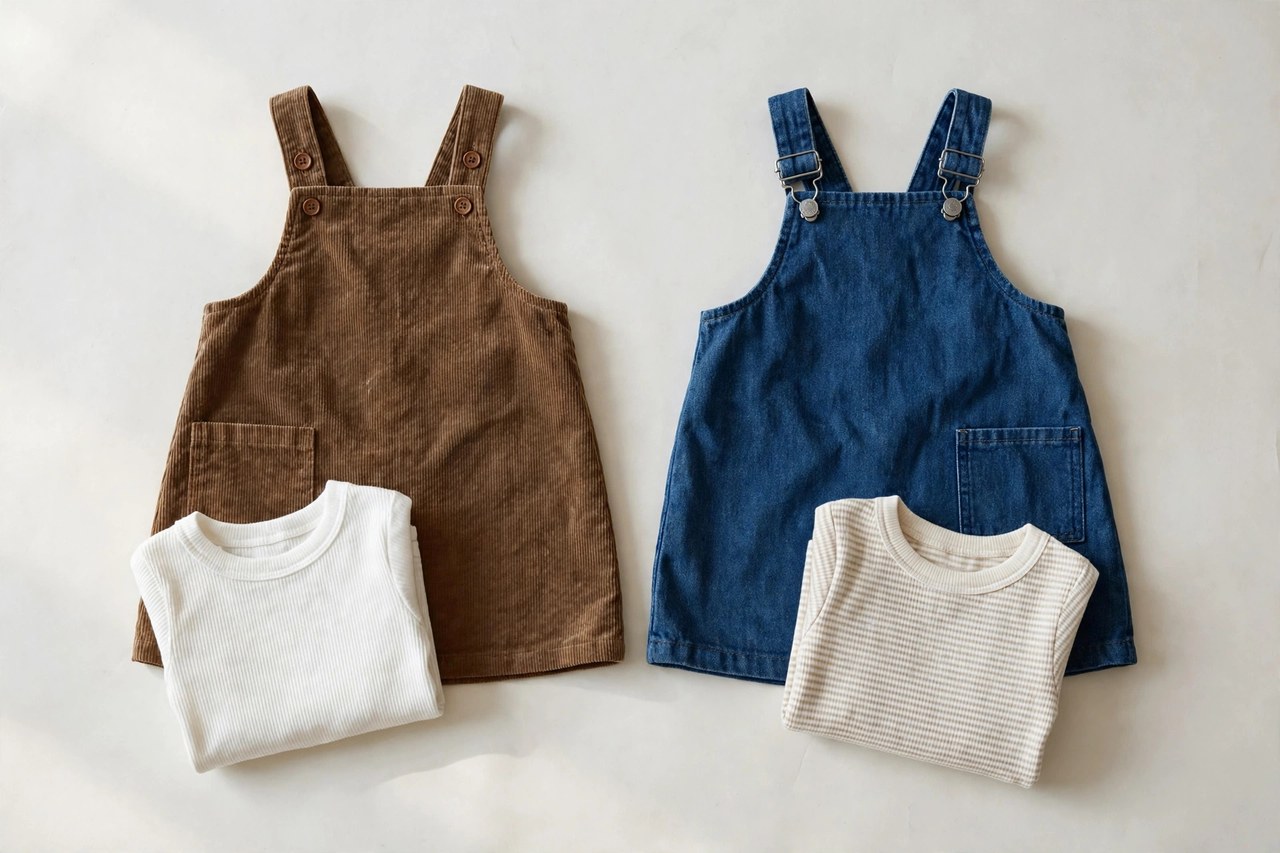
In American children's clothing, a jumper is a sleeveless dress with a deep armhole and open sides, worn over a top - the garment British English calls a pinafore dress. (The word means a sweater in Britain, which is why this guide's name occasionally confuses; the sweater has its own page in this folder.) The baby jumper is a clever piece of wardrobe engineering: one hard-wearing shell that turns every bodysuit and tee it covers into a fresh outfit.
Jumpers for infants and toddlers are built in sturdy fabrics - corduroy, denim, twill, heavier cottons - because the jumper takes the abrasion the layer beneath is spared. A-line cuts dominate, fastened at the shoulders with buttons or snaps, with hems that sit above the knee for crawlers and walkers alike.
Why the Jumper Earns Its Place
The jumper multiplies a wardrobe. Three jumpers over six tops make a rotation that looks like eighteen outfits, and the tops - the cheap, stained, frequently washed layer - take the damage while the jumpers, washed a third as often, stay smart. For nursery and daycare, where a presentable child must survive finger paint and lunch, that division of labour is the whole point.
Temperature control is the second virtue. The same jumper works over a sleeveless bodysuit in September, a long-sleeved tee in November and a thin sweater in January, with tights or leggings added below as the season deepens. Few garments in the baby wardrobe span three seasons; the jumper is the reliable one, which is why it is a classic of the hand-me-down box.
Fit and Fastenings
Fit a jumper by length and shoulder, not by chest - the A-line body forgives everything, but shoulder buttons must sit on the shoulder, and a jumper bought too big slides its armholes down and twists. Shoulder fastenings should be snaps or large, flat buttons a parent can work quickly and a toddler cannot easily undo; decorative front buttons on baby jumpers are a security check waiting to happen and should be pull-tested.
For crawlers, length is a safety dimension: the hem must clear the knees completely. For walkers, an above-knee hem keeps stairs and climbing frames negotiable. Pockets, where they appear, are for treasures and should be checked before washing - the jumper pocket is where the nursery's small objects emigrate to.
Care and Longevity
Corduroy jumpers wash inside out to protect the pile, denim with the dark load, and both improve with a little wear. Shoulder snaps and buttons take the garment's mechanical stress, so inspect them at each wash; a jumper body will outlast its fastenings if they are not maintained, and a replaced button is a two-minute job that doubles a garment's life.
Because jumpers wash less and wear slowly, they are among the best buys in the baby wardrobe per wearing, and among the best second-hand finds. A jumper handed down through three children is not an exception but the design working as intended.
Common Questions
What is a jumper in children's clothing?
In American usage, a sleeveless dress worn over a top - a pinafore. (In British English the word means a sweater, which has its own guide in this folder.)
Why are jumpers practical for babies and toddlers?
One sturdy jumper turns every top beneath it into a new outfit, spans three seasons by layering, and takes the abrasion while the cheaper layer underneath takes the stains.
How long should a toddler's jumper be?
Above the knee - clear of a crawler's knees entirely, and short enough for a walker to manage stairs and climbing frames safely.
More in Children's Clothes Guide I
The I letter hub and the guides closest to this one:
More to Explore on Apparel Search
Looking for Children's Clothing Stores?
This guide helps you choose children's infant & toddler jumpers. To browse where to buy, visit our children's clothing store directory, where you can find retailers that carry them.