Children's Infant & Toddler Sweaters Guide
Sweaters are the knitted layer of the baby wardrobe: cardigans that open at the front, pullovers that go over the head, and knitted hoodies and jackets between the two. In a wardrobe built on cotton jersey, the sweater is the warmth with texture - the layer grandparents knit, photographers love, and parents reach for whenever a bodysuit and a top are not quite enough. (British readers should note this is the garment they call a jumper; the American jumper, a pinafore dress, has its own page in this folder, and the two guides politely ignore each other's vocabulary.)
Shop Children's Infant & Toddler Sweaters Now
Shop Children's Infant & Toddler Sweaters on Amazon Shop Children's Infant & Toddler Sweaters on eBayThe Amazon and eBay links on this page are affiliate links. If you make a purchase through them, Apparel Search may earn a commission.
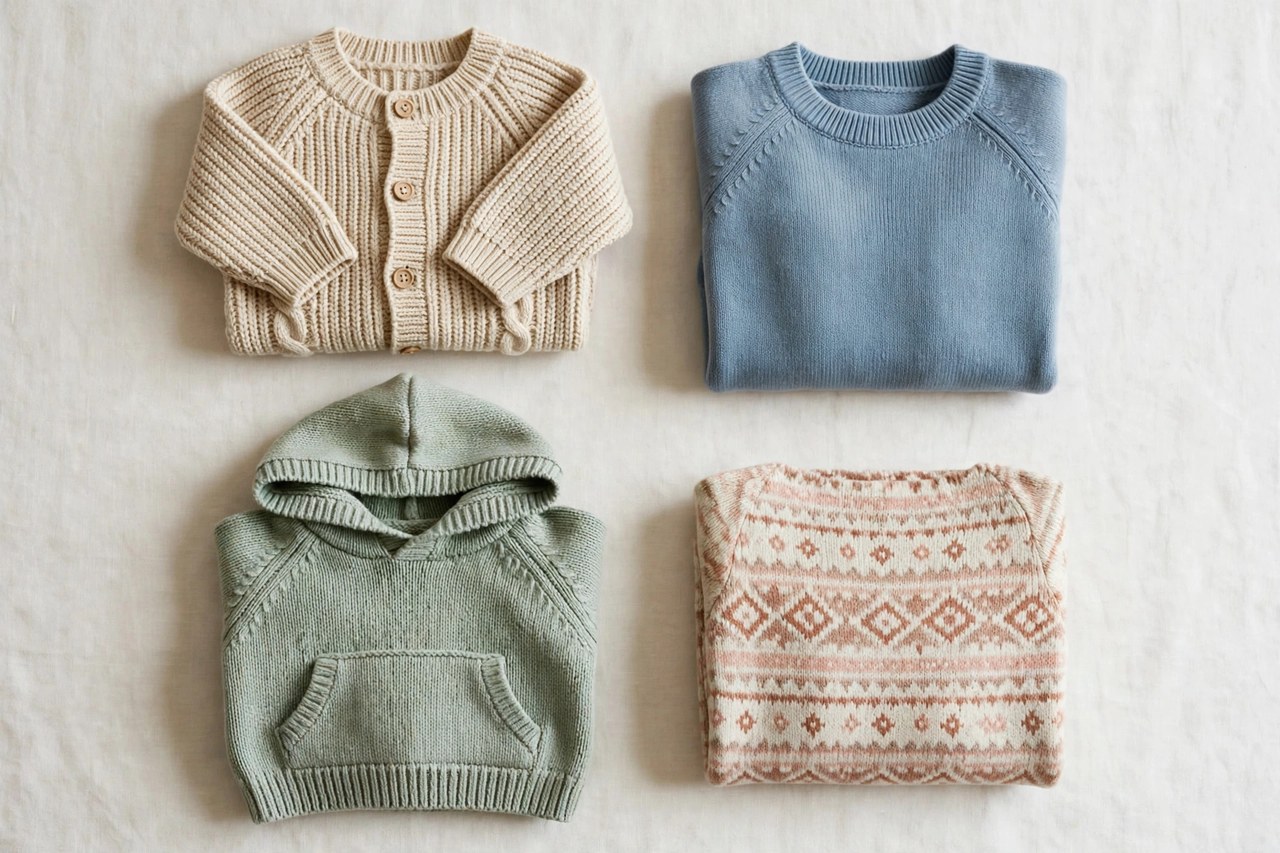
Sweaters are the knitted layer of the baby wardrobe: cardigans that open at the front, pullovers that go over the head, and knitted hoodies and jackets between the two. In a wardrobe built on cotton jersey, the sweater is the warmth with texture - the layer grandparents knit, photographers love, and parents reach for whenever a bodysuit and a top are not quite enough. (British readers should note this is the garment they call a jumper; the American jumper, a pinafore dress, has its own page in this folder, and the two guides politely ignore each other's vocabulary.)
The cardigan is the infant form, for the same reason the zip beats the pullover at 3 a.m.: a front opening goes on and off a sleeping, feeding or protesting baby without crossing the face. Pullover sweaters join the wardrobe as heads and tempers stabilize, usually across the second half of the first year.
Fibres: What Baby Knits Are Made From
Modern baby sweaters are mostly cotton, acrylic, or blends - cotton for softness and washability, acrylic for lightness, warmth and price, blends for the compromise. Wool appears in quality knits and hand-knits, warm and elastic, but it asks for gentler washing and is refused by some skins; a cotton layer beneath settles most wool questions. Whatever the fibre, the inside surface is the specification: seams and pattern floats should lie smooth, because a sweater is worn for hours against a layer thin enough to transmit every ridge.
Hand-knitted sweaters deserve their own note as the wardrobe's heirlooms-in-waiting. Check their fastenings like any baby garment's - buttons on a hand-knit get the pull test with love but without mercy - and photograph the baby wearing them promptly, both for the knitter and because hand-knits are famously sized by optimism.
Fit and Fastenings
A baby sweater fits with ease across the chest and a sleeve that ends at the wrist: the long, sweet cuff of the shop display becomes a hand-covering frustration for a baby discovering her fingers, and a safety consideration for a feeder. Cardigan buttons or snaps should close without strain over the layers beneath - the sweater is sized over the outfit, not instead of it, and a cardigan that only fits over a bare bodysuit will spend the winter open, doing half its job.
Necklines should stretch or open: a crew neck on a pullover sweater needs real give, tested in the shop by a firm two-hand stretch, because it will be tested at home by a tired parent at speed, and the sweater or the morning will tear accordingly.
Care of Knits, Small and Large
Knits wash inside out, in a gentle or standard cycle by fibre, and dry flat or on a low heat: a sweater hung wet stretches at the shoulders, and a sweater dried hot shrinks to a smaller, denser version of itself that fits no one. Cotton knits are the most forgiving; acrylic pills at the rub points and is revived by a fabric shaver; wool follows its label or is hand-washed, by the family's temperament.
Storage is folded, never hung, in the size-band system with the rest of the wardrobe. Sweaters hand down superbly - knits show condition honestly, and a sweater that has survived one baby's winter without pilling to felt will usually survive a second's. Keep one, the best, back as the keepsake; the rest work for a living, in rotation, until the cuffs tell them to stop.
Common Questions
Cardigan or pullover for a baby?
A cardigan for the first months - the front opening goes on without crossing the face. Pullovers join once dressing is calmer, and need a genuinely stretchy neckline.
What are baby sweaters made from?
Mostly cotton, acrylic and blends; wool in quality and hand-knitted pieces. Judge by the inside surface - seams and pattern work should lie smooth against the layer beneath.
How should baby sweaters be washed and stored?
Inside out, gentle or standard cycle by fibre, dried flat or low, and stored folded rather than hung so the shoulders keep their shape.
More in Children's Clothes Guide I
The I letter hub and the guides closest to this one:
Looking for Children's Clothing Stores?
This guide helps you choose children's infant & toddler sweaters. To browse where to buy, visit our children's clothing store directory, where you can find retailers that carry them.