Children's Infant & Toddler Outerwear Guide
Outerwear for infants and toddlers solves a problem adults do not have: the wearer cannot report being cold, cannot adjust a layer, and spends much of the outing immobile in a stroller or carrier, generating no body heat. Baby outerwear therefore insulates more, covers more, and must do it all without bulk that defeats the car seat or the carrier straps. This guide covers the family: fleece jackets, buntings and snowsuits, rain gear, and the hats and mittens that are half the system.
Shop Children's Infant & Toddler Outerwear Now
Shop Children's Infant & Toddler Outerwear on Amazon Shop Children's Infant & Toddler Outerwear on eBayThe Amazon and eBay links on this page are affiliate links. If you make a purchase through them, Apparel Search may earn a commission.
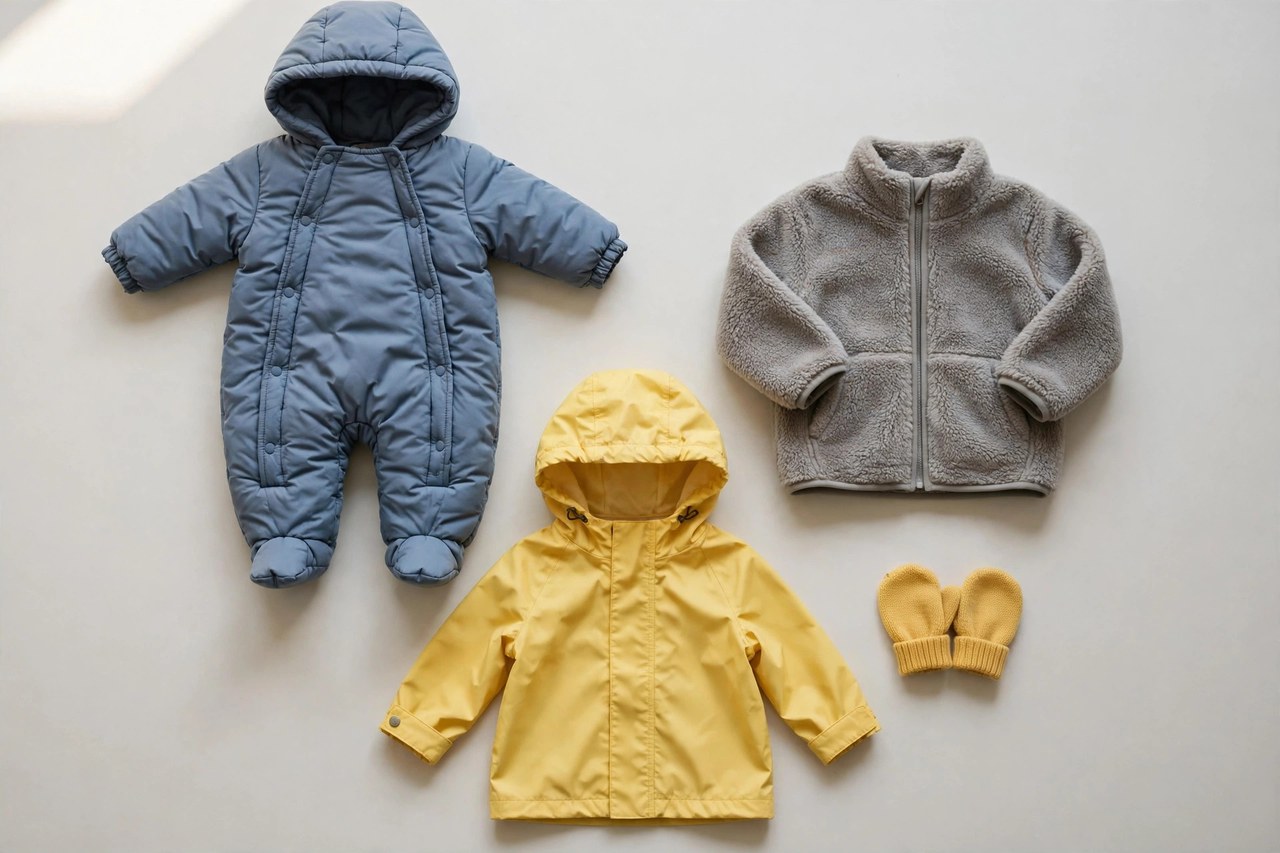
Outerwear for infants and toddlers solves a problem adults do not have: the wearer cannot report being cold, cannot adjust a layer, and spends much of the outing immobile in a stroller or carrier, generating no body heat. Baby outerwear therefore insulates more, covers more, and must do it all without bulk that defeats the car seat or the carrier straps. This guide covers the family: fleece jackets, buntings and snowsuits, rain gear, and the hats and mittens that are half the system.
The first safety rule governs everything: thick, puffy layers must not be worn under car-seat harness straps, because the padding compresses in a crash and leaves the harness loose. The routine is thin layers in the seat, with the coat or a blanket over the buckled harness - a rule that shapes the whole outerwear wardrobe toward layers rather than one enormous garment.
The Pieces by Weather
The fleece jacket or bunting is the everyday piece for cool weather: warm, soft, compressible enough for carriers, and washable. One-piece buntings, with fold-over hand and foot covers, suit the youngest infants who lose mittens and socks on principle. As babies sit and toddlers walk, two-piece systems take over - jacket plus weatherproof pants or a snowsuit - because the wearer now meets the ground personally.
Snow gear is insulation plus a shell that sheds melt-water; rain gear is a shell plus sealed-enough seams, with toddler rain suits and splash pants built for the puddle as a destination rather than an accident. For both, the closure design matters more than the fill power: zips a mittened parent can work, cuffs that close over gloves, and hoods that fit over hats without swallowing the face.
Sizing Outerwear That Is Outgrown by Spring
Outerwear is bought once a season at best, so it is bought with the season's growth inside it: a winter snowsuit purchased in the band the child will wear in January, not the band worn in the October shop. Room to grow is built in by design - extendable cuffs and hems on better toddler pieces literally let down an inch mid-season.
Fit checks are functional: the child must be able to sit, be lifted under the arms, and move both arms forward without the whole garment riding up. Footed buntings need length for a straightened leg in the carrier. And every piece should be tried over the layers it will actually cover - outerwear sized over a bodysuit fails over a sweater.
Care and the One-Season Economy
Outerwear washes less often than any baby category, which is fortunate, since down and synthetic fills want gentle cycles and thorough drying to keep their loft, and waterproof shells want their coatings protected from hot washes and softeners. Spot-clean the week's evidence and save full washes for true need.
Because a season's outerwear is worn for a few months by a child growing in bands, it is the premium category for second-hand buying and the easiest to resell: condition survives a single season almost intact. Buy the expensive piece used, check its zips and cuffs, and the winter budget moves to boots and the second pair of mittens - the ones bought the week the first pair's left half emigrates.
Common Questions
Can a baby wear a puffy coat in a car seat?
No. Thick padding compresses in a crash and leaves the harness loose. Dress the baby in thin layers, buckle the harness snugly, and put the coat or a blanket over the top.
What is a bunting?
A one-piece outerwear garment for infants, often with fold-over covers for hands and feet. It suits the youngest babies; mobile toddlers move to jackets, snowsuits and two-piece systems.
How should toddler outerwear be sized?
For the middle of the season it must survive, with room over real layers. Check sitting, lifting and arm movement, and look for extendable cuffs that release an extra inch.
More in Children's Clothes Guide I
The I letter hub and the guides closest to this one:
More to Explore on Apparel Search
Looking for Children's Clothing Stores?
This guide helps you choose children's infant & toddler outerwear. To browse where to buy, visit our children's clothing store directory, where you can find retailers that carry them.