Children's Infant & Toddler Shoes Guide
Infant and toddler shoes divide by development, not by style: the pre-walker needs a covering, the new walker needs a flexible grip, and the confident toddler needs a real shoe that still bends like a foot. The category is plain - whatever a child is wearing to cover their feet is, for fashion purposes, fine - and the serious content of shoe buying at this age is fit and sole, because a baby's foot is cartilage and growth, easily distorted and quickly outgrowing.
Shop Children's Infant & Toddler Shoes Now
Shop Children's Infant & Toddler Shoes on Amazon Shop Children's Infant & Toddler Shoes on eBayThe Amazon and eBay links on this page are affiliate links. If you make a purchase through them, Apparel Search may earn a commission.
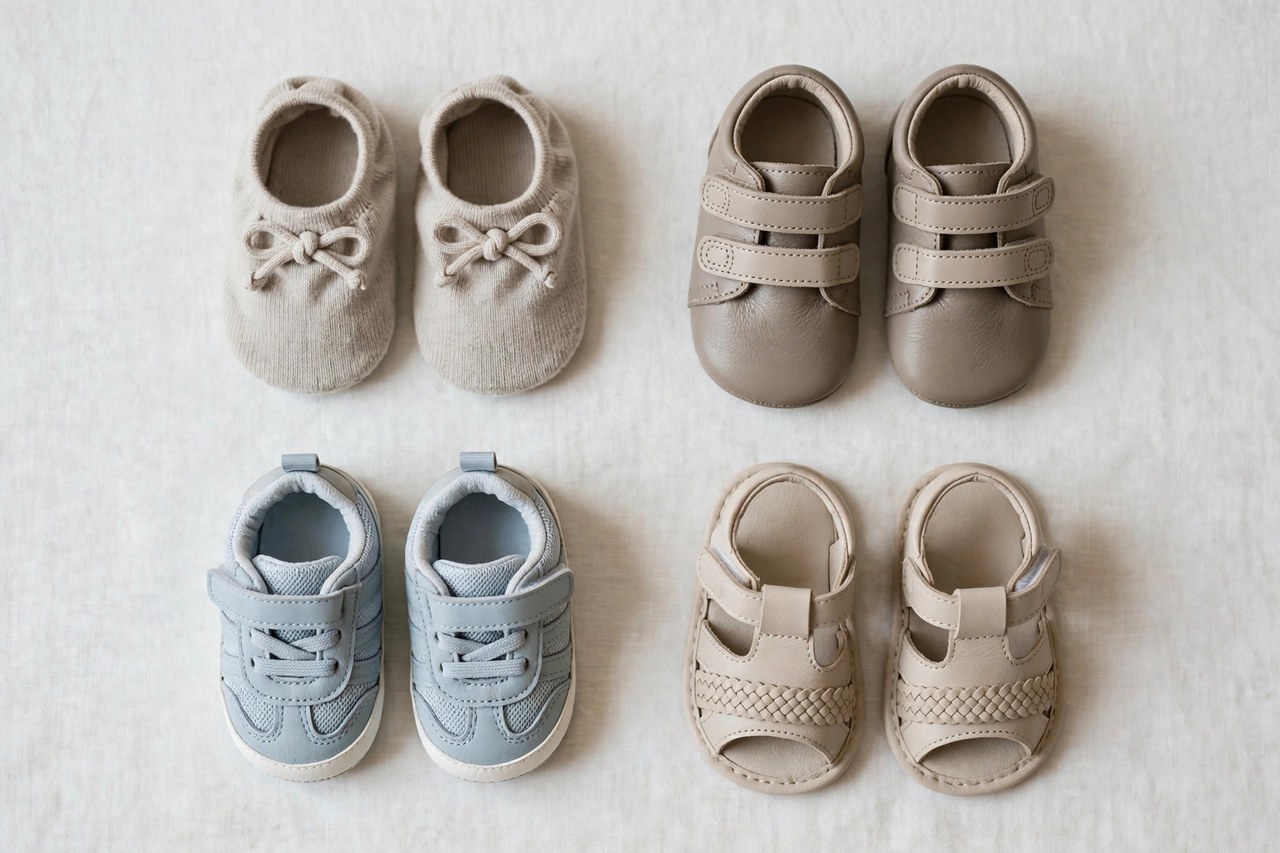
Infant and toddler shoes divide by development, not by style: the pre-walker needs a covering, the new walker needs a flexible grip, and the confident toddler needs a real shoe that still bends like a foot. The category is plain - whatever a child is wearing to cover their feet is, for fashion purposes, fine - and the serious content of shoe buying at this age is fit and sole, because a baby's foot is cartilage and growth, easily distorted and quickly outgrowing.
The stages run: crib shoes and soft booties (decoration and warmth), soft-sole shoes for crawlers and cruisers (protection with ground feel), first walkers with thin flexible soles (grip for new steps), and toddler shoes proper (a structured but flexible shoe for a child who walks everywhere). Skipping stages - rigid soles on a cruiser - teaches the foot nothing good.
Soles, Stages and Ground Feel
A baby learning to walk reads the floor through the sole, and balances by gripping with the toes. Soft and thin soles preserve that information; thick, stiff, high-grip soles muffle it and catch on floors, tripping the walker they claim to protect. The test in the shop is your hand: a first-walker shoe should bend easily at the ball of the foot and twist slightly, like the foot itself.
At home, bare feet or grip socks remain the best footwear for learning on safe floors - shoes are for outside and public ground. Crib shoes and booties, meanwhile, should be judged as clothing: soft, roomy, and secured by a fastening a baby cannot kick off in the first five minutes, which eliminates most slip-on styles from serious consideration.
Measuring and Fitting Fast-Growing Feet
Measure both feet, standing where possible, late in the day, and fit to the larger foot with a thumb's width - about a centimetre - of growing room beyond the longest toe. Infant feet can grow a half size in two to three months, so the fit check is a monthly habit: toes pressed against the end, or red marks at the widest point, mean the shoe is done that week, not that season.
Width matters as much as length in baby shoes: infant feet are wide at the toes and narrow at the heel, and a shoe that squeezes the forefoot to keep the heel seated is the wrong shape, full stop. Fastenings - straps, laces, elastic - should hold the shoe on without compressing the top of the foot, and socks belong in the fitting, since the shoe will be worn over them.
Care, Rotation and Hand-Downs
Shoes for this age are washed rarely (a wipe and an airing), rotated where possible so a pair dries between wearings, and retired by fit long before they wear out. That last fact makes baby shoes the most tempting hand-me-down in the wardrobe - and the one to accept with the most care: a shoe moulds to its first wearer's foot, so used shoes suit occasional wear better than a new walker's daily pair, and any shoe whose sole has worn unevenly should be declined.
Buy the daily walker new and fitted, accept the party shoes second-hand, keep two pairs in rotation if the budget allows, and measure monthly. The feet inside are doing the fastest growing of a lifetime, and the shoes are the one category where the calendar genuinely cannot be trusted at all.
Common Questions
What shoes does a baby learning to walk need?
Thin, flexible soles that bend at the ball of the foot, so the toes can grip and feel the floor. At home on safe floors, bare feet or grip socks are better still.
How much growing room should baby shoes have?
About a centimetre - a thumb's width - beyond the longest toe, fitted to the larger foot. Check monthly; infant feet can grow a half size in two or three months.
Are hand-me-down shoes all right for toddlers?
For occasional wear, usually. A shoe moulds to its first wearer, so the daily pair for a new walker should be new and fitted, and any unevenly worn sole should be declined.
More in Children's Clothes Guide I
The I letter hub and the guides closest to this one:
More to Explore on Apparel Search
Looking for Children's Clothing Stores?
This guide helps you choose children's infant & toddler shoes. To browse where to buy, visit our children's clothing store directory, where you can find retailers that carry them.