Children's Toddler Shoes Guide
Toddler shoes are footwear for the one-to-three stage — a child between the ages of one and three — and specifically for its defining event: learning to walk, then walking everywhere. This page covers toddler shoes alone as a product category: first-walker design, soles, fastenings, measuring and the rapid replacement cycle. The companion toddler clothing page in this letter covers the garments; the infants and toddlers shoe guide covers the younger end of the same family.
Shop Children's Toddler Shoes Now
Shop Children's Toddler Shoes on Amazon Shop Children's Toddler Shoes on eBayThe Amazon and eBay links on this page are affiliate links. If you make a purchase through them, Apparel Search may earn a commission.
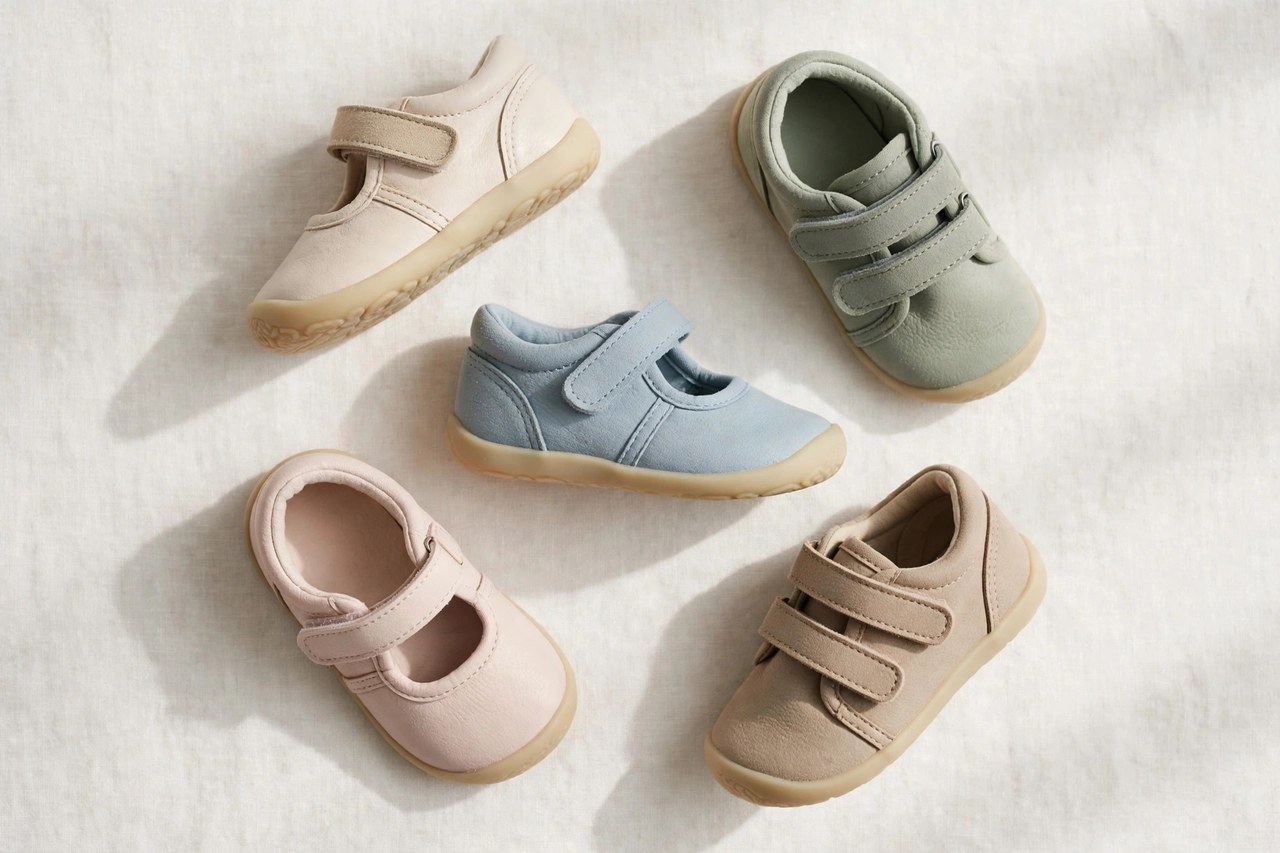
Toddler shoes are footwear for the one-to-three stage — a child between the ages of one and three — and specifically for its defining event: learning to walk, then walking everywhere. This page covers toddler shoes alone as a product category: first-walker design, soles, fastenings, measuring and the rapid replacement cycle. The companion toddler clothing page in this letter covers the garments; the infants and toddlers shoe guide covers the younger end of the same family.
A toddler's foot is not a small adult foot. It is mostly cartilage, soft and mouldable, with no finished arch until well into childhood, and it grows faster in these two years than at any later stage. Shoes at this age have one legitimate job — protection from cold, rough, hot and sharp ground while interfering with walking development as little as possible — and every design test below serves that job and no other.
First-Walker Design: Soles, Weight and Shape
The sole is the specification that matters most. It should be thin enough and flexible enough to bend easily where the foot bends, at the ball, so the child can feel the ground and push off with the toes; a first-walker shoe you cannot bend in one hand is too stiff. Traction still matters — toddlers walk on wet pavements, polished floors and playground surfaces in the same hour — so look for light tread texture rather than a smooth leather sole outdoors. The lightest shoe that protects is the right shoe; heavy footwear measurably tires new walkers.
Shape follows the foot: a wide, rounded toe box that lets toes spread and grip, a heel counter that holds the back of the foot without stiffness, and a fastening that keeps the shoe on a foot that will test it against every chair leg and buggy strap. Indoors and at home, bare feet or grip socks remain the developmental ideal where the floor is safe and warm — shoes are for outdoors and public floors, and the less they are worn beyond that need, the better they serve.
Fastenings and the Daily Reality
Hook-and-loop straps are the toddler standard for good reason: they adjust across the instep as feet vary day to day, fasten one-handed while the other hand holds a wriggling child, and can be re-fastened in seconds the dozen times a day a toddler removes them. Double straps hold better than single wide straps on narrow feet. Elastic laces with a strap combine a neat look with the same adjustability. Real tied laces belong to later childhood: on toddlers they trail, loosen and trip, and no milestone is served by them.
Expect determined removal. A toddler who can take shoes off will, in the car, the buggy and the supermarket trolley, so the practical defences are fit — a shoe that stays on a kicking foot is genuinely well fastened — and routine: a spare pair lives in the changing bag through this stage, and shoes are checked at every stop like a seatbelt. Shoes with lights, squeakers and characters are harmless fun, but buy them only after sole, shape and fastening pass, never instead of them.
Measuring, Fit Checks and Replacement
Measure both feet standing — toddlers must be weight-bearing, because a young foot lengthens noticeably under load — late in the day, and fit to the longer foot. A fitted toddler shoe leaves roughly a centimetre of space beyond the longest toe, holds the heel without the shoe slipping off in a kick test, and is wide enough that the soft upper is not stretched drum-tight across the toes. Many toddler shoes have removable insoles: stand the child on the insole and the fit, including the growth margin, is visible at a glance.
Check fit every six to eight weeks through this stage without exception — toddler feet can grow a full size in two to three months — and treat shoes as finished the moment toes press the end, red marks appear across the toes, or the heel starts slipping because the foot is wedging forward. Never hand a toddler a shoe a size up to grow into: at this age the extra length is a tripping mechanism attached to a learner. Handed-down shoes pass only if soles are unworn into another child's gait, uppers are not moulded out of shape and tread is intact — with growth this fast, most pairs qualify honestly, which is the small economic mercy of the category.
Common Questions
What makes a good first-walker toddler shoe?
A thin, flexible sole that bends at the ball so the child feels the ground, light weight, a wide rounded toe box, a heel counter that holds without stiffness, and a fastening that survives kicking. If you cannot bend the shoe easily in one hand, it is too stiff for a new walker. Indoors, bare feet or grip socks are ideal where floors are safe.
How often should toddler shoe fit be checked?
Every six to eight weeks, without exception — feet between one and three can grow a full size in two to three months. Replace shoes the moment toes press the end, red marks appear, or the heel slips from the foot wedging forward. Measure standing, late in the day, and fit the longer foot.
Should toddler shoes be bought a size up to grow into?
No. At this age extra length trips a learner with every step, and the shoe slops, rubs and wears unevenly long before the foot grows into it. Buy the current fit with about a centimetre beyond the longest toe, and rely on the rapid check-and-replace cycle instead.
More in Children's Clothes Guide T
The T letter hub and related T guides:
Looking for Children's Clothing Stores?
This guide helps you choose children's toddler shoes. To browse where to buy, visit our children's clothing store directory, where you can find retailers that carry them.