Children's Infant & Toddler Activewear Guide
Infant and toddler activewear raises an honest question: do infants or toddlers actually need activewear? Probably not - it is rather hard to exercise and stay physically active when you are crawling around in a diaper, and parents may want to wait until the child is a bit older before shopping the older children's activewear rails. The joke aside, there is a real question underneath it: what should the clothes of a very active baby and toddler actually do?
Shop Children's Infant & Toddler Activewear Now
Shop Children's Infant & Toddler Activewear on Amazon Shop Children's Infant & Toddler Activewear on eBayThe Amazon and eBay links on this page are affiliate links. If you make a purchase through them, Apparel Search may earn a commission.
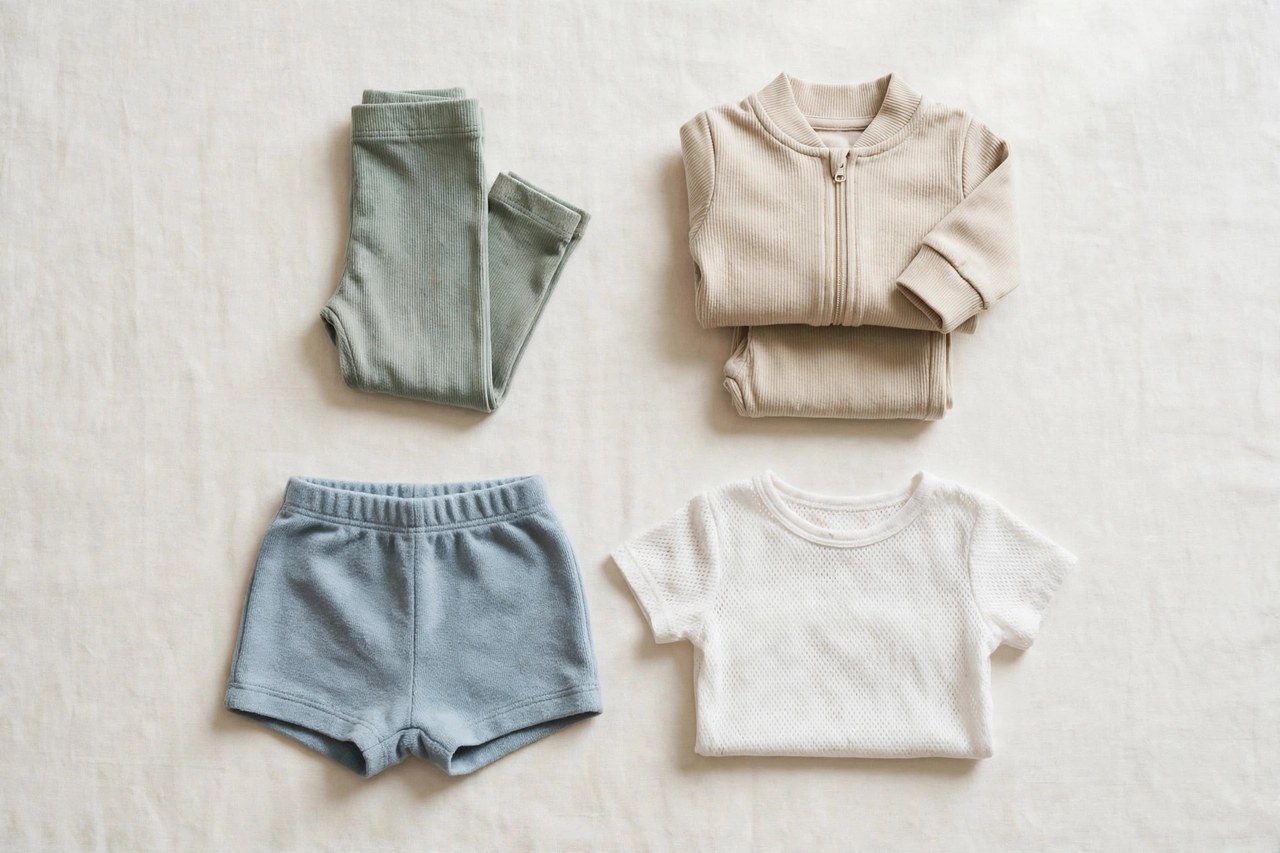
Infant and toddler activewear raises an honest question: do infants or toddlers actually need activewear? Probably not - it is rather hard to exercise and stay physically active when you are crawling around in a diaper, and parents may want to wait until the child is a bit older before shopping the older children's activewear rails. The joke aside, there is a real question underneath it: what should the clothes of a very active baby and toddler actually do?
Because movement is the toddler's whole job. The child who cannot yet walk is rolling, crawling and pulling up; the one who can is running, climbing and falling, all day, at full commitment. Clothing for that workload needs stretch, abrasion resistance, washability and nothing that restricts a stride or snags a climb - which is the activewear brief, whatever the label says.
What 'Activewear' Means at This Age
In baby sizes, activewear is mostly a styling category: miniature tracksuits, tiny trainers-style shoes, small leggings and shorts styled after adult sportswear. The garments underneath the styling are ordinary play clothes, and that is fine - the miniature tracksuit is a legitimate pleasure purchase. The parent's job is only to check the sporty styling has not smuggled in sportswear's adult compromises: stiff soles, drawstring hoods, heavy logos at pressure points and fabrics that trade softness for wicking a baby does not need.
True functional activewear begins where activity becomes organized - the toddler swim class, the first gymnastics and dance sessions, the playground in all weathers. There the requirements are real: swim pieces with sun protection, soft shoes that grip, layers that move. The guides to those older categories start from this page's principles, scaled up.
Movement-First Buying Rules
Buy for the four movements: crawl, climb, squat and fall. Crawling wants knee fabric that survives friction - double-layer knees, denim-weight leggings, overalls. Climbing wants nothing dangling: no long drawstrings, sashes or trailing hems to catch a foot. Squatting wants a waistband that stays up without a belt and a seat with room - test by the diaper, which is the bulk every toddler garment must clear. Falling wants soft landings: no hard badges, buckles or zips where a tumble drives them into skin.
Fabrics follow from the movements. Cotton with a little elastane out-performs pure synthetics at this age: it breathes against skin in a way baby sportswear rarely needs to, washes hot, and has no performance finish to wash out. Save the technical fabrics for sun and swim, where UPF weaves and chlorine resistance do work a baby genuinely benefits from.
Play Clothes Economics
Active play is where toddler clothes go to die, so the economics are the reverse of occasion wear: this is the category to buy in multi-packs, at the value end, and second-hand without hesitation. A rotation of six to eight play outfits covers a nursery week with laundry slack, and when every piece is plain and mixable, the rotation assembles itself each morning.
Keep one better set aside for outings if the family photographs on the move; the playground set should be the clothes nobody minds seeing grass-stained by ten o'clock. When play clothes retire, they retire honestly worn out - the one category in the baby wardrobe where outgrown and worn-out finally arrive together.
Common Questions
Do babies and toddlers really need activewear?
Not as a separate technical category - a crawling baby in a diaper is active enough in ordinary play clothes. What matters is movement-friendly construction: stretch, knee durability, no dangling parts.
What fabrics suit toddler play clothes best?
Cotton with a little elastane for everyday play; technical fabrics earn their place for sun (UPF weaves) and swim (chlorine resistance), not for the playground.
How many play outfits does a toddler need?
Six to eight plain, mixable outfits cover a nursery week with laundry slack. Buy them in multi-packs or second-hand - play clothes are worn out, not kept.
More in Children's Clothes Guide I
The I letter hub and the guides closest to this one:

Looking for Children's Clothing Stores?
This guide helps you choose children's infant & toddler activewear. To browse where to buy, visit our children's clothing store directory, where you can find retailers that carry them.