Children's Activewear Guide
Children's activewear is clothing designed to be worn for sports, exercise and outdoor activities — stretchy, washable and built to move, with keeping kids active as the real goal.
Shop Children's Activewear Now
Shop Children's Activewear on Amazon Shop Children's Activewear on eBayThe Amazon and eBay links on this page are affiliate links. If you make a purchase through them, Apparel Search may earn a commission.
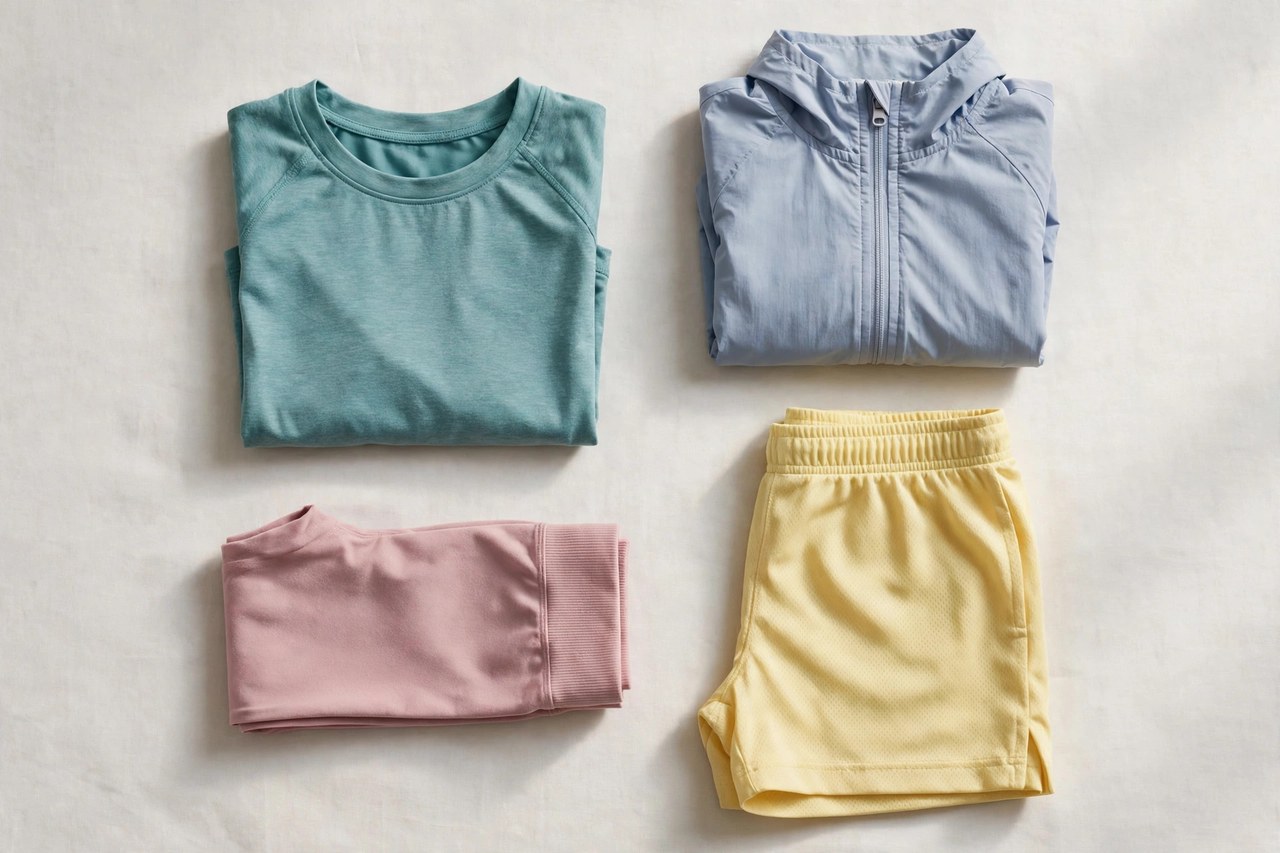
Activewear is clothing designed to be worn for sports, exercise, and outdoor activities — the working definition and the test for everything in this category. If a garment is built so a child can run, climb, stretch, kick and fall in it, wash it, and do it all again tomorrow, it is activewear. The core wardrobe is small: tops that move, leggings and shorts that stretch, a warm layer for cool starts, and socks and base layers underneath.
A second point matters just as much: it is good to get kids into activewear they like, but it is even more important to simply keep them active. The clothes are equipment for movement, not the other way round, so this guide judges every piece by how it moves, how it handles sweat and weather, and how it survives the wash — the three tests play applies daily.
Fabrics: Stretch, Sweat and Weather
Most children's activewear is cut from polyester or nylon blended with elastane, because synthetic fibers wick moisture away from the skin, dry quickly and hold their shape through repeated washing. Cotton feels soft and suits short, gentle activity, but it absorbs sweat, stays wet and heavy, and chills a child who stops moving — which is why sports kits and training clothes are rarely pure cotton. Mesh panels at the back and underarms add ventilation where heat builds first.
For outdoor activity, the fabric's second job is weather. Lightweight zip jackets and pullovers in water-resistant finishes shed drizzle and cut wind on the way to a game; fleece mid-layers add warmth without bulk for cold mornings; and sun-protective activewear with a stated UPF rating covers long summer practices. Flatlock or flat seams appear throughout better activewear because a raised seam that is fine for an hour of wear rubs during an afternoon of it.
The Core Pieces and How They Fit
Tops range from plain training tees to raglan-sleeve shirts whose diagonal seam lets arms swing freely overhead — a construction borrowed from sport for good reason. Bottoms split by activity: leggings and fitted tights for gymnastics, dance and layering; loose athletic shorts with an elastic or drawstring waist for running and field sports; and joggers with cuffed ankles for warm-ups and cooler days. Sets sold together suit school sports kits, where the same outfit is needed clean several times a week.
Fit for movement is different from fit for the classroom. Activewear should allow a full stride, a deep knee bend and both arms overhead without the hem riding up or the waistband sliding down — checks worth doing in the shop or at home before the tags come off. Room to grow is a false economy here: oversized shorts catch on equipment and baggy legs tangle, so buy the current size with an adjustable waistband rather than the next size up.
Buying by Activity and Season
Match the kit to the calendar. A single sport played weekly justifies the specific garment — the shin-length socks, the moisture-wicking team top — while general play and physical education are better served by versatile pieces that rotate: two or three tops, two bottoms, one layer. School uniforms of sport, sold as PE kits, follow the same logic in school colors, and the athletic uniforms guide in this letter covers the matching team version of the same idea.
Season layering keeps one wardrobe working all year: a wicking base layer under a tee in spring and autumn, shorts and a breathable top in summer, and tights under shorts with a fleece and a shell for winter training. Bright colors and reflective trims are a genuine product feature for children active outdoors near roads at dusk, not a decoration — look for them on jackets and leggings intended for cycling and running.
Care for Hard-Working Clothes
Activewear care is mostly about protecting the stretch and the wicking finish. Wash in cool water with similar synthetics, skip fabric softener, which coats the fibers and dulls moisture management, and air-dry or tumble low, since high heat ages elastane and shortens the garment's working life. Turn printed and numbered tops inside out to protect their graphics.
Kept that way, good children's activewear outlasts the season it was bought for and hands down well — which, for the hardest-washed clothes in a child's wardrobe, is the real mark of quality. Choose it for movement first, and it will do the job it was designed for: sports, exercise and outdoor activities, every day they happen.
Common Questions
What is children's activewear?
Clothing designed to be worn for sports, exercise and outdoor activities. In practice that means tops, leggings, shorts and layers cut from stretchy, quick-drying fabrics - usually polyester or nylon blended with elastane - with flat seams and room for a full range of movement. It is built to be run, climbed and fallen in, washed, and worn again the next day.
Why is cotton usually a poor choice for kids' sports clothes?
Cotton absorbs sweat and holds it, so the garment stays wet and heavy during activity and chills the wearer when they stop moving. Synthetic activewear fibers wick moisture away from the skin and dry quickly, which keeps the garment light and comfortable through a full practice or an afternoon of play. Cotton still suits short, gentle activity; it is sustained sports and outdoor exercise where the difference shows.
How should children's activewear fit?
For movement, not just for standing still. A top should allow both arms overhead without the hem riding up, and bottoms should allow a full stride and a deep knee bend without the waistband sliding down. Buy the current size with an adjustable waistband rather than sizing up for growing room - oversized shorts catch on equipment and baggy legs tangle during play.
More in Children's Clothes Guide A
The other A topics, and the full A letter, are gathered here:
Photos

Looking for Children's Clothing Stores?
This guide helps you choose children's activewear for sports and play. To browse where to buy, visit our children's clothing store directory, where you can find retailers that carry it.