Children's Fashion Accessories Guide
Children's fashion accessories are the pieces that finish an outfit — gloves, hats, scarves and sunglasses chosen to complement the clothes, with comfort ahead of style for young wearers.
Shop Children's Accessories Now
Shop Children's Accessories on Amazon Shop Children's Accessories on eBayThe Amazon and eBay links on this page are affiliate links. If you make a purchase through them, Apparel Search may earn a commission.
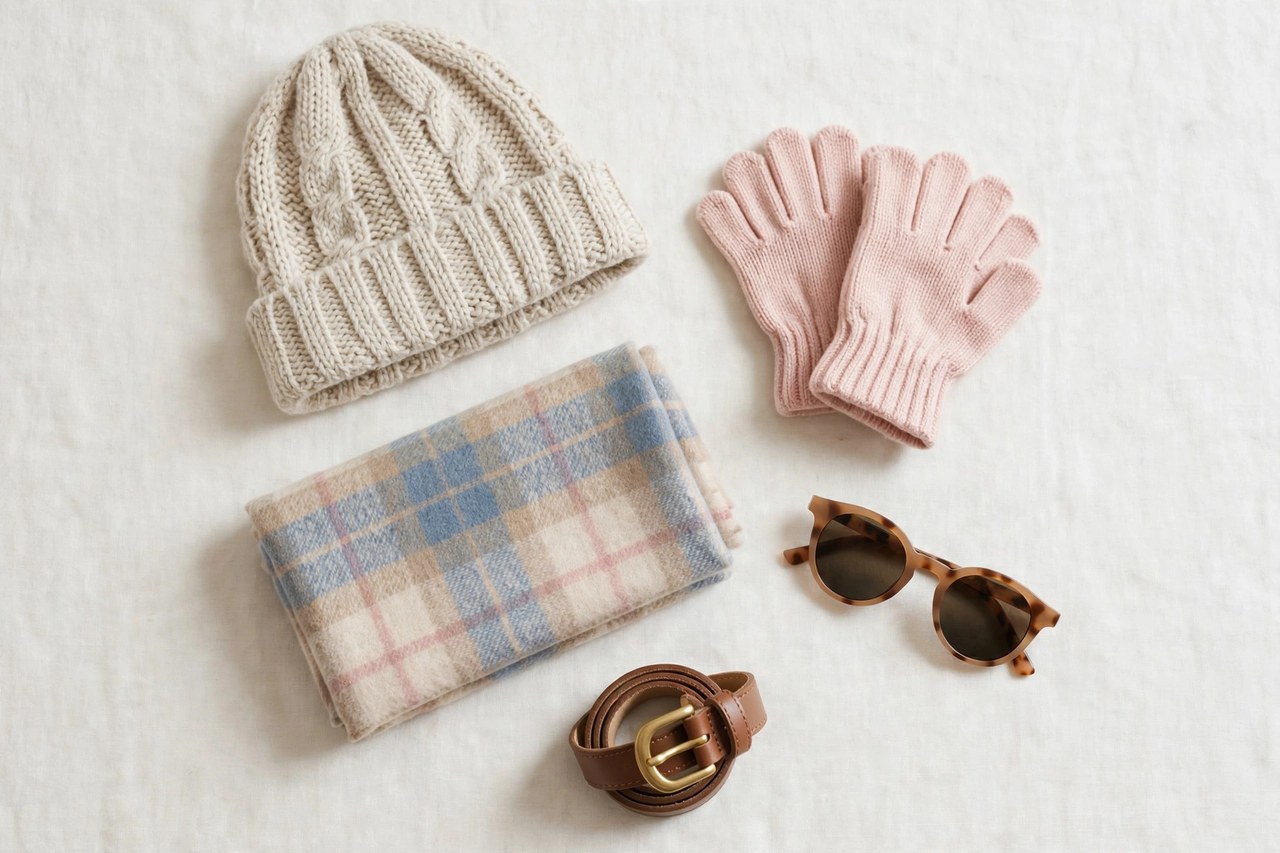
A fashion accessory is an item used to contribute, in a secondary manner, to the wearer's outfit, often used to complete an outfit and chosen to specifically complement the wearer's look. That definition explains the whole category: accessories are never the main garment, but they decide whether an outfit looks finished. For children, the wide assortment starts with four everyday families — gloves, hats, scarves and sunglasses — and widens to belts, hair accessories, small bags, ties and cold-weather extras.
Children's accessories do double duty that adult accessories rarely attempt. A hat is decoration and sun or cold protection at once; gloves finish a winter outfit and keep small hands warm; a scarf adds the color and does a real thermal job. That is why this guide treats every family as a product first — materials, sizing, fastenings and care — and as a style choice second.
The Everyday Families: Gloves, Hats and Scarves
Hats are the broadest family: sun hats with brims and chin straps for summer, knitted beanies and trapper styles for winter, baseball caps for shade, and dress hats for occasions. Judge a child's hat by its job — brim width and UPF fabric for sun, ear coverage and a close knit for cold — and by head size, since children's hats are sold by age range and head circumference rather than one-size claims. A strap or an elastic back matters more on a child's hat than on an adult's, because the hat has to stay on through play.
Gloves split into mittens for younger children, whose fingers stay warmer together and who cannot yet manage individual finger stalls, and fingered gloves for older children who need grip for bikes, balls and playground bars. Scarves for children are shorter and narrower than adult scarves for a practical reason: less loose fabric to trail, tangle or catch. Fleece and soft knits dominate both families because they wash easily, stretch over growing hands and heads, and carry no stiff parts to rub.
Sunglasses, Eyewear and Finishing Pieces
Sunglasses are the accessory where the product details matter most. Children's sunglasses should state real UV protection — look for a UV400 rating or a 100 percent UVA/UVB claim — and flexible, impact-resistant frames that bend rather than snap. Straps and soft cases earn their place here too, because a pair that survives the school bag is the pair that gets worn. Our guide's eyewear coverage continues in the E section, and cold-weather ear coverage has its own guide there as well.
Beyond the big four, the finishing pieces follow the same rule: they complete a specific outfit. Belts are sized by waist and sold with extra holes for growth; hair accessories range from soft baby bands to clips and ties for older children, and smooth edges matter because they sit against hair all day; small bags and backpacks add the carrying function. Ties, bow ties and suspenders appear for formal outfits, usually as matched sets with dress shirts.
Comfort First: Choosing and Sizing
Although style is important, for the childrenswear market comfort should be a key consideration over style — the standing rule for this whole category, and still the best buying advice on this page. In practice that means soft, non-scratchy fabrics against skin, flat seams and covered elastic, fastenings a child can manage or that stay put without constant adjustment, and nothing with small detachable parts for the youngest children, for whom accessories are sized and made differently by design.
Size by measurement where the family allows it: head circumference for hats, hand length for gloves, waist for belts. Age ranges on labels are a starting estimate, not a fit guarantee, and children of the same age vary widely. Adjustable features — hat straps, belt holes, elastic backs, mitten clips that fasten a pair to coat sleeves — buy growing room and cut down on the lost-single-glove problem every family knows.
Care and Storage
Accessories are small, numerous and easily separated, so their care is mostly organization. Knitted hats, gloves and scarves wash with similar colors in cool water and dry flat to keep their shape; sunglasses live in a case, lenses wiped with a soft cloth rather than a sleeve; leather belts and dress pieces stay out of the wash entirely and are wiped clean. Storing gloves and mittens clipped or paired, and keeping a single basket for hats and scarves by the door, does more for this category than any special product.
Bought for comfort first, sized by measurement and stored in pairs, children's accessories are the hardest-working small purchases in the wardrobe — the pieces that finish the outfit, do a practical job, and get reached for every single day.
Common Questions
What counts as a children's fashion accessory?
Any item that contributes to an outfit in a secondary manner - it completes the outfit and is chosen to complement the wearer's look rather than forming the main garment. For children the popular families are gloves, hats, scarves and sunglasses, widening to belts, hair accessories, small bags, ties and cold-weather extras such as earmuffs. The accessory finishes the outfit; the outfit does not depend on it the way it depends on the clothing underneath.
Why does this guide put comfort ahead of style for children's accessories?
Because a child wears an accessory all day, at school and at play, and an uncomfortable one simply comes off - the scratchy scarf, the hat that slips, the gloves that pinch. For the childrenswear market, comfort should be a key consideration over style. In practice: soft fabrics, flat seams, covered elastic, fastenings that stay put, and no small detachable parts on pieces made for the youngest children.
How do you size children's hats and gloves?
By measurement rather than by age alone. Hats are sold by age range and head circumference, so measure around the head above the ears and match the maker's chart; a chin strap or elastic back helps the hat stay on through play. Gloves are sized by hand length, and younger children are usually better served by mittens, which keep fingers warmer together and are easier to put on than individual finger stalls.
More in Children's Clothes Guide A
The other A topics, and the full A letter, are gathered here:
Looking for Children's Clothing Stores?
This guide helps you choose children's fashion accessories. To browse where to buy, visit our children's clothing store directory, where you can find retailers that carry them.