Children's Anoraks Guide
A children's anorak is a waterproof jacket, typically with a hood — a pullover shell with roots in the heavy coats of polar regions, scaled down for school runs and wet weekends.
Shop Children's Anoraks Now
Shop Children's Anoraks on Amazon Shop Children's Anoraks on eBayThe Amazon and eBay links on this page are affiliate links. If you make a purchase through them, Apparel Search may earn a commission.
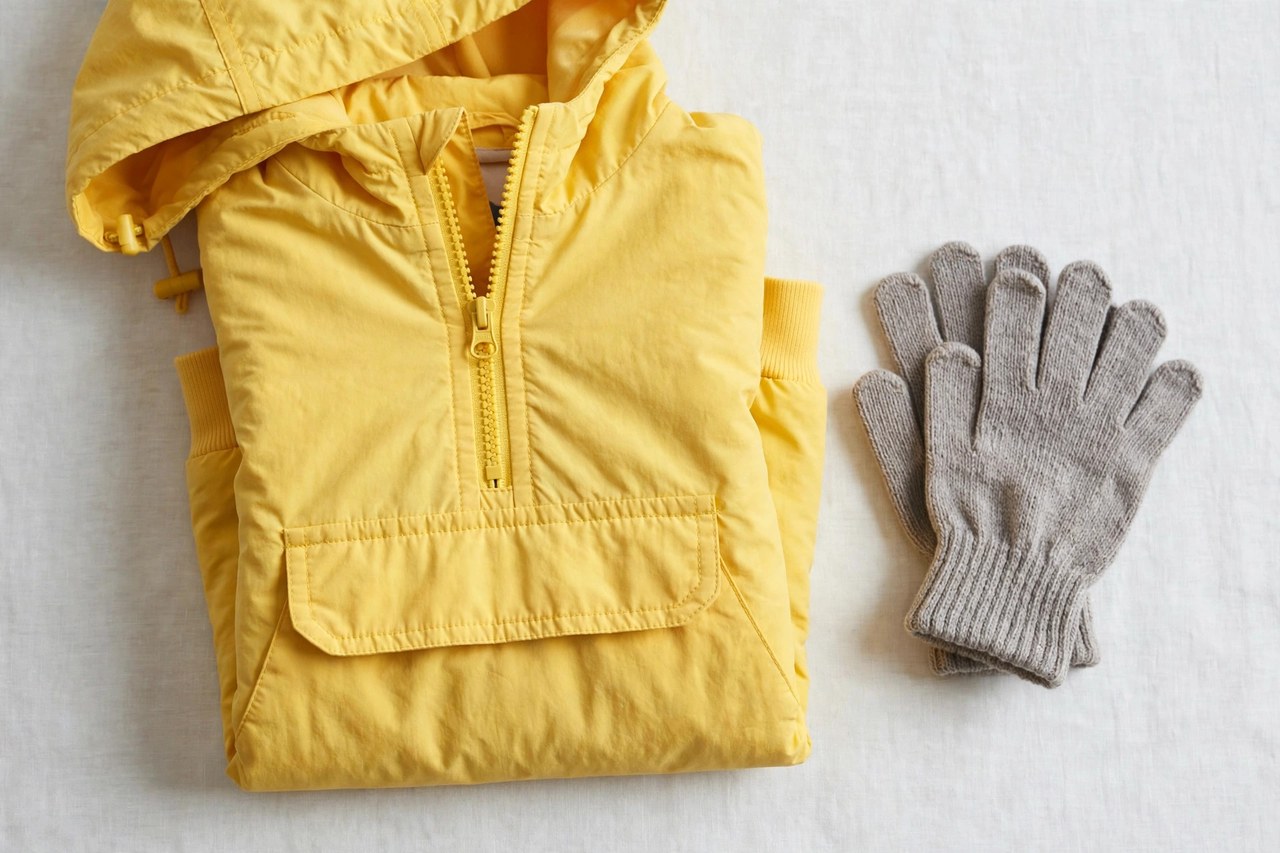
An anorak jacket is a waterproof jacket, typically with a hood, of a kind originally used in polar regions. An example of an anorak is the coat traditionally worn by the Inuit people in Canada. It is typically a heavy and warm jacket. Together, those points carry the whole history of the garment: a pullover coat built to keep wind and wet out in the coldest inhabited places on earth, which children's outerwear has adopted and lightened for rain, wind and the walk to school.
The modern children's anorak keeps the original's defining features — a hood, a pullover or half-zip front, a roomy kangaroo pocket and a hem and cuffs that close against the weather — while trading the traditional heavy warmth for layered versatility. Most are shells rather than winter coats, designed to go over whatever the day requires underneath. This guide covers the construction, the fabrics and the fit that decide whether an anorak does its job.
Anorak, Parka or Rain Jacket?
The three hooded jackets are easy to confuse and worth separating. An anorak pulls on over the head, fastening with a half or quarter zip at the neck, and carries its pocket as a single kangaroo pouch at the front; the design has few openings, which is exactly why it sheds wind and rain so well. A parka opens fully down the front, runs longer, and is usually insulated as a true winter coat. A rain jacket also zips fully open and is built as a light waterproof layer without the anorak's pullover cut and deep pocket.
For children, the pullover cut has one practical consequence: the anorak goes on over the head, so younger children need the neck zip opened fully and a size that clears shoulders and any layers beneath without a struggle. In exchange, there is no full-length zip to leak, snag or be left hanging open in the rain — the trade the original polar design made, and still the reason to choose the style.
Shells, Linings and Weatherproofing
Children's anoraks are made in two weights. Unlined shells in coated nylon or polyester are pure weather layers — waterproof or water-resistant, windproof, and light enough to pack into a school bag or their own pocket, as packaway styles do. Lined anoraks add a mesh or fleece lining that makes the jacket comfortable over a single top and stretches its season from spring showers into autumn. Fully waterproof versions state it in sealed seams and a waterproof rating; water-resistant versions shed showers but wet through in sustained rain, a distinction worth reading on the label rather than assuming.
Details decide the rest: a hood shaped to stay up without covering the eyes, elastic or adjustable cuffs that close over gloves, a drawcord or elasticated hem, and storm flaps over the neck zip. Bright colors and reflective trims recur in children's anoraks for the same reason they appear in activewear — visibility in grey, wet daylight is a product feature on a garment worn precisely in that weather.
Fit, Sizing and Buying
An anorak is sized as outerwear: it should fit over a jumper or fleece without binding at the shoulders, reach past the waist to mid-hip or below, and leave sleeves long enough to cover wrists with arms raised, since it will be worn over cuffs and gloves. Because it pulls on, check the head and shoulder clearance as carefully as the chest measurement. Kangaroo pockets on children's versions are sized for hands, gloves and small finds; a zipped inner pocket, where fitted, is the secure place for a bus pass or key.
Buy for the layer system the child actually wears. In mild, wet climates the unlined shell plus ordinary clothes is the workhorse; where cold rain is common, a lined anorak or room under the shell for a fleece extends the same jacket through more of the year. Retailers for children's outerwear are listed in the references below.
Care for Coated Fabrics
Anoraks ask for gentler care than their toughness suggests. Wash cool with a mild detergent, avoid fabric softener, which clogs waterproof coatings and breathable finishes, and dry away from direct heat; many shells refresh their water repellency with gentle tumble warmth, as the maker's label directs. Reproofing sprays and washes restore beading on older shells whose coating has worn.
Stored clean and dry with the hood down and zips closed, a good children's anorak hands down as reliably as any garment in the wardrobe — a polar coat's descendant, still doing the job it was invented for: keeping the weather on the outside.
Common Questions
What is a children's anorak?
A waterproof jacket, typically with a hood, of a kind originally used in polar regions - the coat traditionally worn by the Inuit people in Canada, typically a heavy and warm jacket. The children's version keeps the defining features - hood, pullover or half-zip front, kangaroo pocket, closed cuffs and hem - usually as a lighter shell worn over layers rather than as a heavy winter coat.
How is an anorak different from a parka or a rain jacket?
By its front. An anorak pulls on over the head and fastens with a half or quarter zip, carrying a single kangaroo pocket, so it has few openings for wind and rain to enter. A parka zips fully open, runs longer and is usually insulated as a winter coat. A rain jacket also zips fully open and is a light waterproof layer without the pullover cut and deep pocket.
Is a children's anorak waterproof or only water-resistant?
Both exist, and the label decides. Fully waterproof anoraks use coated fabrics with sealed seams and state a waterproof rating; water-resistant versions shed showers but wet through in sustained rain. Check also the details that support the claim: a hood that stays up, cuffs that close over gloves, a hem drawcord and a storm flap over the neck zip.
More in Children's Clothes Guide A
The other A topics, and the full A letter, are gathered here:
More to Explore on Apparel Search
References & Further Reading
Looking for Children's Clothing Stores?
This guide helps you choose children's anorak jackets. To browse where to buy, visit our children's clothing store directory, where you can find retailers that carry them.