Children's Infant & Toddler Clothing Sets Guide
A clothing set packages the outfit decision: a top and bottom (or a dress and leggings, or three pieces with a hat or cardigan) designed, coloured and sold together. Sets are the gift economy's favourite format and the tired parent's favourite shortcut, and one question opens the subject properly: do you like a matching set? Most people, at 6 a.m. with a baby to dress, do.
Shop Children's Infant & Toddler Clothing Sets Now
Shop Children's Infant & Toddler Clothing Sets on Amazon Shop Children's Infant & Toddler Clothing Sets on eBayThe Amazon and eBay links on this page are affiliate links. If you make a purchase through them, Apparel Search may earn a commission.
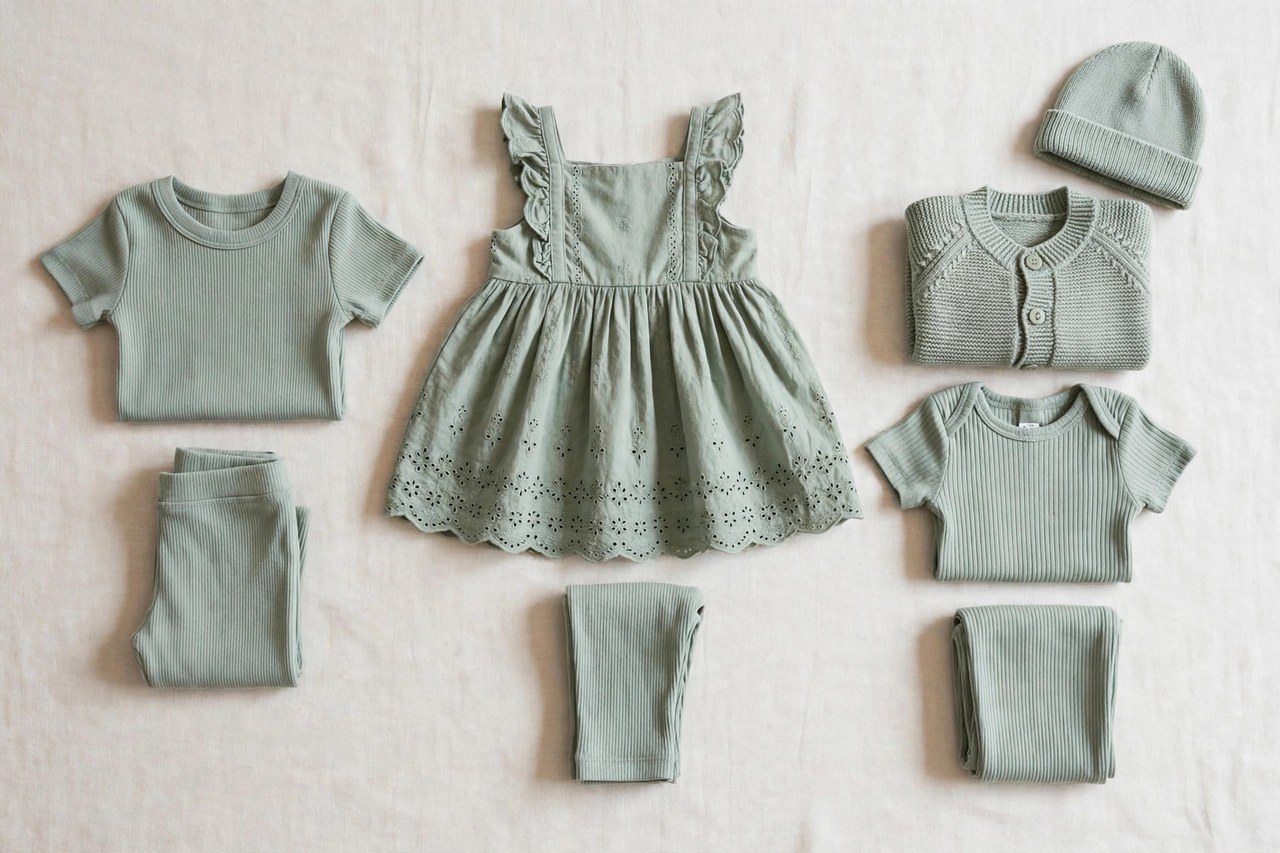
A clothing set packages the outfit decision: a top and bottom (or a dress and leggings, or three pieces with a hat or cardigan) designed, coloured and sold together. Sets are the gift economy's favourite format and the tired parent's favourite shortcut, and one question opens the subject properly: do you like a matching set? Most people, at 6 a.m. with a baby to dress, do.
Sets divide into layette sets (multi-piece starter packs of the basics), outfit sets (a coordinated top-and-bottom look), and occasion sets (the waistcoat or dress combination bought for an event). Each type has a different value logic, and most set disappointment comes from judging one type by another's standards.
Judging a Set Piece by Piece
A set is only as good as its weakest piece, and the weakness is usually the bottom. Check that the set's pants or leggings would pass as a standalone purchase - full elastic waist, decent weight, reinforced knees for crawlers - because the top's print is doing the selling while the bottom does the wearing. The reverse check applies to dress sets, where the leggings are the afterthought: thin leggings under a good dress strand the outfit after two wears.
Count the real configurations. A three-piece set with a reversible or layering top makes three or four outfits; a fixed two-piece makes one. Sets whose pieces separate gracefully into the existing wardrobe - the top over other pants, the pants under other tops - repay their price several times over, while a set that only works as itself is a single outfit wearing a plural name.
Sizing Sets and Buying Them as Gifts
Sets size by their most fitted piece, which is the bottom: a baby can wear a loose top for months, but the set's pants band is the appointment the whole outfit keeps. Buy sets by the bottom's band, and beware the set whose top and bottom are visibly different sizes wearing one label - it happens at the discount end, and the changing table finds it first.
As gifts, sets solve the giver's coordination problem and create the receiver's size problem: they arrive in newborn and 0-3 bands in quantity. Give sets a band or two ahead, in season-neutral styles, with the receipt - a set exchanged for the right size keeps its whole value, while a set outgrown in its wrapping keeps none. Registries exist largely to fix this, and sets are the item most worth registering by size.
Care and Keeping Sets Together
Wash sets as units even when the pieces could survive different cycles - sets fade as units too, and a top washed hot twenty times beside pants washed cold ten times stops being a set. The discipline is simple: the pieces live together in the drawer, wash together, and retire together.
When a set's life ends, split it honestly: the surviving piece joins the separates drawer, and the set as a photograph remains. Handing sets down intact is worthwhile only while both pieces pass inspection - a hand-me-down set missing its bottom is just a top with a story.
Common Questions
What types of baby clothing sets are there?
Layette sets (multi-piece basics), outfit sets (a coordinated top and bottom) and occasion sets (a dressed-up combination). Each has a different value logic.
How should a clothing set be sized?
By its bottom piece - pants or leggings set the appointment the outfit keeps. A loose top lasts for months; an outgrown bottom retires the whole set.
How do you keep a set looking like a set?
Wash and store the pieces together so they fade and wear at the same rate, and split the set into separates only when one piece genuinely wears out.
More in Children's Clothes Guide I
The I letter hub and the guides closest to this one:
Looking for Children's Clothing Stores?
This guide helps you choose children's infant & toddler clothing sets. To browse where to buy, visit our children's clothing store directory, where you can find retailers that carry them.