Children's Infant Boys Apparel Guide
Apparel is the trade word for clothing as a whole, and infant boys' apparel means the complete wardrobe sold for baby boys in their first two years: bodysuits, pants, tops, rompers, sleepwear, outerwear and the small extras that fill a layette list. This guide takes the wardrobe view - what the categories are, how the store sections are organized, and how much of each thing a baby boy actually gets through - rather than the view of any single garment, which the garment guides in this folder cover one by one.
Shop Children's Infant Boys Apparel Now
Shop Children's Infant Boys Apparel on Amazon Shop Children's Infant Boys Apparel on eBayThe Amazon and eBay links on this page are affiliate links. If you make a purchase through them, Apparel Search may earn a commission.
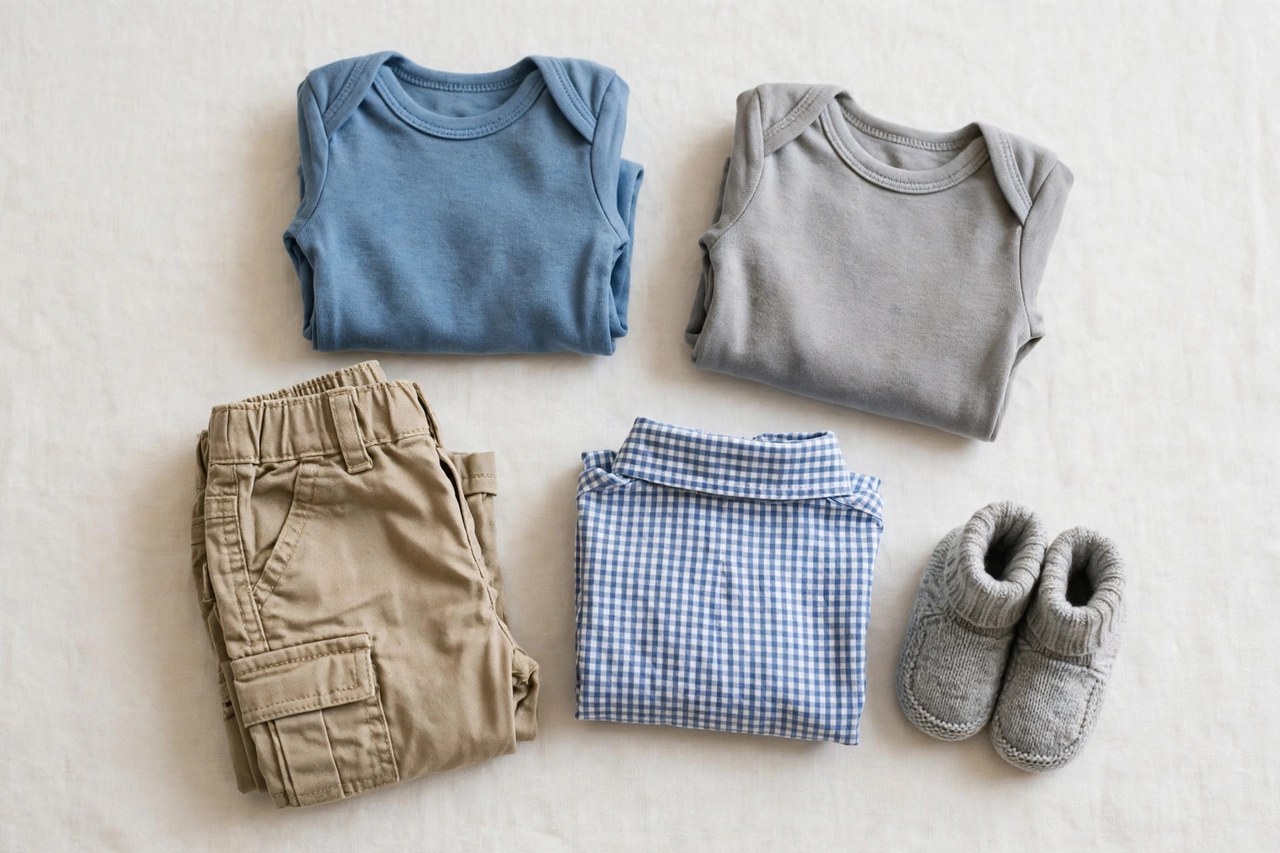
Apparel is the trade word for clothing as a whole, and infant boys' apparel means the complete wardrobe sold for baby boys in their first two years: bodysuits, pants, tops, rompers, sleepwear, outerwear and the small extras that fill a layette list. This guide takes the wardrobe view - what the categories are, how the store sections are organized, and how much of each thing a baby boy actually gets through - rather than the view of any single garment, which the garment guides in this folder cover one by one.
Boys' infant apparel is merchandised as its own department in most stores, separated from girls' at the rail even though many individual garments - plain bodysuits, sleep sacks, leggings, hats - are functionally identical. The separation is mostly about colour and print, which is worth knowing: it means the boys' rail is a styling choice laid over a shared practical core, and a parent who understands the core can shop both rails for the basics.
The Layette: What the Word Apparel Actually Contains
The layette is the starter set, and for boys it is the same architecture as for any baby: five to seven bodysuits, four to six sleepers or pajama sets, three or four pairs of soft pants or leggings, a few tops, socks that stay on, a hat, and something warm for the season. Boys' versions lean on a familiar palette - blues, greys, greens, reds, vehicle and animal prints, stripes and checks - but the quantities are driven by laundry, not by colour: babies generate outfit changes, and the wardrobe size is a washing-machine calculation.
Apparel is sold in the month bands - newborn, 0-3, 3-6, 6-9, 12, 18, 24 months - which are weight and length bands wearing age labels. Boys on average run slightly longer and heavier than the band midpoints, a small effect that matters at the edges: a boy near the top of a band belongs in the next size. The apparel view helps here too, because it encourages buying the wardrobe by band, a complete small set per size, instead of accumulating random pieces that never quite make outfits.
Buying Boys' Apparel by Season and Source
Season decides the gaps. A boy born in spring needs the warm layer by autumn in a size two bands up, which is why experienced buyers purchase end-of-season apparel a size or two ahead at clearance prices - the risk is only that growth outruns the guess, and basics forgive a loose fit. Gift apparel skews tiny and dressy; if you are building a practical boys' wardrobe, register or ask for 6-12 month sizes, the bands babies wear longest per piece relative to how fast the newborn sizes are outgrown.
Sources split into basics retailers, where multi-pack bodysuits and pants are the value core, department stores for occasion outfits, and second-hand, where infant apparel is the best bargain in children's clothing because it is outgrown before it is worn out. Check second-hand boys' pieces at the knees and seat, where crawlers wear fabric thin, and at snap lines, where repeated changing stresses the placket.
Care and Hand-Me-Down Value
Infant boys' apparel takes the same wash load as any baby clothing: frequent, warm, and stain-heavy. Cotton and cotton blends dominate because they survive it. Darker boys' colours hide the evidence of weaning and crawling better than pastels, one practical reason the traditional palette persists beyond habit.
Because babies outgrow apparel faster than they wear it out, a boys' wardrobe kept clean and stored by size band becomes a hand-me-down asset - for a younger sibling, a cousin, or resale. Store each band together, labelled, with the season noted; the apparel system that made buying easy makes passing on easy too, and the next parent inherits a wardrobe instead of a pile.
Common Questions
What does infant boys' apparel include?
The whole baby-boy wardrobe: bodysuits, pants, tops, rompers, sleepwear, outerwear, socks and hats, organized in stores as its own department and sold in month size bands.
How many pieces does a baby boy's layette need?
Roughly five to seven bodysuits, four to six sleepers, three or four pairs of soft pants, a few tops, socks and a hat, plus a warm layer for the season - quantities set by laundry frequency.
Are boys' and girls' infant clothes practically different?
Mostly not. The core garments are the same; the departments differ mainly in colour and print, so the plain basics can be bought from either rail and handed down either way.
More in Children's Clothes Guide I
The I letter hub and the guides closest to this one:

Looking for Children's Clothing Stores?
This guide helps you choose children's infant boys apparel. To browse where to buy, visit our children's clothing store directory, where you can find retailers that carry them.