Children's Infant Clothing Guide
Infant clothing covers the first year - roughly the newborn to 12-month size bands - and it is the most systematized clothing category in the whole children's guide. Everything about it is designed around three facts: the wearer cannot dress or speak, the clothing is changed many times a day, and it is outgrown on a rhythm of weeks. This guide explains the system itself: the size bands, the core garments, and the quantities a first wardrobe actually needs.
Shop Children's Infant Clothing Now
Shop Children's Infant Clothing on Amazon Shop Children's Infant Clothing on eBayThe Amazon and eBay links on this page are affiliate links. If you make a purchase through them, Apparel Search may earn a commission.
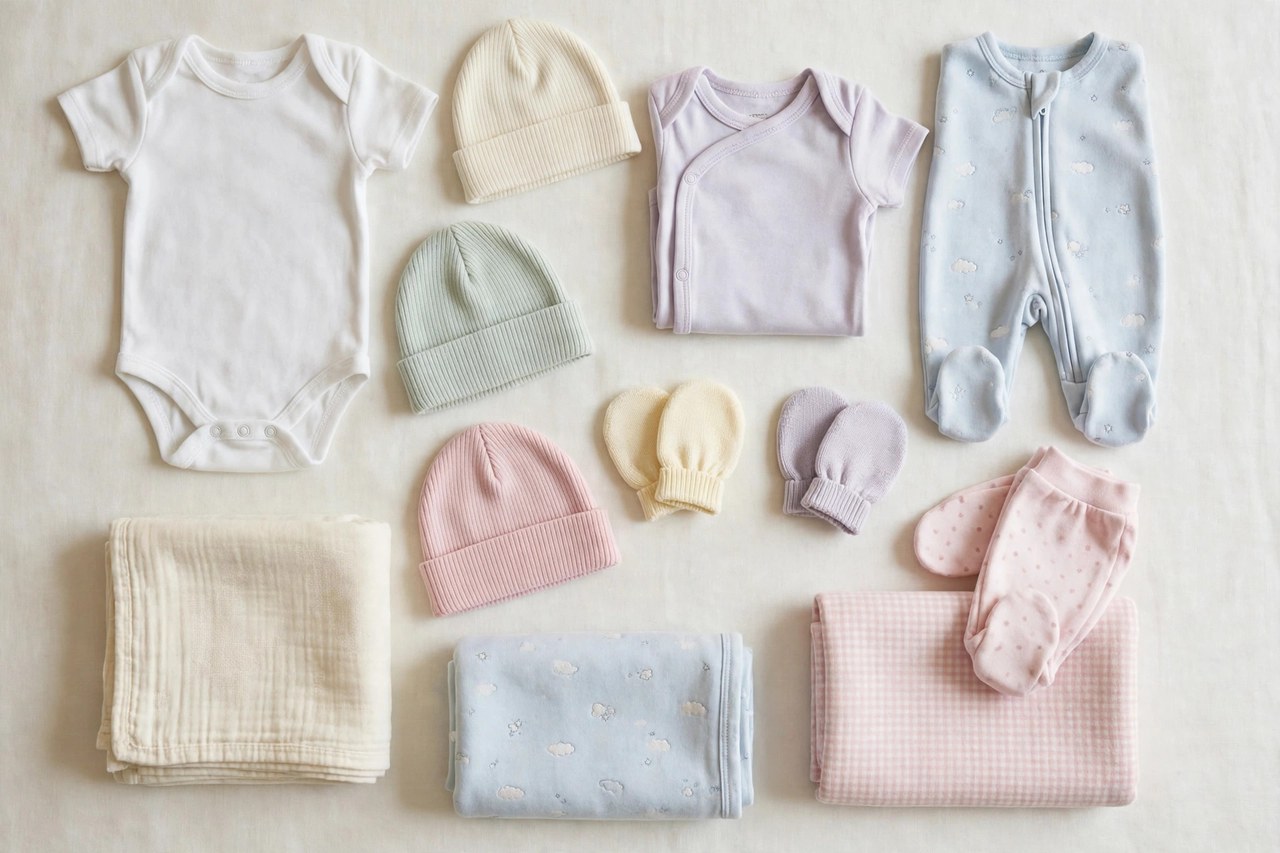
Infant clothing covers the first year - roughly the newborn to 12-month size bands - and it is the most systematized clothing category in the whole children's guide. Everything about it is designed around three facts: the wearer cannot dress or speak, the clothing is changed many times a day, and it is outgrown on a rhythm of weeks. This guide explains the system itself: the size bands, the core garments, and the quantities a first wardrobe actually needs.
The wardrobe's core is small and repeats across every brand: bodysuits as the base, footed sleepers as the all-day garment of the early months, soft pants and leggings, a handful of tops, socks and a hat, plus swaddles and sleep sacks for sleep. Around that core sit the occasion and weather pieces. Parents who understand the core can read any store's infant section in minutes, because the departments are all arrangements of the same dozen garments.
The Size Bands, Decoded
Sizes run newborn (up to about 8 lb), 0-3, 3-6, 6-9 and 12 months, and each band is defined by weight and length ranges printed on the label's size chart - the only part of the label that matters. A long baby can skip the newborn band entirely; a small baby can live in it for two months. Buy the newborn band lightly whatever the predictions, keep receipts, and let the baby's actual measurements promote him or her through the bands.
One band sits below newborn on some charts, and it runs on its own rules: preemie, sized purely by weight and length, with a micro preemie band below it. Preemie clothing sizes, explained decodes those bands, and the preemie clothing guide covers the wardrobe built at that scale.
Two sizing traps recur. First, brands differ: one maker's 3-6 is another's 6-9, so compare garments by eye and tape, not label, when mixing brands in one wardrobe. Second, cloth diapers and bulky sleep sacks add a size's worth of bulk under clothing - if either is in use, the band above usually fits better through the seat and torso.
Fabrics and Fastenings for New Skin
Infant clothing is overwhelmingly cotton, and for good reasons: it is soft, breathable, washable at the temperatures new-baby laundry demands, and kind to skin meeting fabric for the first time. Cotton interlock is the smooth standard; rib knits give stretch across growing tummies; organic and undyed lines exist for parents who want the fewest finishes against newborn skin. Whatever the fabric, wash before first wear, and choose flat or external seams and tagless necks where a baby will lie on them for hours.
Fastenings do their most deliberate work one size down, in preemie clothing: full front and side openings, shoulder snaps that let a garment slide on from below, and fasteners placed so none of them sits under the baby. Our NICU-friendly baby clothing features guide takes that construction apart feature by feature.
Fastenings are the engineering of infant clothing. Envelope necks pull wide and down the body; nickel-free snaps resist rust through hundreds of washes; two-way zippers open sleepers from the foot for changes without undressing the chest. Magnets exist too and fasten fastest of all, though they must be kept from medical devices and checked like any closure. The test for every fastening is the 3 a.m. change: one hand, low light, no struggle.
Quantities and the Laundry Equation
The mathematics of the first wardrobe is laundry frequency. A household washing every other day needs roughly three days of garments: seven to ten bodysuits, five to seven sleepers, four pairs of pants, socks in pairs of six, and two sleep sacks so one is always clean. Daily-wash households can halve it; everyone should own more bodysuits than feels reasonable, because they are also the spill-catchers, the layer under everything, and the garment sent to every caregiver as the spare.
Spend in proportion to wear: the money belongs in the core garments washed fifty times, not in the occasion piece worn twice. And build the wardrobe one band ahead in the drawer - the morning a 3-6 wardrobe stops snapping shut is not the morning to begin shopping for 6-9.
Common Questions
What sizes does infant clothing come in?
Newborn, 0-3, 3-6, 6-9 and 12 months. The bands are weight and length ranges, so use the label's size chart and the baby's measurements rather than age.
How many infant clothes does a first wardrobe need?
About three days' worth for a wash-every-other-day household: seven to ten bodysuits, five to seven sleepers, four pairs of pants, six pairs of socks and two sleep sacks.
Which fastenings are best for infant clothing?
Envelope necks, nickel-free snaps and two-way zippers that open from the foot. The test is a one-handed change in low light without undressing the baby's chest.
More in Children's Clothes Guide I
The I letter hub and the guides closest to this one:

Looking for Children's Clothing Stores?
This guide helps you choose children's infant clothing. To browse where to buy, visit our children's clothing store directory, where you can find retailers that carry them.