Children's Toddler Fashion Guide
Toddler fashion is the first fashion a wearer helps to choose. Between the second and fourth birthdays, clothing stops being something done to a child and becomes something negotiated with one - and toddler style, with its fierce preferences, beloved characters and ceremonial favourites, is the record of that negotiation. This guide covers the fashion layer of the T years: what toddlers actually choose, how occasion dressing works at this age, and how parents keep the whole enterprise comfortable, safe and solvent.
Shop Children's Toddler Fashion Now
Shop Children's Toddler Fashion on Amazon Shop Children's Toddler Fashion on eBayThe Amazon and eBay links on this page are affiliate links. If you make a purchase through them, Apparel Search may earn a commission.
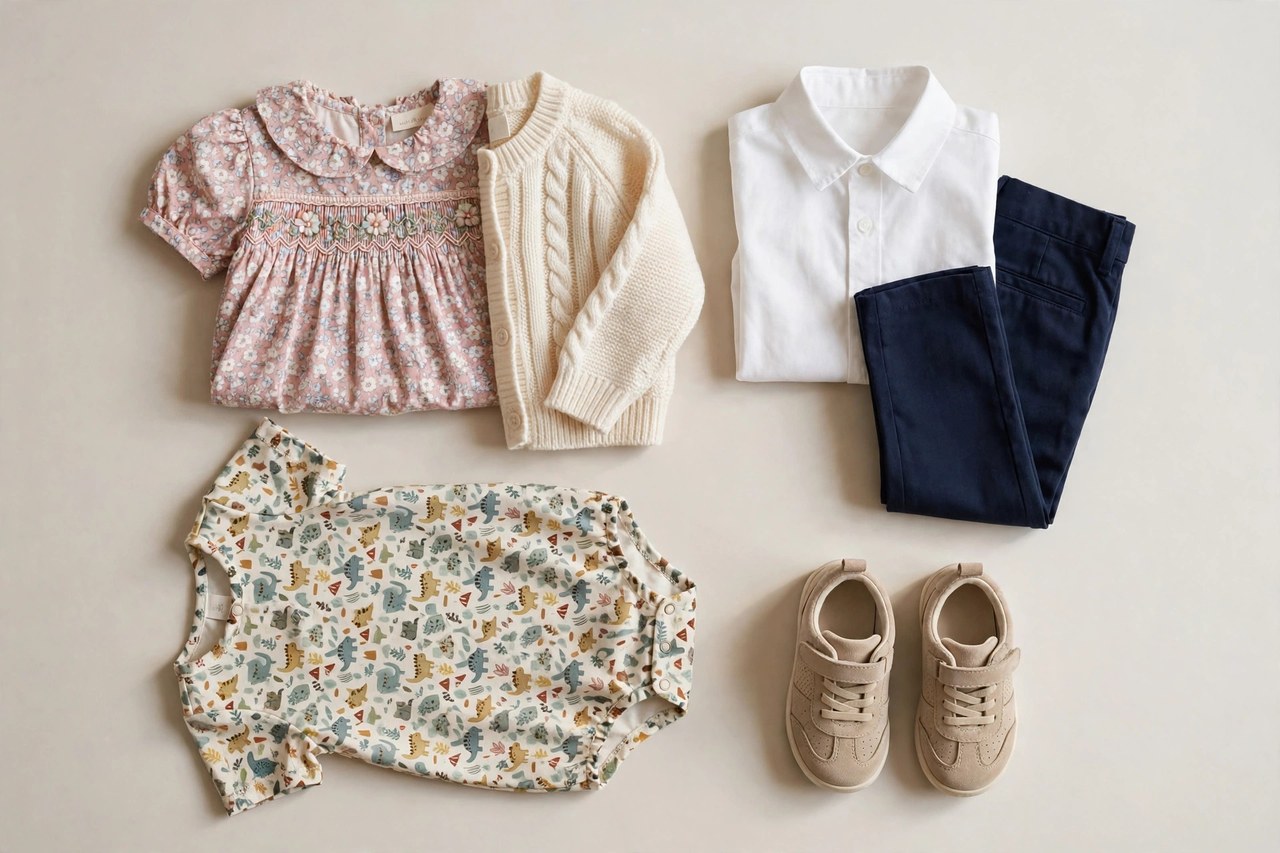
Toddler fashion is the first fashion a wearer helps to choose. Between the second and fourth birthdays, clothing stops being something done to a child and becomes something negotiated with one - and toddler style, with its fierce preferences, beloved characters and ceremonial favourites, is the record of that negotiation. This guide covers the fashion layer of the T years: what toddlers actually choose, how occasion dressing works at this age, and how parents keep the whole enterprise comfortable, safe and solvent.
The toddler fashion market borrows from the same sources as the infant one - adult trends miniaturized, classic children's motifs, licensed characters - but the audience has changed. An infant's fashion is for the family's album; a toddler's fashion is increasingly for the toddler, judged by criteria (twirl, pockets, the right dinosaur) that are internally consistent and absolutely non-negotiable.
What Toddlers Choose, and Why It Works
Given a rail, toddlers choose colour saturation, characters they know, sparkle and print scale - the bold over the subtle every time. They also choose by feel more honestly than adults do: the soft thing wins, the scratchy thing is refused without appeal. A parent building a toddler fashion wardrobe learns to curate the choices rather than make them: a rail of pre-approved, comfort-passing options from which the toddler selects the day's combination produces both a dressed child and a peaceful morning.
The favourite garment phenomenon peaks here - one dress, one shirt, worn in a rotation limited only by laundry. The fashion-literate response is duplicates: the beloved item bought twice (and once in the next size, when found) converts a daily negotiation into a system. Favourites are also data: they describe the child's actual sensory and aesthetic preferences more accurately than any size chart.
Occasion Fashion for the Very Small Guest
Weddings, photographs and holidays dress toddlers formally, and the toddler occasion outfit follows the infant rules with one amendment: the wearer now has mobility and opinions, so comfort failures are acted upon immediately and publicly. Soft-worn formal - the dress with the jersey body, the shirt with the snap placket disguised as buttons, shoes already broken in at home - is the only reliable strategy, with the complete change of clothes in the bag upgraded from precaution to certainty.
Seasonal fashion events - the holiday outfit, the first-birthday successor photographs - are single-wear economics and should be bought that way: cheerfully, cheaply or second-hand, and photographed early in the event while the outfit and the occasion are both still intact.
Keeping Fashion Safe and Sane
The safety rules of the infant letters continue unchanged, because the mouthing and climbing years overlap the fashion years: pull-tested embellishments, no neck drawstrings, inside finishes checked by fingertip, footwear fitted like equipment. To those, toddler fashion adds the supervision truth that a child dressed against her will in a fragile outfit will resolve the contradiction herself, usually at the event, usually involving the outfit and a drink.
Budget sanity is the last rule, and it rhymes with the infant one: fashion in the T years is the most photographed and least durable spending in the wardrobe, so it is bought last, least and lightest - a few chosen pieces over a plain, hard-wearing base. The toddler will remember none of the outfits and all of the mornings; fashion that makes the mornings easier is the only kind this guide recommends without qualification.
Common Questions
How do toddlers choose clothes?
By bold colour, known characters, sparkle and above all by feel - the soft garment wins. Parents do best curating a rail of pre-approved options and letting the toddler select the combination.
What do you do about a toddler's single favourite outfit?
Buy duplicates, and the next size when you find it. A favourite is real data about the child's preferences, and a duplicate converts a daily negotiation into a system.
How should a toddler be dressed for a formal event?
Soft-worn formal: jersey-bodied dresses, snap plackets disguised as buttons, shoes broken in at home - plus a complete change of clothes in the bag, as a certainty rather than a precaution.
More in Children's Clothes Guide I
The I letter hub and the guides closest to this one:
Looking for Children's Clothing Stores?
This guide helps you choose children's toddler fashion. To browse where to buy, visit our children's clothing store directory, where you can find retailers that carry them.