Children's Toddler Apparel Guide
Toddler apparel is the wardrobe of the 2T-4T years: the department where the baby system ends and ordinary children's clothing begins. The T sizes mark the transition - cut for an upright, walking, climbing body, with pull-up waists instead of snap crotches, real shoes instead of coverings, and a wearer who participates, increasingly vocally, in every decision. This guide takes the toddler wardrobe as a whole: what changes from the infant system, and how to build for a child in motion.
Shop Children's Toddler Apparel Now
Shop Children's Toddler Apparel on Amazon Shop Children's Toddler Apparel on eBayThe Amazon and eBay links on this page are affiliate links. If you make a purchase through them, Apparel Search may earn a commission.
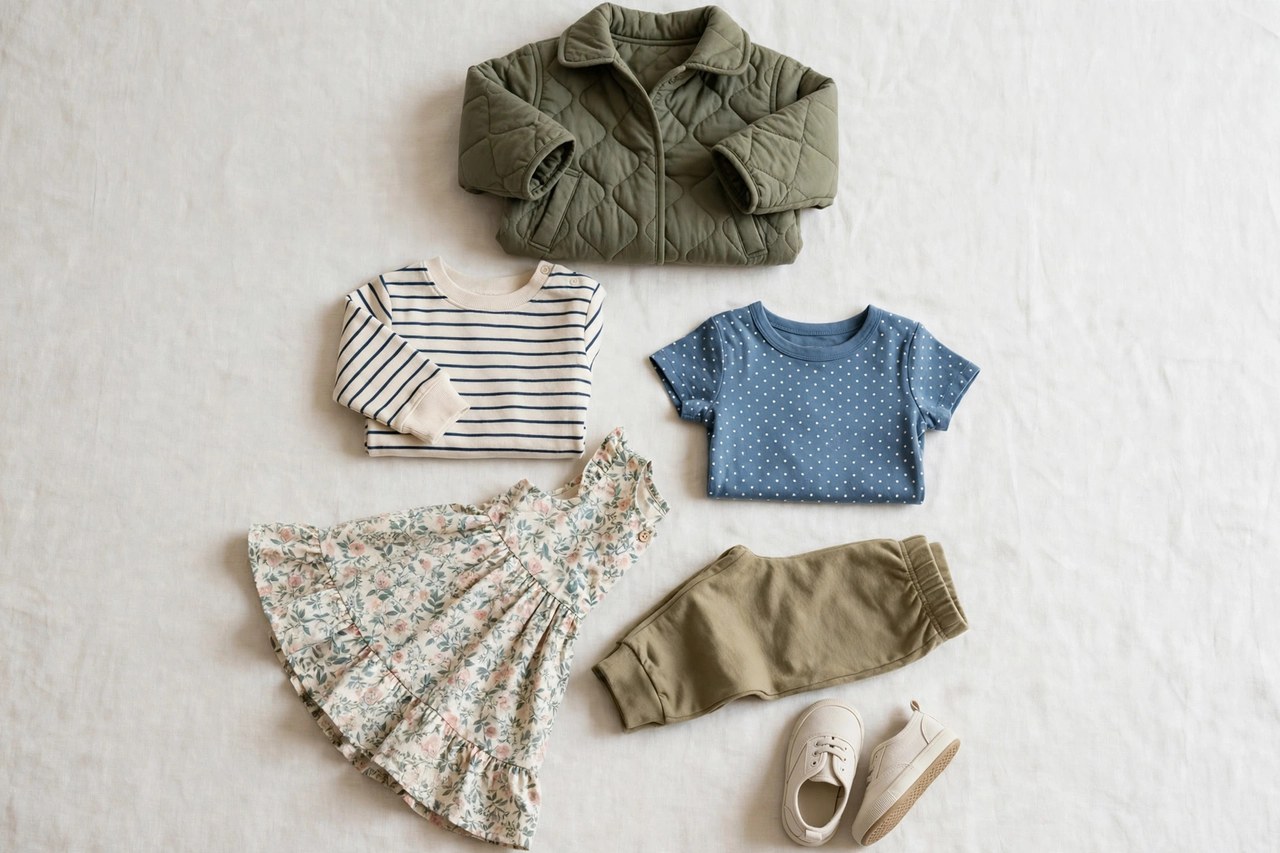
Toddler apparel is the wardrobe of the 2T-4T years: the department where the baby system ends and ordinary children's clothing begins. The T sizes mark the transition - cut for an upright, walking, climbing body, with pull-up waists instead of snap crotches, real shoes instead of coverings, and a wearer who participates, increasingly vocally, in every decision. This guide takes the toddler wardrobe as a whole: what changes from the infant system, and how to build for a child in motion.
The change is partly mechanical (no more dressing a passive baby on a mat; now the wearer is dressed standing, moving, and occasionally fleeing) and partly social: nursery, playgroup, playground and family events multiply the wardrobe's jobs, and the clothes must survive all of them weekly rather than impress at any of them once.
The Toddler Wardrobe, Category by Category
The working toddler wardrobe runs: five to seven day tops (tees, then shirts), four to five bottoms (leggings, pants, shorts by season, skirts and dresses with under-layers), two knit layers (sweatshirt and sweater or cardigan), outerwear by climate, sleepwear for a week of nights, and shoes in rotation. Underwear and training pants join as toilet learning proceeds. Every category is bought plainer and in greater rotation than its infant equivalent, because the wear is harder and the laundry is (slightly) less desperate.
The palette discipline of the infant wardrobe pays its dividend here: toddler apparel bought inside a family's colour families assembles into outfits by a tired parent, a grandparent, or eventually the child, without any piece being stranded. Add the character and novelty pieces the toddler chooses, in the knowledge that choice is a developmental feature - the self-dressed toddler, mismatched and proud, is the system working.
Sizing in the T Years
T sizes are height-and-weight bands like the month sizes before them, but the wearer now has a shape the bands must respect: toddlers carry their weight high and forward, and a waist that fits in September's shop can be ambushed by a growth spurt's reorganization by November. Fit bottoms by the waist and rise standing and sitting; fit tops by length, since a toddler's torso lengthens visibly between birthdays.
The T years also introduce the first durable fit preferences - the child who will not wear jeans, the one who lives in dresses - which parents learn to treat as specifications rather than phases to outwait. Apparel bought against a stated, consistent preference is apparel donated unworn; the toddler's rail, like the toddler, is best negotiated with honestly.
Durability, Care and the End of the Baby System
Toddler apparel is washed cooler and less often than infant clothing but treated harder in wear: knees, seats, cuffs and fronts take the abrasion and the food. Reinforced knees, covered elastic and flat seams stop being premium features and become the baseline worth paying for, because a toddler garment's life is now measured in seasons, not weeks, and it can genuinely wear out before it is outgrown - the first time in the child's life that has been true.
Handing down continues, with inspection standards rising accordingly. And when the 4T band ends, the wardrobe crosses into the children's sizes of the guide's other letters - the system this folder built, of measurements over ages and garments understood one by one, goes with it. The baby system ends; the method does not.
Common Questions
What sizes are toddler apparel?
2T, 3T and 4T - height and weight bands cut for an upright walking body, with pull-up waists and no crotch snaps, replacing the infant month bands.
How many clothes does a toddler wardrobe need?
About five to seven tops, four to five bottoms, two knit layers, a week of sleepwear, seasonal outerwear and shoes in rotation - plainer and harder-wearing than the infant wardrobe.
Why do toddlers suddenly refuse certain clothes?
Fit and fabric preferences arrive with the T years and are best treated as specifications. Apparel bought against a consistent preference is usually donated unworn.
More in Children's Clothes Guide I
The I letter hub and the guides closest to this one:
More to Explore on Apparel Search
Looking for Children's Clothing Stores?
This guide helps you choose children's toddler apparel. To browse where to buy, visit our children's clothing store directory, where you can find retailers that carry them.