Children's Infant & Toddler Underwear Guide
Underwear enters the children's wardrobe at the toddler stage, and it arrives as part of a process rather than a purchase: the move from diapers, through training pants, to real underwear is one of the toddler year's major projects, and the garments are its equipment. Beyond young children's sizes lie the wider types of underwear; this page stays with the young end - undershirts and vests for babies, training pants for learners, and first briefs and underpants for the newly independent. Copy and advice here are strictly product-focused, as befits the category.
Shop Children's Infant & Toddler Underwear Now
Shop Children's Infant & Toddler Underwear on Amazon Shop Children's Infant & Toddler Underwear on eBayThe Amazon and eBay links on this page are affiliate links. If you make a purchase through them, Apparel Search may earn a commission.
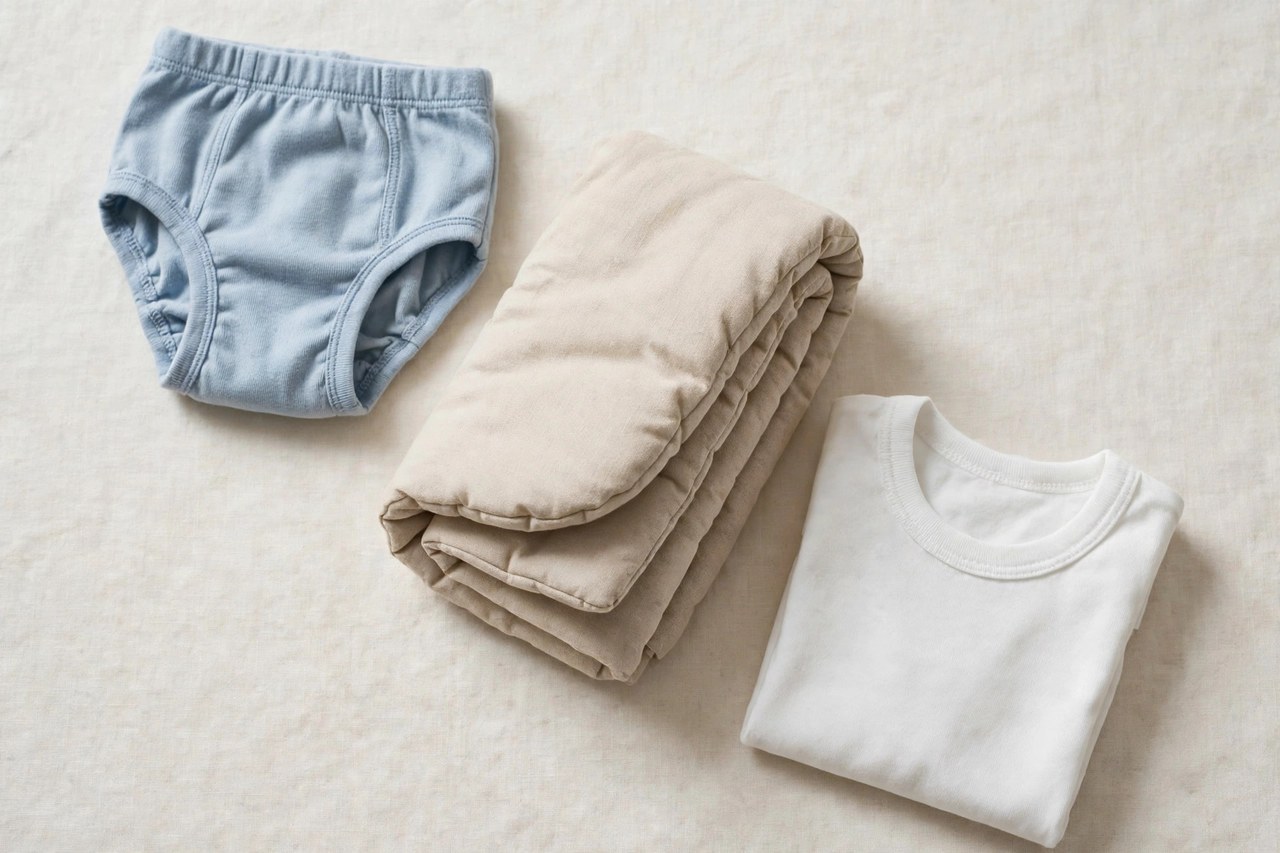
Underwear enters the children's wardrobe at the toddler stage, and it arrives as part of a process rather than a purchase: the move from diapers, through training pants, to real underwear is one of the toddler year's major projects, and the garments are its equipment. Beyond young children's sizes lie the wider types of underwear; this page stays with the young end - undershirts and vests for babies, training pants for learners, and first briefs and underpants for the newly independent. Copy and advice here are strictly product-focused, as befits the category.
For infants, underwear in the adult sense does not exist: the bodysuit is the underlayer, worn under everything and engineered for the diaper beneath it. The undershirt or vest appears as an extra warmth layer in cold climates, in the same soft cottons, and retires the same way. The category proper begins with the training pant.
Training Pants: The Bridge Garment
Training pants are underpants with a padded, absorbent crotch - cloth versions with several layers or a waterproof panel, and disposable pull-up versions that work like a diaper worn as pants. Their shared purpose is feedback and independence: the child can pull them down and up alone (the whole point), and a cloth trainer lets a small accident be felt without flooding, which is the sensation toilet learning runs on. Disposable pull-ups feel like a diaper and convenience argues for them; cloth trainers teach faster and cost less over the project. Many families run cloth at home and disposables out.
Quantities are project quantities: six to ten cloth trainers in rotation, because the learning weeks are a laundry event, and two sizes' patience - the fit should be snug enough to hold the padding in place and loose enough for small hands to manage, a balance that usually means trying two brands before settling.
First Underwear: Fit and Fabric Basics
First briefs and underpants for toddlers are simple cotton or cotton-blend garments with covered elastic at waist and leg. Fit is judged by the covered elastic: it should hold without marking, because a toddler will reject an uncomfortable pair with a finality that sets back the whole project, and the leg openings should sit flat without riding. Undershirts follow the same rules - soft, tagless where possible, long enough to stay tucked through a morning.
Let the child choose prints and characters where offered: underwear is the first garment category where a toddler's preference materially affects the outcome, and a chosen pair is worn with a pride that sustains the learning project through its harder days. Buy the chosen design in the multi-pack; enthusiasm, like everything else at this age, is washed frequently.
Care and the Practical Rotation
Training pants and underwear wash hot and often - the hottest the fabric allows for cloth trainers, with an extra rinse where absorbency matters, since detergent and softener residues reduce the padding's capacity exactly as they do a cloth diaper's. Disposable trainers are used and discarded; their cost is the argument for confining them to outings once the project is underway.
The category's milestones deserve a plain statement in a guide: underwear is bought last in the infant and toddler folder because it marks the end of the diaper system that half this folder's garments were designed around. When the bodysuits' snaps are finally outgrown in purpose rather than size, the baby wardrobe has done its work - and the children's guide's older sections, briefs and all, are waiting in the letters ahead.
Common Questions
What are training pants?
Underpants with a padded absorbent crotch - cloth with layered or waterproof padding, or disposable pull-ups. They let a toddler manage alone while containing small accidents during toilet learning.
Cloth or disposable training pants?
Cloth gives the wetness feedback that speeds learning and costs less over the project; disposables are convenient for outings. Many families use cloth at home and disposables out.
How should toddlers' first underwear fit?
Covered elastic at waist and leg that holds without marking, leg openings that sit flat, and soft tagless cotton. A toddler who finds a pair uncomfortable will reject the whole project with it.
More in Children's Clothes Guide I
The I letter hub and the guides closest to this one:
Looking for Children's Clothing Stores?
This guide helps you choose children's infant & toddler underwear. To browse where to buy, visit our children's clothing store directory, where you can find retailers that carry them.