Apparel Search Consumer Guides
Preemie Clothing Sizes, Explained
Below the month bands, sizes run on pounds and inches — micro preemie, preemie and newborn, decoded band by band.
Every other size system in baby clothing runs on age: newborn, 0–3 months, 3–6. Preemie sizing cannot — babies below the newborn band are measured in pounds, not birthdays — so preemie labels print weight and length ranges instead, and the word on the tag means less than the numbers under it. This page decodes the bands as brands commonly print them, as part of our preemie clothing guide. Read it with the garment’s own chart in hand: brands differ, and the differences at this scale are a whole size.
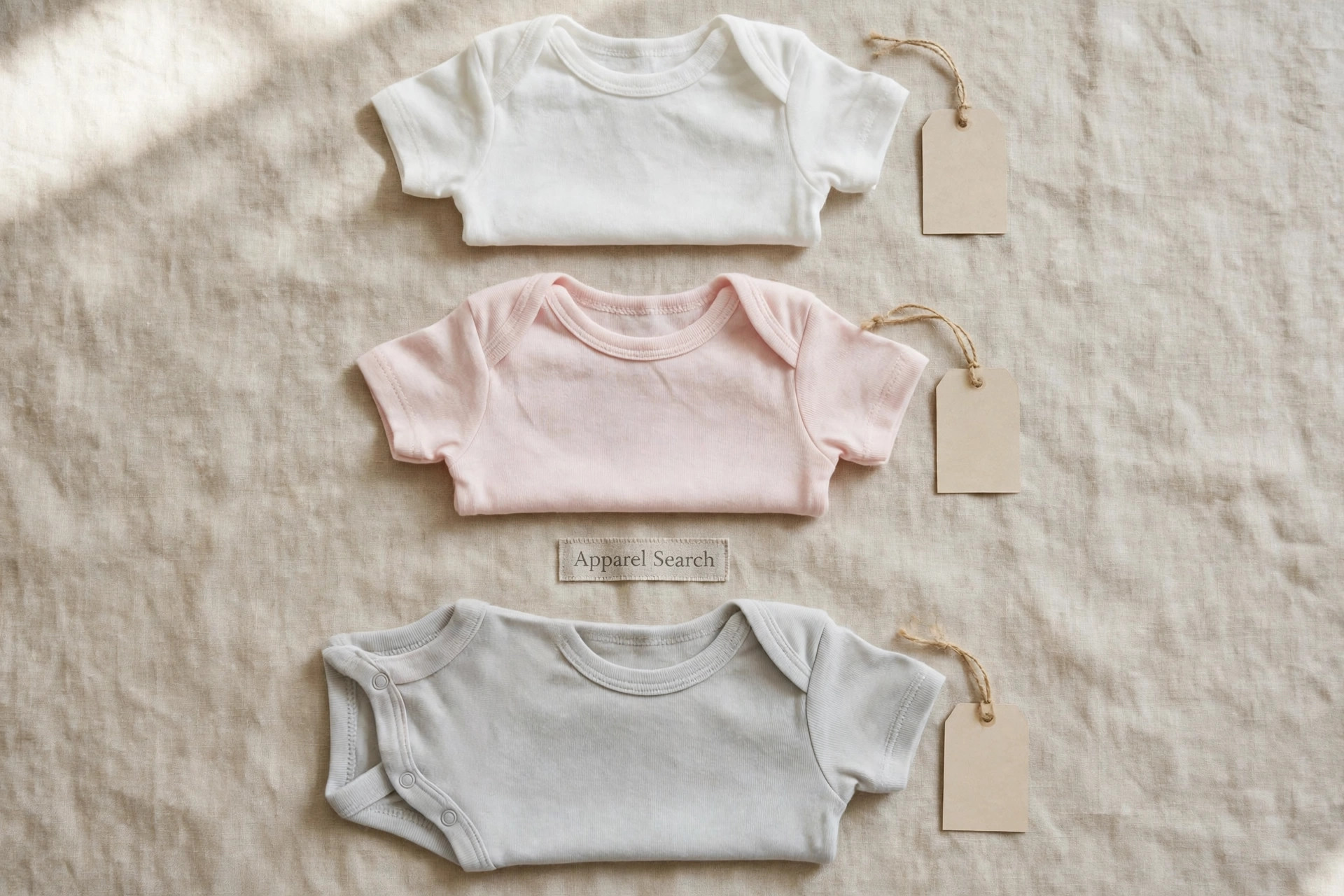
Sizes by Weight, Not Age
A preemie size is a promise about two measurements: the baby’s weight, which sets the body width the pattern is graded for, and length, which sets the body and leg. A baby can sit in different bands on the two measures — long and lean is the common split — and when they disagree, length usually calls it for one-piece garments, because a too-short bodysuit announces itself at the snap line, while a touch of extra width just looks relaxed. Our infant and toddler size chart picks the system up where the preemie bands leave off.
The Bands, as Brands Commonly Print Them
Micro preemie. The smallest band: often printed up to about 3 lb (1.4 kg), in lengths up to roughly 16 inches. Carried by specialist preemie ranges rather than every brand, and the band hospitals most often supply.
Preemie. The main band: commonly from about 3 lb up to 5–6 lb (up to about 2.7 kg), lengths up to about 18 inches. The top of the band is where brands disagree most — one label’s preemie ends at 5 lb, another’s at 6 — which is why the chart on the garment governs.
Newborn. The bridge band: roughly 5–8 lb and up to about 21½ inches on many charts, overlapping preemie at the bottom. Plenty of babies pass through both bands in their first weeks, wearing preemie for fit across the body and newborn where length runs out first.
Those numbers are the common printings, offered as a map, not a standard: no authority fixes them, and any brand’s chart outranks this page for that brand’s clothes.
Micro Preemie, Preemie, Newborn: The Steps Up
The three bands form a staircase with overlapping treads. Moving up is not a ceremony — most drawers hold two bands at once during a transition, the smaller for bodysuits that still close comfortably, the larger for footed pieces where length went first. Expect the newborn band, when it arrives, to feel like a change of system as much as size: from there up, the month bands of our infant clothing guide take over, and weight-and-length charts continue underneath them.
When a Baby Moves Up: The Fit Signs
- Snap lines straining. Fronts and crotch snaps that gap or pop under ordinary movement are the loudest signal in this wardrobe.
- Shoulder seams drift. When the seam sits toward the neck instead of on the shoulder point, the body has outgrown the grade.
- Feet cramp in footed styles. Toes pressing the end of a footed leg — or the leg riding up — mean length has run out, whatever the scales say.
- Openings land wrong. Shoulder snaps and wrap fronts are placed for a size; when they sit off their landmarks, the garment’s whole design is working at the wrong scale.
How Much to Buy for a Fast-Moving Stage
Buy each band like a layette in miniature, and a smaller one than instinct suggests: four to six bodysuits or gowns, two or three footed or footless bottoms or one-pieces, a hat and socks, washed in rotation. The stage can be measured in weeks, and the common waste is a full drawer bought a band ahead that fits for a fortnight. The pattern that works is current band in use, next band in the drawer with tags on and receipts kept — the same buy-light discipline our infant clothing guide recommends for the newborn band, applied one step smaller.
Weight First, Length Second, Age Last
If a preemie label prints an age at all, ignore it — at this scale it is the least reliable number on the tag. Shop by the baby’s current weight against the band’s printed range, check length for one-pieces and footed styles, and read a brand’s band edges as approximate by up to a pound in either direction.
A Garment Guide, Not Medical Advice
This page covers clothing: how preemie garments are sized, sewn and fastened. It describes what the garments are made of and how they open and close — nothing here is advice about a baby’s care. Questions about your baby belong to your own doctor and care team, and their guidance outranks anything in a product description — including the ones described here.
Common Questions
What weight is preemie size?
On most charts, the preemie band tops out at about 5 to 6 pounds (roughly 2.3 to 2.7 kg), with lengths up to about 18 inches — but there is no single standard behind the word, and brands differ by as much as a pound at each step. The weight and length printed on the garment’s own size chart are the only numbers that govern that garment.
What is micro preemie size?
The band below preemie, cut for the smallest babies of all: many brands print it up to about 3 pounds (about 1.4 kg) and 16 inches or so in length. Not every preemie range carries it — it is often a specialist line within the range — and it is the band most often supplied by hospitals rather than bought in quantity by families.
How long do babies stay in preemie sizes?
It varies too much for a calendar answer — the band is outgrown by weight and length, not by age, and babies cross it at very different speeds. The garment answer is to watch the fit signs: snap lines straining, shoulder seams pulling toward the neck, feet cramped in footed styles. When two of those show, the next band is due, however long or short the stage has been.
Should I buy a size up to get more wear out of it?
At this scale, no. Oversizing a preemie garment undoes its design: the neckline gapes, spare fabric folds under a baby who lies on it, and openings land in the wrong places. A small quantity that fits now, plus a few pieces ready in the next band, serves better than a drawer of almost-fits — the next band arrives soon enough on its own.
Back to the Preemie Clothing Guide
The full section: the features the garments are built around, the softness specification, and what families need first.
Search Apparel Search
Please note: Apparel Search is a fashion and clothing guide, not a medical authority. Pages in this section describe clothing features and dressing ideas only. We make no claim that any garment or special product will improve, treat, or help with any medical condition, and descriptions of product features reflect how those products are designed and marketed, not a medical endorsement. Please check with your own doctor or care team about what is right for you.