Children's Tennis Clothes Guide
Children's tennis clothes are the kit for a racket sport: tennis is played individually against a single opponent or between two teams of two players, each using a racket strung with cord to strike a hollow rubber ball covered with felt over a net into the opponent's court, the object being to play the ball so the opponent cannot make a valid return. The clothing follows from those movements — reaching, lunging, sprinting and serving overhead — and this guide covers the garments as products: tops, shorts, skirts, fabrics, court rules and fit.
Shop Children's Tennis Clothes Now
Shop Children's Tennis Clothes on Amazon Shop Children's Tennis Clothes on eBayThe Amazon and eBay links on this page are affiliate links. If you make a purchase through them, Apparel Search may earn a commission.
Children's tennis clothes are the kit for a racket sport: tennis is played individually against a single opponent or between two teams of two players, each using a racket strung with cord to strike a hollow rubber ball covered with felt over a net into the opponent's court, the object being to play the ball so the opponent cannot make a valid return. The clothing follows from those movements — reaching, lunging, sprinting and serving overhead — and this guide covers the garments as products: tops, shorts, skirts, fabrics, court rules and fit.
Looking stylish on court is a critical factor, and tennis clothing does keep a strong traditional look. But for children's lessons and junior matches the working tests come first: the clothes must move without restriction, handle sweat through a long session, hold a spare ball where the game requires it, and meet the dress expectations of the club or school where the child plays.
The Kit: Tops, Shorts, Skirts and Dresses
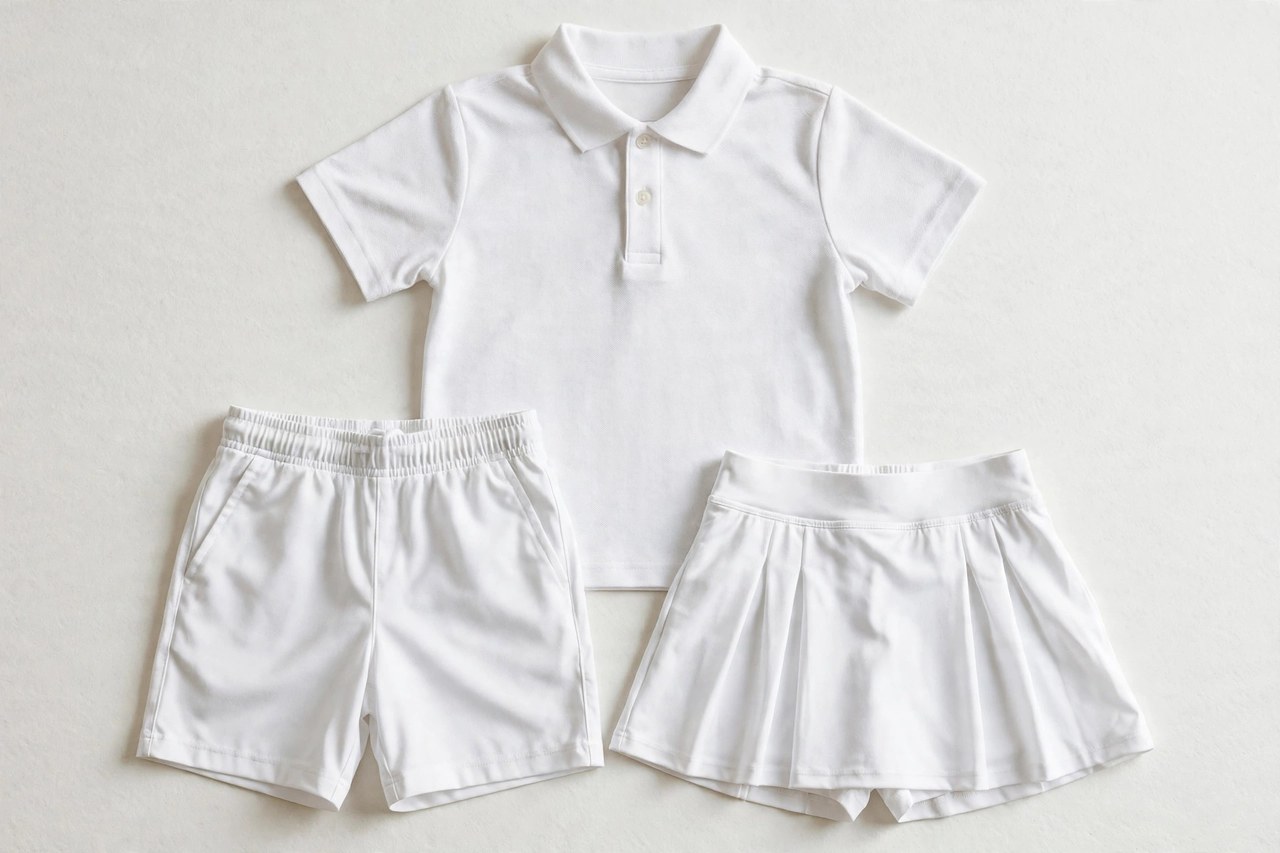
The polo shirt is the classic tennis top for children: a soft collar, a short placket and short sleeves, tidy enough for any club and comfortable enough for a two-hour lesson. Crew-neck tennis tees in performance fabric are the modern alternative where dress codes allow, lighter and quicker-drying than cotton. Sleeveless tops appear in older junior ranges for hot climates. Whatever the top, it must allow a full overhead serve without riding up or binding across the shoulders — have the child mime the serve in the changing room before buying.
Bottoms divide by preference and club custom. Tennis shorts carry the sport's most practical detail: pockets deep and angled enough to hold a tennis ball securely while running. Tennis skirts and skorts — a skirt panel over built-in shorts — are the traditional alternative, with the inner short often holding the ball. Tennis dresses combine the two in one garment for older juniors. Socks should be cushioned athletic socks that come above the shoe collar to prevent heel rub, and a cap or visor plus a light sweatband handle sun and sweat in outdoor summer play.
Fabrics, Whites and Club Dress Codes
Tennis is a stop-start sprint sport played in sun, and fabrics work hard. Cotton polos look classic and breathe well but hold sweat and grow heavy through a long clinic; modern polyester and nylon performance knits wick moisture, dry between games and keep their shape, and most junior programmes now default to them. Mesh panels at the back and underarms vent heat where a playing child needs it. For outdoor play, a UPF rating in the fabric is a genuine feature, since shoulders and backs face the sun for whole sessions.
Dress codes are the category's standing question. Some clubs and schools still require predominantly white clothing, a few require all-white, and many junior programmes allow any tidy tennis kit. Check the actual rule of the club or school before buying colours, because a kit that breaks the code stays in the bag. Where whites are required, buy them in rotation — grass, clay and hard-court marks mean a white kit needs washing after nearly every outing — and treat whites as the hard-wearing uniform they are, not as best clothes.
Fit, Shoes Note and Care
Fit tennis clothes for movement: enough ease through the shoulder and hip for lunges and overhead reach, shorts that stay in place without a drawstring being hauled at between points, and skirt or dress lengths that pass the club's expectations and the child's own comfort in a full stretch. Sizes are not standardised between makers, so use each maker's chart against the child's chest, waist and height, and re-check at each growth spurt — junior players seem to grow between one clinic season and the next without exception.
One boundary worth stating: court shoes are footwear, not clothing, but no tennis kit works without them — proper court shoes grip without marking and support the side-to-side movement that running shoes are not built for, and many clubs require non-marking soles. The shoe guides in this directory cover fitting children's athletic shoes generally. Care for the clothes themselves is simple: wash performance fabrics cool without fabric softener, which coats the wicking finish, dry whites promptly so court marks do not set, and keep a spare kit in the racket bag so a soaked or marked set never ends a playing day early.
Common Questions
What is tennis?
A racket sport played individually against a single opponent or between two teams of two players. Each player uses a racket strung with cord to strike a hollow rubber ball covered with felt over or around a net into the opponent's court, and the object is to play the ball so the opponent cannot play a valid return.
Do children's tennis shorts need special pockets?
Yes — the defining practical detail of a tennis short is a pocket deep and angled enough to hold a tennis ball securely while the player runs. Skirts and skorts solve the same job with a ball holder in the built-in inner short. Ordinary fashion shorts with shallow pockets drop balls all over the court.
Must children's tennis clothes be white?
Only where the club or school says so. Some venues require predominantly white or even all-white kit; many junior programmes accept any tidy tennis clothing. Check the actual dress code before buying colours — a kit that breaks the code never gets worn.
More in Children's Clothes Guide T
The T letter hub and related T guides:
Looking for Children's Clothing Stores?
This guide helps you choose children's tennis clothes. To browse where to buy, visit our children's clothing store directory, where you can find retailers that carry them.