Men's Big and Tall Robes Guide
Big and tall robes are the wrap layer of the home wardrobe, sized on the extended system: big robes with the wrap overlap a larger body genuinely needs, tall robes with the length and sleeve that keep a robe a robe rather than a long cardigan. A robe is bought on three specifications - fabric weight for the season, wrap and belt geometry, and length - and in extended sizes each of the three has a failure mode that regular ranges never reveal. This page treats the robe strictly as the garment it is.
Shop Men's Big and Tall Robes Now
Shop Men's Big and Tall Robes on Amazon Shop Men's Big and Tall Robes on eBayThe Amazon and eBay links on this page are affiliate links. If you make a purchase through them, Apparel Search may earn a commission.
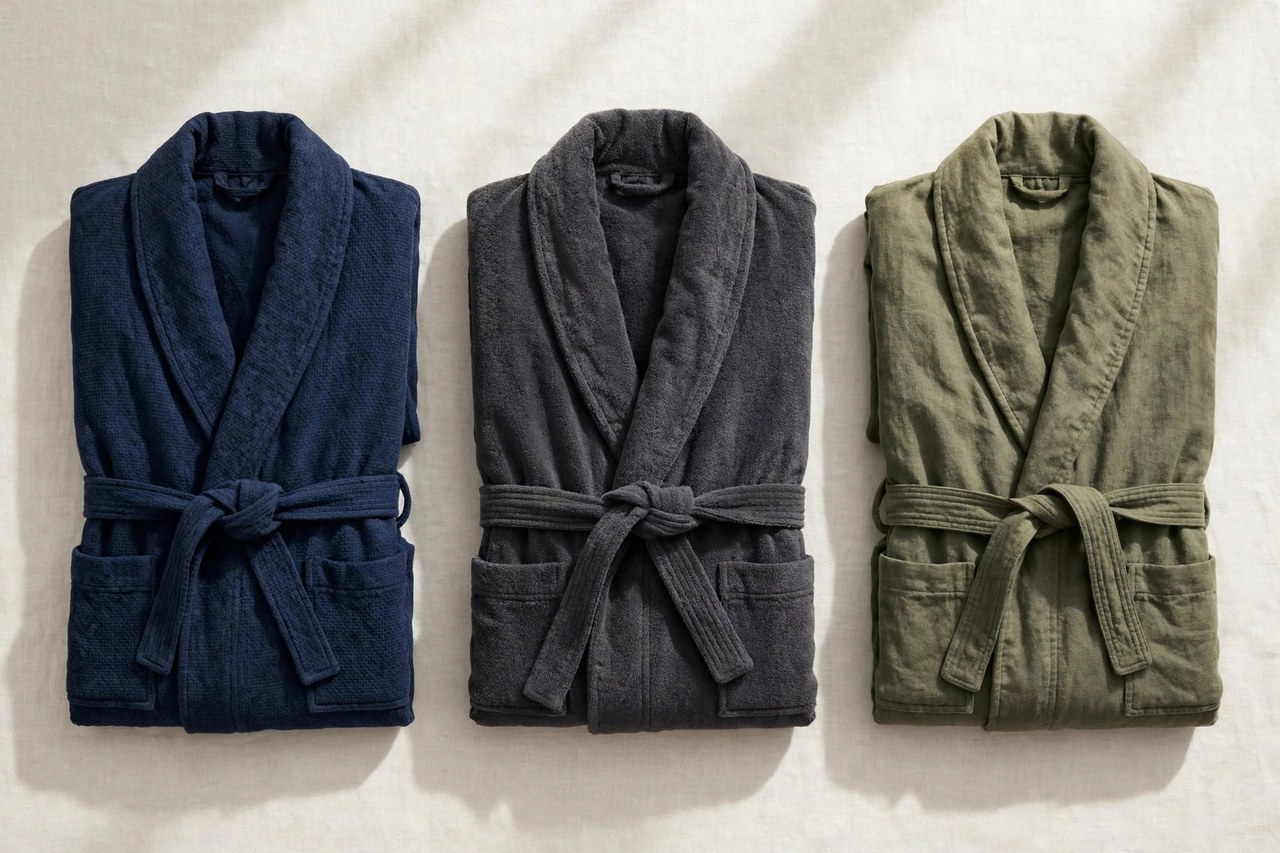
Big and tall robes are the wrap layer of the home wardrobe, sized on the extended system: big robes with the wrap overlap a larger body genuinely needs, tall robes with the length and sleeve that keep a robe a robe rather than a long cardigan. A robe is bought on three specifications - fabric weight for the season, wrap and belt geometry, and length - and in extended sizes each of the three has a failure mode that regular ranges never reveal. This page treats the robe strictly as the garment it is.
Big and tall sizing answers two different bodies with two different ranges: big sizes (1X through 6X in most lines) add circumference - chest, waist, seat and thigh - at regular lengths, while tall sizes (LT through 4XLT) add length - sleeves, body, rise and inseam - at a given circumference. Many men need one, some need both, and buying the wrong axis is the classic big-and-tall mistake: a big size bought for length drowns the shoulders, and a tall size bought for girth strains at every closure. Measure both axes - circumference where the garment closes, and length where it must reach - and order from the maker's own chart, because an X in one brand is a rumor in another.
Sizing for Bigger and Taller Frames
Wrap geometry is the big-size test: a robe must overlap generously at the front when belted - several inches of double fabric across the midsection - or it will gap with every movement, which defeats its purpose entirely. Judge by the belted fit, seated as well as standing. Tall robes state their length (mid-calf is the classic target) and sleeve; a 'one size' robe is a regular robe with ambitions, and on a tall frame its sleeves end at the forearm and its hem at the knee. Belt position matters too: the loops should sit at your waist, not where a regular pattern assumed it.
Proportions are the second half of the system. A garment simply scaled up in every dimension fits nobody: proper big-and-tall patterns widen the shoulder and chest without dropping the armhole to the waist, add rise so a waistband sits where trousers are meant to sit, and grade pockets, collars and cuffs up modestly rather than comically. When a tall or big version looks like a regular garment photographed through a magnifier, that is usually better than it sounds - restraint in grading is what keeps a 3X shirt reading as a shirt and not as a tent with buttons.
Fabric and Construction
Fabrics by season and temperament: terry cloth for after-bath absorbency, waffle weave for light summer coverage, flannel and fleece for winter warmth, satin-faced and silk for the formal end. In big sizes, fabric weight multiplies - a heavy terry robe in a 3X is a substantial garment - so match weight to your climate honestly. Construction details worth their price: belt loops that are stitched through rather than tacked, a belt that is actually long enough (measure it against your waist with the robe wrapped), and pockets placed where hands fall.
For next-to-skin garments, read the fiber label before the size label. Cotton is soft and breathable but holds moisture; modal and microfiber synthetics move moisture and keep their shape; a small percentage of elastane - typically two to five percent - is what keeps leg openings and waistbands from relaxing through the day. Seams should be flat or covered where they cross skin, the waistband should be plush-backed rather than bare elastic, and care is simple and important: wash warm or cool, avoid heavy softeners that coat performance fibers, and replace garments when elastic recovery goes, because support is the product.
Wearing and Care
Care for robes in extended sizes follows the same rules as any quality garment, with two additions: the extra fabric weight makes hangers work harder, so fold heavy knits and use broad hangers for tailored pieces; and alterations budget matters more, because a hem or sleeve adjustment is often the difference between an extended size that fits and one that merely covers.
Replace next-to-skin basics on condition, not on a calendar: when waistbands stay stretched after washing, when leg elastics ripple, or when fabric thins enough to lose its support, the garment has finished its service. Wash new purchases before first wear, keep a rotation of at least seven to ten pieces so no single garment is laundered to death weekly, and sort by fiber - synthetics and cotton tolerate the same gentle cycle, but drying synthetics on low protects the elastane that gives them their fit.
Common Questions
How much wrap overlap should a big robe have?
Enough that the front stays closed and doubled across the whole midsection when belted and seated - in practice, several inches of overlap beyond the belt line at your fullest point. If a robe only just meets at the front standing, it will gap in every real use. Try robes belted and seated; the fitting room chair is the robe's honest critic.
What length should a tall robe be?
Mid-calf is the classic robe length, and on a tall frame that means a stated tall size: regular robes shorten proportionally into knee-length jackets. Look for a published garment length and compare it against a robe or coat you own that hangs right. Sleeves should reach the wrist with the arm down - forearm sleeves are the other signature of a regular robe on a tall man.
Terry or waffle weave for a robe?
Terry is the absorbent bath robe: looped cotton that drinks water off skin and feels substantial, warm in winter, heavy in summer - and heavier still in big sizes. Waffle weave is the light, quick-drying summer and travel robe. Many men keep one of each and change with the season, which is the robe wardrobe working exactly as intended.
More Big and Tall Guides
From Our Original Guide
Our original page for this category was a directory page for robes in extended sizes, carried in the original big and tall directory's second page. It pointed readers to big and tall clothing stores and onward through the collection’s categories — links carried in this rebuild below — and this page now supplies the full guide the original pointed toward: the garment’s extended sizing, fabrics, fit and care, written for big and tall men.
Looking for Men's Clothing Stores?
This guide explains men's big and tall robes and their sizing. To browse where to buy, visit our men's clothing store directory, where you can find retailers that carry extended sizes.