Men's Robes Guide
A men's robe is a loose-fitting outer garment with sleeves - the detail that separates robes from capes and cloaks. Its most popular form is the bathrobe, worn after bathing or swimming, typically made of an absorbent material such as toweling, and worn at home after a bath to keep warm and preserve modesty when there is no need to dress in full. Around that core sit kimono-style robes, hooded robes, spa and hotel robes, and lighter lounge robes - a small category, but one where fabric choice decides almost everything.
Shop Men's Robes Now
Shop Men's Robes on Amazon Shop Men's Robes on eBayThe Amazon and eBay links on this page are affiliate links. If you make a purchase through them, Apparel Search may earn a commission.
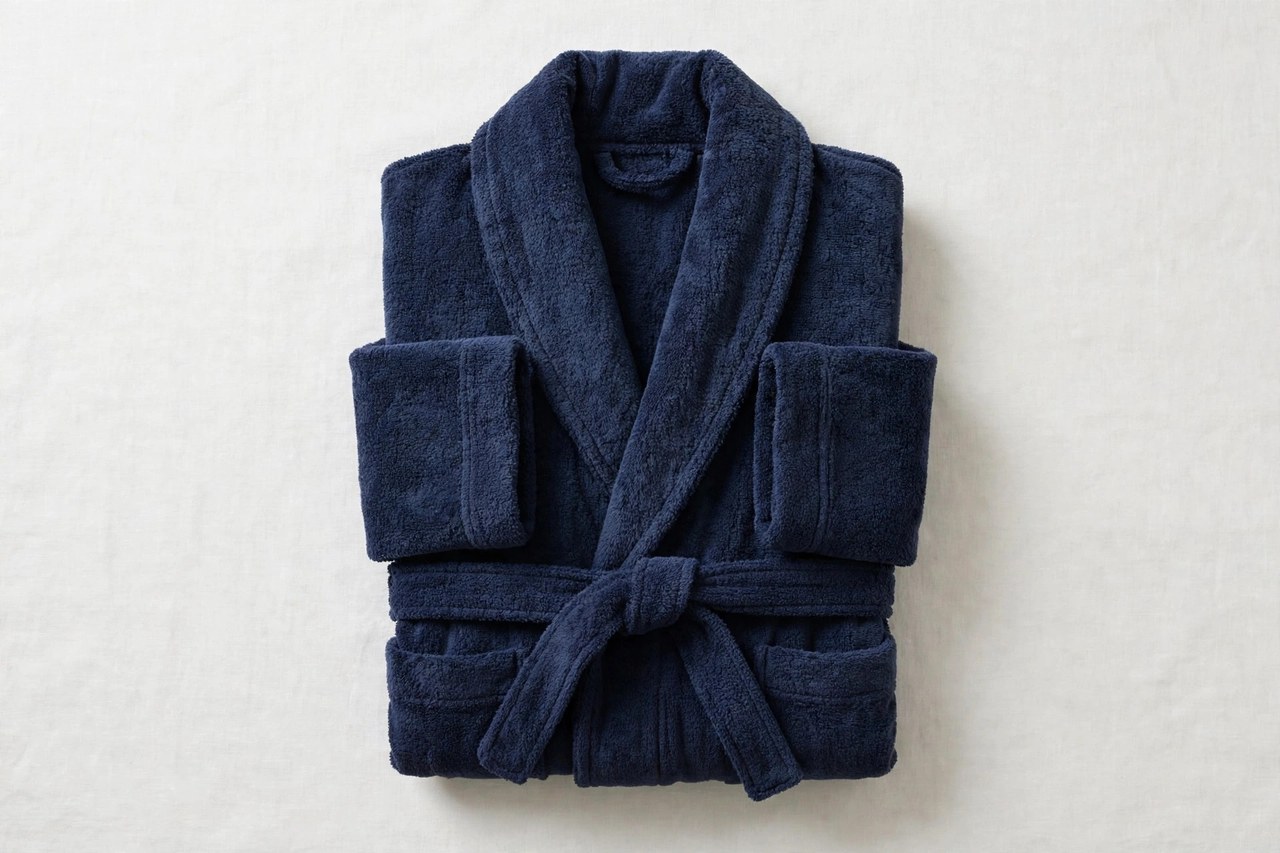
A men's robe is a loose-fitting outer garment with sleeves - the detail that separates robes from capes and cloaks. Its most popular form is the bathrobe, worn after bathing or swimming, typically made of an absorbent material such as toweling, and worn at home after a bath to keep warm and preserve modesty when there is no need to dress in full. Around that core sit kimono-style robes, hooded robes, spa and hotel robes, and lighter lounge robes - a small category, but one where fabric choice decides almost everything. This guide is built around the questions buyers actually ask: which style, which size, which fabric, and what will it look like after a year of real use - answered in order, with the trade-offs stated plainly.
Fabrics and Styles: Terry, Waffle, Velour and Silk
Choose a robe by its cloth and its job. Terry toweling (looped cotton) is the absorbent classic for straight out of the bath or pool; waffle weave is lighter, quicker-drying and the spa standard; velour trades absorbency for softness; fleece and microfiber serve pure warmth; silk and satin are lounge garments, handsome and useless against water. Construction points that matter: a shawl collar or hood for warmth at the neck, a belt that is attached or looped so it cannot vanish in the wash, patch pockets placed where hands fall, and seams finished flat so they do not chafe bare skin. Length sets the register - knee length is active and poolside, mid-calf and ankle lengths are the full warm wrap.
The durable buying order is job, specification, budget - in that sequence. Decide what the garment must do, translate that into fiber, weight, construction and size numbers, and only then shop price. Read labels as specifications, inspect the garment inside out where finishing is unposed, and prefer the maker who publishes measurements to the one who publishes adjectives. A garment that matches your measurements, climate and laundry will be worn; one that misses any of the three becomes expensive storage.
Fit and Sizing
A robe should wrap with genuine overlap: fasten the belt and check that the front closes with several inches of double fabric across the body, sleeves reaching the wrist without swallowing the hands, and length where you want it when you sit - a robe rides up in a chair. Sizes are forgiving by design (many are S/M and L/XL), so choose by the wrap and the sleeve rather than the letter, and remember that terry and waffle cotton shrink noticeably in the first hot washes: a slightly generous new robe is usually the right one.
Measure yourself once a year and keep the numbers - chest, waist, inseam, foot, head - because bodies drift gradually while size habits never do. Shop from measurements, try garments under real conditions (over layers, in your own shoes, late in the day for footwear), and be honest about alterations: lengths and small waist changes tailor beautifully; shoulders, rises and patterns are the garment you bought forever.
Wearing and Care
Wash a robe before first wear to clear lint and wake up the toweling's absorbency - and skip fabric softener on terry and waffle cotton, which coats the loops and makes them repel the very water they exist to absorb. Wash warm with like colors, tumble dry for loft, and hang the robe on a hook or broad hanger between uses so it dries fully rather than souring on a door. In hard-water areas an occasional vinegar rinse restores absorbency that detergent build-up steals.
Five minutes when a garment comes off - shake it out, hang or fold it correctly, note the stain and the loose button - prevents most of the damage later blamed on quality. Keep a small kit where the clothes live: brush, lint roller, conditioner suited to your leathers, black, navy and grey thread. Clothing rarely dies at once; it fades by small neglects, and small attentions reverse the process at the same pace.
Common Questions
What is the difference between a robe and a bathrobe?
A bathrobe is the most popular kind of robe, not a separate category. A robe is any loose-fitting outer garment with sleeves; a bathrobe is the robe made for bathing contexts - absorbent toweling or waffle cotton, worn after a bath, shower or swim for warmth, drying and modesty. Dressing gowns, kimono robes, hooded and spa robes are sibling styles within the same family, chosen for lounge and warmth rather than absorbency.
Which robe fabric is best?
The fabric that matches the job. Terry toweling for absorbency after bathing; waffle weave for a lighter, faster-drying spa feel; fleece or velour for warmth on cold mornings; cotton seersucker or jersey for summer; silk or satin purely for lounging. The common mistake is buying the softest fabric for a wet job - velour feels wonderful and absorbs almost nothing, while terry's loops are engineered for exactly that work.
Why has my terry robe stopped absorbing water?
Usually build-up, not age. Fabric softener and excess detergent coat terry loops so they repel water instead of drinking it - which is why robe care skips softener entirely. Strip the build-up with a hot wash and a cup of white vinegar in the rinse, then dry fully; absorbency typically returns. If the loops themselves are flattened and worn, the robe has genuinely reached the end of its toweling life.
More in Men's Clothes Guide R
Robes and Bathrobes
A robe is a loose-fitting outer garment, and unlike garments described as capes or cloaks, robes usually have sleeves. It surveyed the styles available in the menswear market and singled out the most popular: the bathrobe, worn mostly after bathing or swimming, typically made of an absorbent material such as toweling, and worn at home after a bath to keep warm and preserve modesty if there is no need to dress in full.
More to Explore on Apparel Search
Looking for Men's Clothing Stores?
This guide explains men's robes. To browse where to buy, visit our men's clothing store directory, where you can find retailers that carry them.