Men's Resort Wear Guide
Men's resort wear - also called cruise wear - is clothing designed for warm-weather vacations: relaxed, breathable and polished enough to move from the beach to the dining room. A resort is a self-contained destination providing a vacationer's wants on the premises, but in fashion, resort wear grew into a clothing style and a year-round fashion season - born as collections for affluent customers spending the post-Christmas weeks in warm climates, and now a specialized season of its own, characterized by nautical themes, classic Hawaiian prints of palm trees and hula girls, and bright color. This guide turns that history into a working warm-weather wardrobe.
Shop Men's Resort Wear Now
Shop Men's Resort Wear on Amazon Shop Men's Resort Wear on eBayThe Amazon and eBay links on this page are affiliate links. If you make a purchase through them, Apparel Search may earn a commission.
Men's resort wear - also called cruise wear - is clothing designed for warm-weather vacations: relaxed, breathable and polished enough to move from the beach to the dining room. A resort is a self-contained destination providing a vacationer's wants on the premises, but in fashion, resort wear grew into a clothing style and a year-round fashion season - born as collections for affluent customers spending the post-Christmas weeks in warm climates, and now a specialized season of its own, characterized by nautical themes, classic Hawaiian prints of palm trees and hula girls, and bright color. This guide turns that history into a working warm-weather wardrobe. This guide explains what to look for, how the sizing actually works, which fabrics and constructions earn their price, and how to care for the garment so it keeps doing its job season after season.
Building the Wardrobe: Fabrics, Prints and Core Pieces
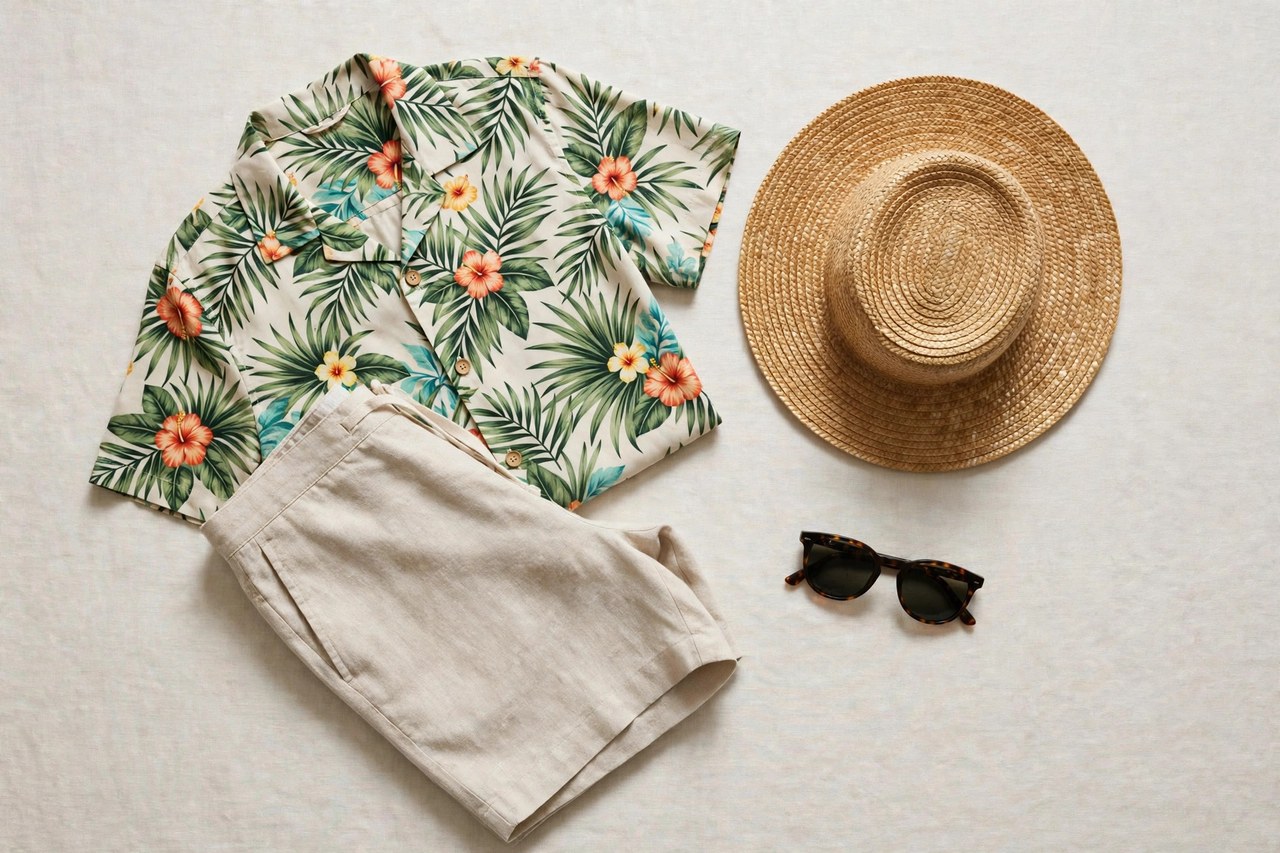
Build resort wear from fabrics that breathe: linen and linen blends, open-weave cotton, seersucker, rayon camp shirts and lightweight knits, in the palette of nautical navy and white, minty greens, yellows and blues, bright florals. The core pieces are few: camp-collar shirts (including Hawaiian prints), linen or cotton shorts with a clean hem, relaxed drawstring or flat-front trousers for evening, a light unstructured blazer or overshirt for air-conditioned rooms, and swim shorts tidy enough to double at lunch. Prints are the category's signature - wear one loud piece at a time and let everything else be solid and quiet, and prefer prints woven or printed on natural-feeling cloth over shiny synthetics.
The durable buying order is job, specification, budget - in that sequence. Decide what the garment must do, translate that into fiber, weight, construction and size numbers, and only then shop price. Read labels as specifications, inspect the garment inside out where finishing is unposed, and prefer the maker who publishes measurements to the one who publishes adjectives. A garment that matches your measurements, climate and laundry will be worn; one that misses any of the three becomes expensive storage.
Fit and Sizing
Resort fit is ease with intent: shirts that skim rather than billow, worn untucked at a length that ends mid-fly; shorts ending at or just above the knee; trousers relaxed through the thigh with a gentle taper and a cropped or no-break hem over loafers or sandals. The test is the dining room, not the beach - if the outfit reads deliberate with shoes on and sleeves neat, the ease is right. Size for heat: natural fabrics relax in humidity and shrink a little in resort laundry services, so a touch of room at the waistband is a feature, not a flaw.
Measure yourself once a year and keep the numbers - chest, waist, inseam, foot, head - because bodies drift gradually while size habits never do. Shop from measurements, try garments under real conditions (over layers, in your own shoes, late in the day for footwear), and be honest about alterations: lengths and small waist changes tailor beautifully; shoulders, rises and patterns are the garment you bought forever.
Packing and Care
Pack and care for resort wear around wrinkles and salt. Roll linen and knits rather than folding, hang everything on arrival (a steamy bathroom revives most pieces), and rinse swim and beach pieces in fresh water the same day - salt and sunscreen degrade elastic and fade prints faster than sun does. Wash camp shirts cool and inside out to protect prints, dry in shade, and accept linen's soft crease as part of the style: the goal is relaxed polish, not boardroom press.
Five minutes when a garment comes off - shake it out, hang or fold it correctly, note the stain and the loose button - prevents most of the damage later blamed on quality. Keep a small kit where the clothes live: brush, lint roller, conditioner suited to your leathers, black, navy and grey thread. Clothing rarely dies at once; it fades by small neglects, and small attentions reverse the process at the same pace.
Common Questions
What is resort wear, exactly?
Warm-weather vacation clothing with a season of its own. Resort wear - or cruise wear - began as collections made for affluent customers spending the post-Christmas and New Year weeks in warm climates, and designers, buyers and media now treat it as a specialized year-round style and fashion season. For the wearer it means breathable fabrics, relaxed but deliberate fits, and pieces that move from beach to dining room: camp shirts, linen shorts and trousers, swim shorts, light layers.
How is resort wear different from ordinary summer clothes?
Polish and range. A summer T-shirt and gym shorts cover heat; resort wear covers occasions - the same camp shirt and linen trousers work at the pool bar, on a boat and at a white-tablecloth dinner. The fabrics (linen, seersucker, open-weave cotton), the prints (nautical themes, Hawaiian palms and florals, bright South American color) and the tidy finishing are what lift vacation clothes into resort wear.
Can I wear Hawaiian prints without looking like a costume?
Yes, with the one-loud-piece rule. Wear the Hawaiian or floral print as the single statement - the camp shirt - and keep shorts or trousers solid and quiet, shoes clean, and the fit neat rather than oversized. Scale helps too: smaller, denser prints read calmer than huge spaced motifs. The print is the category's classic signature; the discipline around it is what makes it style rather than novelty.
More in Men's Clothes Guide R
What “Resort” Means in Fashion
In North American English, a “resort” is a self-contained commercial establishment which attempts to provide for most of a vacationer’s wants while remaining on the premises — food, drink, lodging, sports, entertainment and shopping. But in the world of fashion the term means more than a relaxing destination: resort wear is a clothing style, as well as a year-round fashion “season.” Sometimes known as “cruise wear,” it began as collections made only for very affluent customers who were expected to spend the post-Christmas and New Year’s weeks in warm-weather climates; more recently designers, store buyers and the media have come to view resort wear as a specialized year-round clothing style and fashion season. Its character includes the “nautical” style inspired by sailor and yachting themes, classic Hawaiian prints of palm trees and hula girls, brushed denim from San Francisco, bright floral prints from South America, and minty greens, yellows and blues.
Looking for Men's Clothing Stores?
This guide explains men's resort wear. To browse where to buy, visit our men's clothing store directory, where you can find retailers that carry them.