Men's Vintage Eyewear Guide
Vintage eyewear means older men's spectacle frames and sunglasses from earlier decades, in acetate, metal and combination materials, bought either to wear with new lenses or as period accessories. Frames survive well, but age affects hinges, nose pads, screws and plastic stability, so inspection matters more than style alone. This guide covers judging frame condition, understanding older sizing numbers, checking lens safety in old sunglasses, and the gentle handling that keeps brittle materials serviceable.
Shop Men's Vintage Eyewear Now
Shop Men's Vintage Eyewear on Amazon Shop Men's Vintage Eyewear on eBayThe Amazon and eBay links on this page are affiliate links. If you make a purchase through them, Apparel Search may earn a commission.
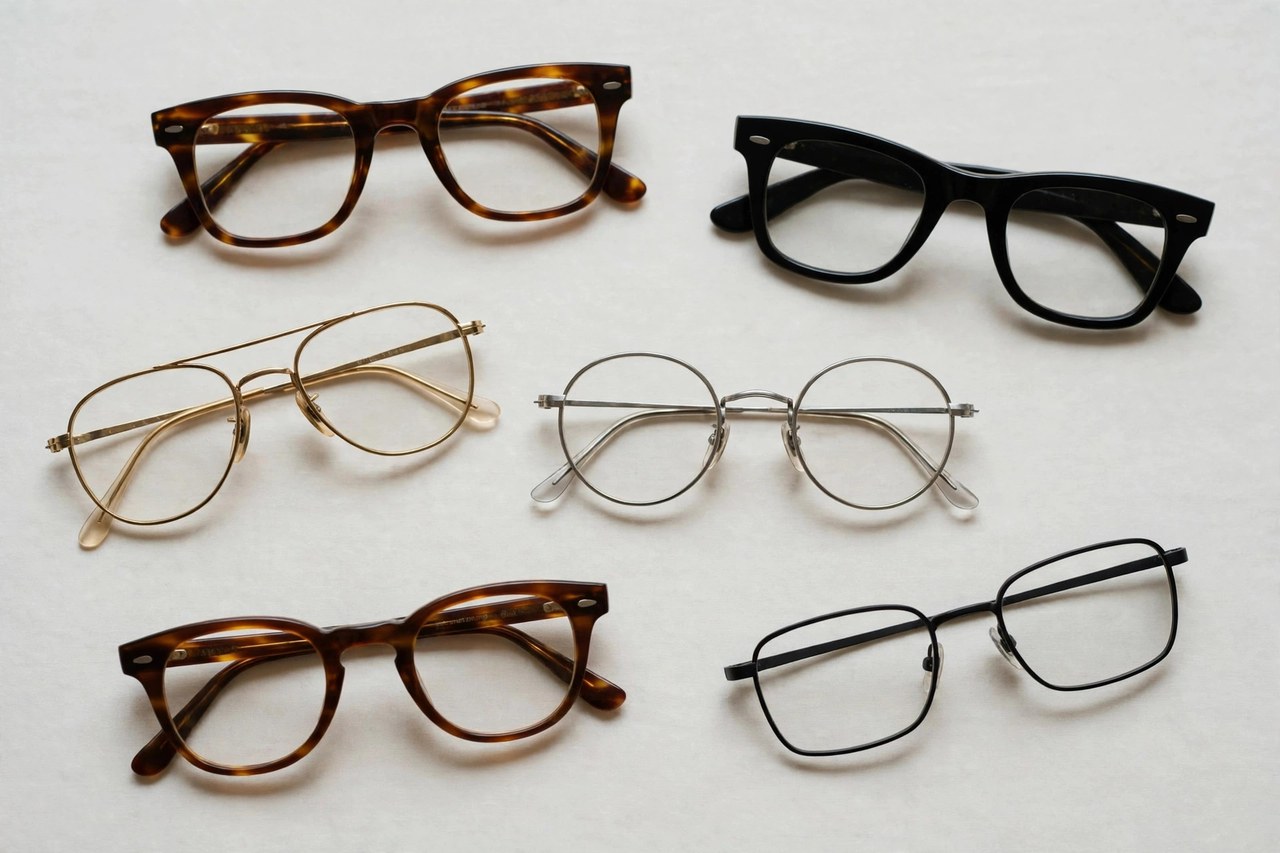
Vintage eyewear means older men's spectacle frames and sunglasses from earlier decades, in acetate, metal and combination materials, bought either to wear with new lenses or as period accessories. Frames survive well, but age affects hinges, nose pads, screws and plastic stability, so inspection matters more than style alone. This guide covers judging frame condition, understanding older sizing numbers, checking lens safety in old sunglasses, and the gentle handling that keeps brittle materials serviceable. This guide is built around the questions buyers actually ask: which style, which size, which fabric, and what will it look like after a year of real use - answered in order, with the trade-offs stated plainly.
Styles and Construction
Judge a frame by straightness, symmetry and moving parts. Sight along the temples for twists, open and close the hinges for smooth resistance, and check for cracks around screw holes, bridge stress marks and acetate whitening that signals brittleness. Metal frames may show plating wear or verdigris at nose pads, while early plastics can warp or become fragile. Original lenses in old sunglasses may lack modern ultraviolet protection, so plan on replacement lenses for regular outdoor use.
Accessories reward material honesty: solid metal over plated base metal, full-grain leather over bonded scraps, stitching over glue wherever fabric or hide is joined. Work every moving part through its full travel before paying - clasps, hinges, springs, adjusters - because small hardware fails before large materials do. And budget the care with the purchase: conditioner, the right cloth, a dry drawer; an accessory you can maintain will outlast a finer one you cannot.
Fit and Sizing
Frame sizes are printed as a series of numbers covering lens width, bridge width and temple length, but older frames often run narrower overall, reflecting period styles and smaller average fits. Vintage sizes run smaller in effect, so measure a comfortable current frame and compare every dimension, especially bridge fit and temple length behind the ears. An optician can adjust metal and some acetate carefully, but cannot widen a fundamentally narrow frame without risking breakage.
Accessories have exact fits and exact measures: belt length to the middle hole of a belt you own, hat size as head circumference, a watch case within the wrist's width. Makers' accessory charts vary more than apparel charts, so measure and use the chart rather than ordering a habitual letter - ninety seconds with a tape prevents the most avoidable returns in menswear.
Wearing and Care
Handle vintage frames with two hands, keep them in a hard case, and clean with lukewarm water, a drop of mild soap and a soft cloth rather than solvents that attack old acetate and coatings. Store away from car dashboards, radiators and sunlight, because heat warps plastic and loosens lens fits. Have screws checked and tightened by an optician, replace perished nose pads, and never force a stiff hinge; lubrication and adjustment are professional jobs.
Store accessories deliberately: leather away from sun and plastic, metal dry, belts rolled or hung by the buckle rather than folded at the same crease forever. Condition leather a few times a year, polish metal with the cloth meant for its finish, and repair hardware early - a loose screw today is a lost cufflink or a failed clasp next month. Rotate daily pieces in pairs and both will outlast a single workhorse.
Common Questions
Can prescription lenses be fitted to vintage frames?
Often yes, if the frame is sound, symmetrical and not brittle. An optician will inspect it first and may refuse fragile early plastic because lens insertion stresses the rim. Acetate and metal frames in good condition are the best candidates. Ask before buying, and factor quality replacement lenses and adjustment into the total cost.
Are vintage sunglasses safe to wear as they are?
Not automatically. Older sunglass lenses may offer little ultraviolet protection, can be scratched or unevenly darkened, and glass lenses may not meet modern impact expectations. For occasional short wear they may be acceptable, but for driving or regular sun use have modern protective lenses fitted to the frames by an optician who approves their condition.
How do I read vintage frame measurements?
The numbers usually give lens width, bridge width and temple length in millimetres, sometimes stamped inside a temple or on the bridge. Compare them with a frame that fits you now. A one or two millimetre bridge difference can change comfort completely, and shorter temples may not reach securely behind the ears on larger heads.
More in Men's Clothes Guide V
Background
Eyewear consists of items and accessories worn on or over the eyes, for fashion or adornment, protection against the environment, and to improve or enhance visual acuity. Glasses, also known as eyeglasses or spectacles, are devices consisting of glass or hard plastic lenses mounted in a frame that holds them in front of a person's eyes, typically using a bridge over the nose and arms which rest over the ears. Sunglasses allow better vision in bright daylight, and may protect one's eyes against damage from high levels of ultraviolet light. Typical sunglasses are darkened for protection against bright light or glare; some specialized glasses are clear in dark or indoor conditions, but turn into sunglasses when in bright light. Most sunglasses do not have corrective power in the lenses; however, special prescription sunglasses can be ordered. Depending on when they had been manufactured, sunglasses or prescription glasses can be vintage. Similar to fashion, vintage eyewear is a generic term for glasses originating from a previous era.
Looking for Men's Clothing Stores?
This guide explains men's vintage eyewear. To browse where to buy, visit our men's clothing store directory, where you can find retailers that carry them.