Men's Western Wear Guide
Men's westernwear is the clothing tradition of the American West: cowboy boots and hats, snap-button western shirts, denim and canvas work layers, tooled leather belts and bolo ties. Part working kit, part regional dress code, it is one of the few menswear families where decoration - piping, yokes, embroidery, conchos - is built into garments that were designed first to survive ranch work.
Shop Men's Western Wear Now
Shop Men's Western Wear on Amazon Shop Men's Western Wear on eBayThe Amazon and eBay links on this page are affiliate links. If you make a purchase through them, Apparel Search may earn a commission.
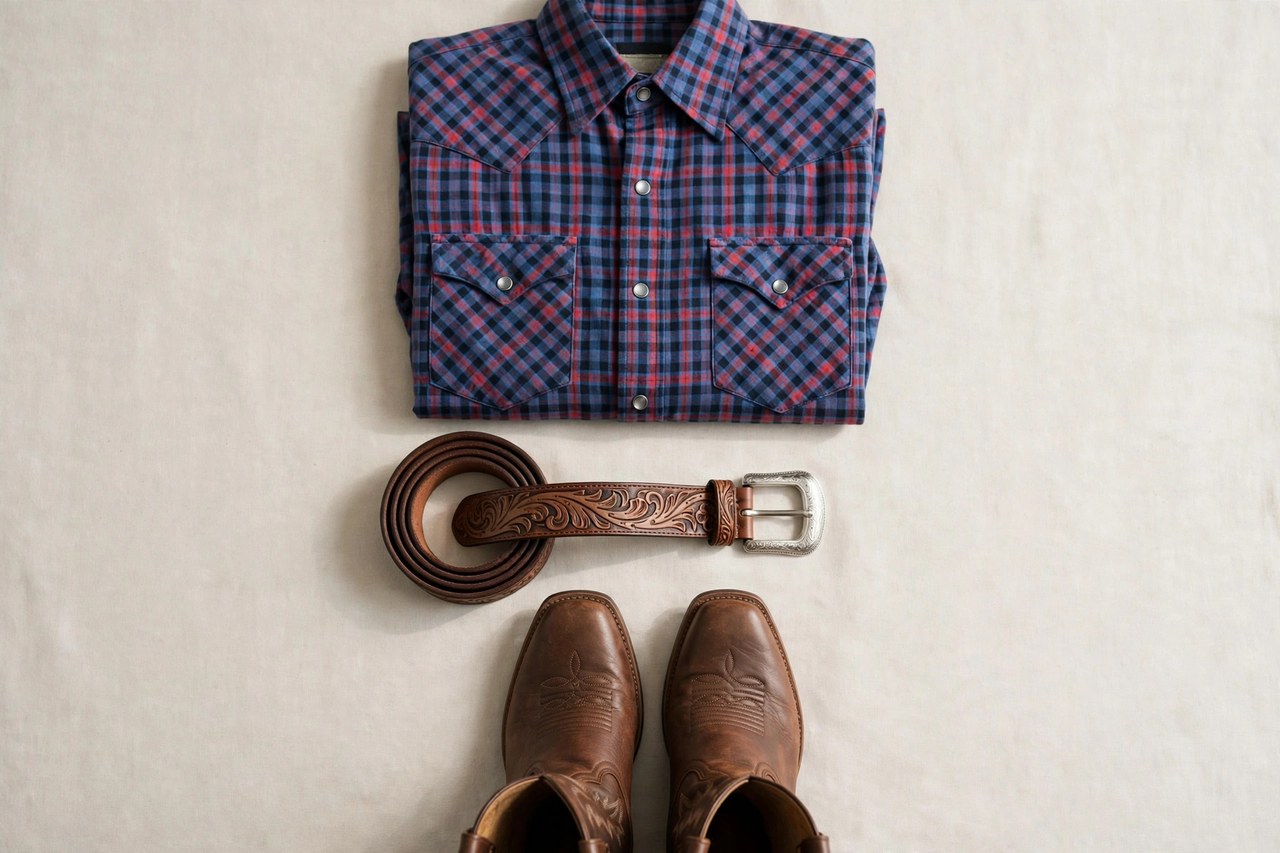
Men's westernwear is the clothing tradition of the American West: cowboy boots and hats, snap-button western shirts, denim and canvas work layers, tooled leather belts and bolo ties. Part working kit, part regional dress code, it is one of the few menswear families where decoration - piping, yokes, embroidery, conchos - is built into garments that were designed first to survive ranch work. This guide is built around the questions buyers actually ask: which style, which size, which fabric, and what will it look like after a year of real use - answered in order, with the trade-offs stated plainly.
Styles and Construction
The western shirt is the signature piece: pointed yokes front and back, snap fasteners that release if a shirt catches on machinery or a horn, flap pockets and long tails that stay tucked in the saddle. Fabrics run from cotton plaid and chambray to denim and, for dress western, satin-trimmed solids. Cowboy boots use a pointed or rounded toe for the stirrup, an angled riding heel, a leather shaft that protects the calf, and construction that can be resoled. Hats in felt or straw, jeans cut to sit over a boot shaft, and belts with trophy buckles complete the kit; quality shows in leather grades, stitch density and whether decoration is stitched and tooled or printed and glued.
The durable buying order is job, specification, budget - in that sequence. Decide what the garment must do, translate that into fiber, weight, construction and size numbers, and only then shop price. Read labels as specifications, inspect the garment inside out where finishing is unposed, and prefer the maker who publishes measurements to the one who publishes adjectives. A garment that matches your measurements, climate and laundry will be worn; one that misses any of the three becomes expensive storage.
Fit and Sizing
Western fit has its own logic: shirts are cut long and close so they stay tucked and do not flap, boots should grip the instep firmly - the heel slips slightly when new and settles as the leather molds - and jeans for boots need a longer inseam than jeans for shoes so the stack sits right over the shaft. Hat fit is by circumference, snug enough to stay on in wind without leaving a mark. If you are new to the style, fit the boots first and build outward; they set the proportions of everything else.
Measure yourself once a year and keep the numbers - chest, waist, inseam, foot, head - because bodies drift gradually while size habits never do. Shop from measurements, try garments under real conditions (over layers, in your own shoes, late in the day for footwear), and be honest about alterations: lengths and small waist changes tailor beautifully; shoulders, rises and patterns are the garment you bought forever.
Wearing and Care
Care for westernwear as workwear with manners: brush boots and condition the vamps, keep boot trees in tall shafts so they do not slump and crack, and store felt hats on a stand or box away from heat. Snap shirts wash inside out to protect the snaps and piping, denim fades are earned rather than maintained, and tooled leather wants an occasional light conditioning - heavy oils darken tooling and soften detail.
Five minutes when a garment comes off - shake it out, hang or fold it correctly, note the stain and the loose button - prevents most of the damage later blamed on quality. Keep a small kit where the clothes live: brush, lint roller, conditioner suited to your leathers, black, navy and grey thread. Clothing rarely dies at once; it fades by small neglects, and small attentions reverse the process at the same pace.
Common Questions
Why do western shirts have snaps instead of buttons?
Snaps are a safety inheritance from ranch work: if a shirt snagged on a fence, horn or machinery, the snaps popped open and released the wearer instead of dragging him. They also fasten one-handed on horseback - and they stayed because they look right on a yoke-front shirt.
How should cowboy boots fit when new?
Snug across the instep - that is what holds the boot on - with room at the toes and a small amount of heel slip that disappears as the sole flexes and the leather molds. If the instep is loose the boot will never fit properly; width cannot be fixed by insoles alone.
Can westernwear be worn without looking like a costume?
Yes - one statement piece at a time. Boots with ordinary jeans and a plain shirt, or a western shirt with plain chinos, read as regional style. The full kit head to toe reads as dress-up unless the occasion - rodeo, dance, western wedding - calls for it.
More in Men's Clothes Guide W
Background
What is this style of fashion? Western wear is a category of men's and women's clothing which derives its unique style from the clothes worn in the 19th-century American West. It ranges from accurate historical reproductions of pioneer, mountain man, Civil War, cowboy and vaquero clothing to the stylized garments popularized by singing cowboys such as Gene Autry and Roy Rogers in the 1940s and 1950s. Western wear can be very informal, with a t-shirt and blue jeans forming a basic ensemble, or it may consist of tailored formal garments with western accents. At minimum, western wear generally incorporates a cowboy hat, a leather belt, and cowboy boots. Key elements of men's western style fashion include the following: Western Shirt - A Western shirt is a traditional item of Western Wear characterized by a stylized yoke on the front and on the back. It is generally constructed of denim or tartan fabric with long sleeves, and in modern form is sometimes seen with snap pockets.
Looking for Men's Clothing Stores?
This guide explains men's western wear. To browse where to buy, visit our men's clothing store directory, where you can find retailers that carry them.