Women's Ballroom Dress Guide
Built to spin, stretch, and catch the light — dresses engineered for the dance floor first and the audience second.
Shop Women's Ballroom Dresses Now
Shop Women's Ballroom Dresses on Amazon Shop Women's Ballroom Dresses on eBayThe Amazon and eBay links on this page are affiliate links. If you make a purchase through them, Apparel Search may earn a commission.
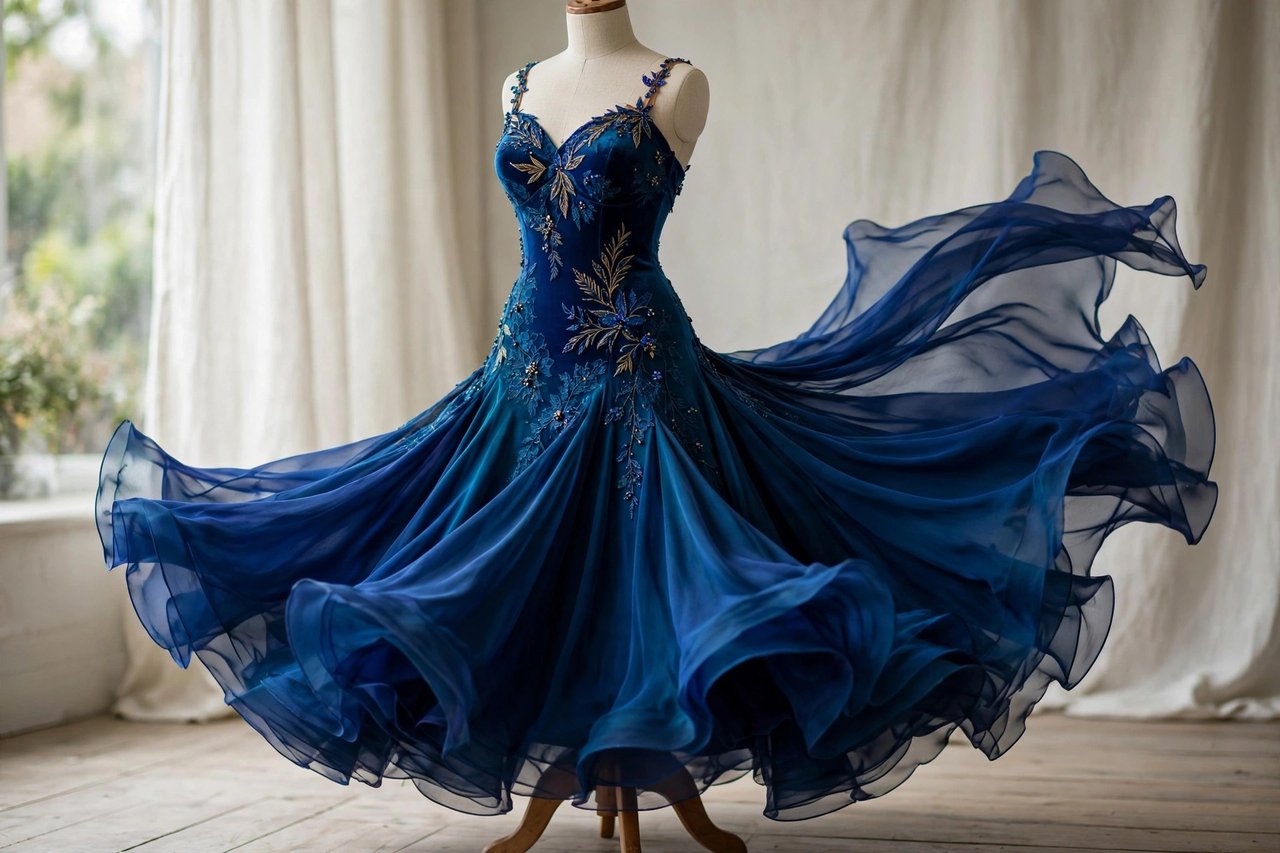
A ballroom dress is athletic wear in formal dress clothing. It must stretch through the shoulders, release through the hips, survive rapid turns without tangling, and still read as elegant from the far side of a competition floor. Two broad families cover most of the dance world. Standard and Smooth dresses are long and flowing, with full skirts that show off sweeping movement in the waltz, foxtrot, and tango. Latin and Rhythm dresses are shorter and closer to the body, often fringed, beaded, or cut with slits so hip action stays visible in the cha-cha, rumba, and swing. Both families rely on stretch fabrics, built-in leotard bodies, and careful weight distribution. Whether you dance socially at weekend parties or compete under judges' eyes, the right dress supports the dancing instead of fighting it — and that functional difference is what this guide focuses on.
Practice Dresses Versus Competition Dresses
A practice dress is the training uniform: usually black or a plain color, made from durable stretch jersey or crepe, knee to midi length, and free of decoration that could snag a partner or shed onto the floor. Dancers buy these to be worn several times a week, washed often, and eventually worn out. A competition dress is a different investment entirely. It is made to be seen at distance, with saturated color, crystals, fringe, floats, and a skirt cut precisely for its dance category. Standard competition gowns add layered underskirts and sometimes detachable arm floats that trail from the wrists to amplify movement. Latin competition dresses use fringe or beaded strands that exaggerate hip motion. Many dancers own one good practice dress and rent or resell competition dresses as styles and partnerships change. Beginners dancing socially sit happily in between: a plain, well-cut dress with modest sparkle works for showcases and parties without competition-level cost.
Fabrics That Move
Stretch is non-negotiable. Quality ballroom dresses use four-way stretch lycra blends, stretch velvet, stretch satin, and fine mesh, almost always built over an integrated leotard so the dress never untucks or twists independently of the body. Skirts for Standard dances favor georgette and chiffon over satin underskirts: the light top layer lags a fraction behind each turn, creating the floating effect judges and audiences love. Satin-faced organza and crinoline edging — a stiff horsehair braid sewn into hems — hold skirt shapes open during spins. Latin dresses lean on fringe, which is heavy, so the base fabric must be strong enough to carry rows of it without sagging. Chrisanne-style stretch lace and crystal-studded mesh appear on higher-end gowns. Whatever the material, hold it to the light and stretch it: quality stretch fabric snaps back flat, while tired or cheap elastic ripples and stays bagged, a flaw that shows mercilessly under bright floor lighting.
Fit Checks Every Dancer Should Do
Never judge a ballroom dress standing still in front of a mirror. In the fitting room, raise both arms into dance position and hold it: the dress should not pull at the shoulders, drag the skirt upward, or open gaps at the back. Take several turning steps and a lunge; the skirt hem should clear your dance shoes comfortably at every point of the spin. Check that the built-in leotard closure is secure and comfortable, since it anchors everything. Standard gowns are hemmed long — close to the floor in dance shoes — but a hem that touches the front of your shoe will catch mid-step, so confirm length while actually wearing your ballroom heels. Latin dresses should allow a full knee lift and deep lunge without the skirt riding up beyond your comfort. Finally, consider your partner: heavily crystallized bodices can scratch a partner's hands and arms, which is why many Smooth dresses keep the front bodice decoration smoother than the back.
Color, Decoration, and Being Seen
On a crowded floor, color does real work. Judges scan dozens of couples, and a dress in a saturated jewel tone — royal blue, magenta, emerald, scarlet — reads clearly at distance, while pale pastels can wash out under fluorescent hall lighting unless heavily crystallized. Skin tone matters: the best shade is the one that creates contrast against you, not the one that matches a trend. Crystals catch light with every movement and are graded by size and placement density; a dress with fewer, well-placed stones often sparkles more tastefully than one crusted edge to edge. Fringe should be checked strand by strand for secure attachment, because shedding fringe on a competition floor is both an embarrassment and a hazard. Floats, capes, and scarves must detach or anchor firmly — anything that can wrap around a partner's hand will eventually do so. Social dancers can ignore most judging logic and simply choose the color and decoration that make them want to practice.
Care for Hardworking Dresses
Ballroom dresses work harder than almost any other garment, and sweat is their main enemy. Air a dress inside out immediately after dancing, before it goes back into a bag, and use a fabric-safe spray between wears rather than overwashing. Practice dresses in plain jersey usually tolerate gentle machine washing in a mesh bag and flat drying, which keeps their stretch alive longer than tumble heat. Competition dresses with crystals, fringe, and floats are specialist-clean only; loose stones should be re-glued promptly with proper crystal adhesive, and a small repair kit of spare stones, needle, and matching thread belongs in every dance bag. Store gowns hung by their inner loops in breathable bags, with fringe smoothed straight and floats unknotted. Transport to events in a long garment bag laid flat in the car rather than crushed into a suitcase. Treated this way, a well-made ballroom dress holds its shape, sparkle, and resale value through many seasons of dancing.
Related Women's Guides
Looking for Women's Clothing Stores?
This guide helps you choose women's ballroom dresses by style and fabric. To browse where to buy, visit our women's clothing store directory, where you can find retailers that carry them.