Women's Ball Gown Guide
Floor-length, full-skirted, and unapologetically formal — the ball gown is the most traditional dress code answer there is.
Shop Women's Ball Gowns Now
Shop Women's Ball Gowns on Amazon Shop Women's Ball Gowns on eBayThe Amazon and eBay links on this page are affiliate links. If you make a purchase through them, Apparel Search may earn a commission.
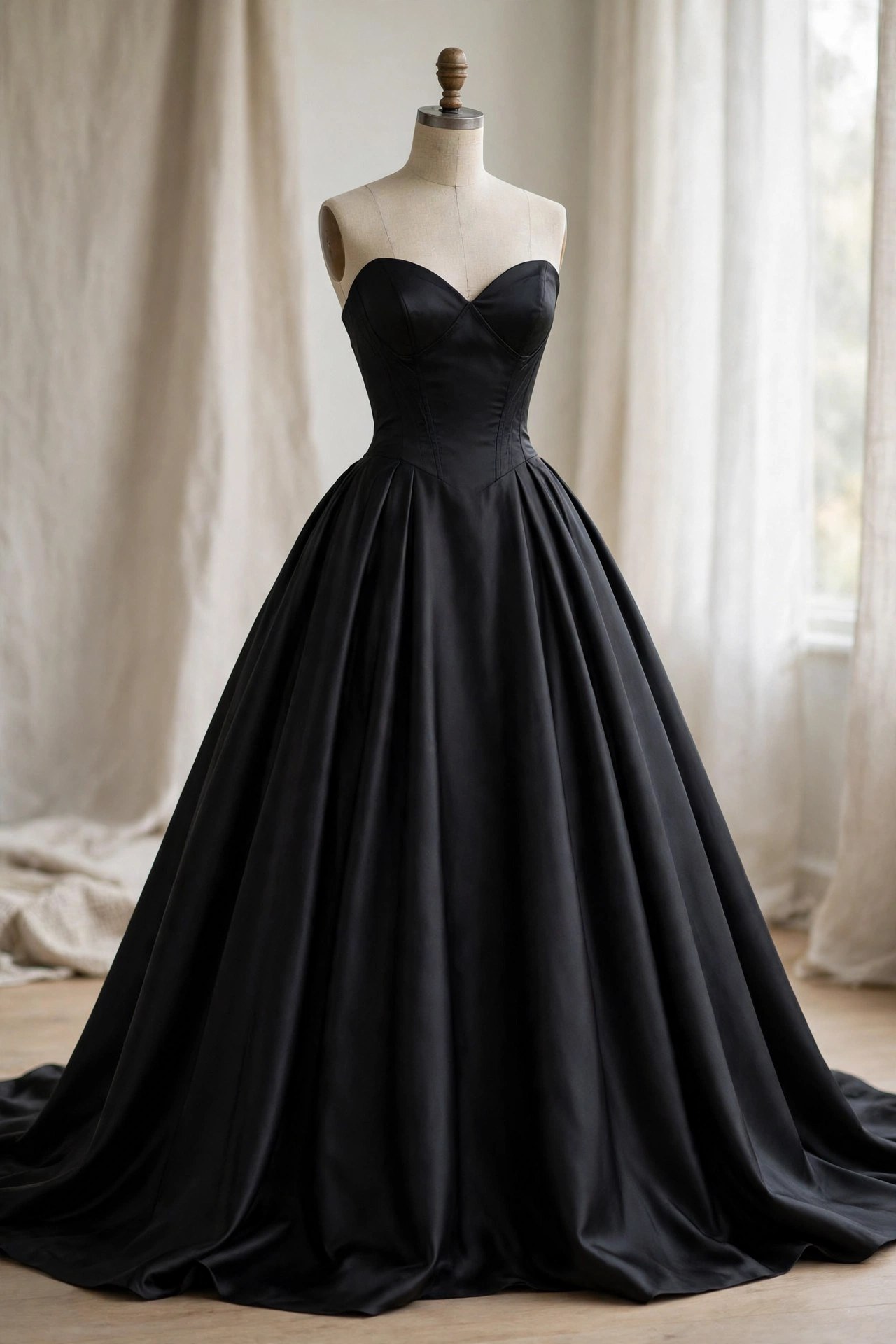
A ball gown is the most formal style of women's evening dress: a fitted bodice, a defined waist, and a full floor-length skirt made to sweep the ground. It is the expected answer to a black-tie or white-tie invitation and the standard silhouette for galas, charity balls, formal weddings, military balls, and debutante events. The drama comes from proportion — a close-fitting top balanced against generous skirt volume — rather than from ornament alone, although beading, embroidery, and lace can add richness. Unlike a generic evening dress, a true ball gown almost always has structural support inside: boning, an inner corselet, or at minimum a firm waist stay that keeps the bodice anchored while the skirt moves. If you attend even one formal event a year, understanding how these gowns differ in silhouette, fabric, and construction will help you buy once and wear the dress for seasons.
Silhouettes: A-Line, Princess, and Mermaid
The classic ball gown silhouette is the princess or A-line shape, with seams running from shoulder or armhole to hem and a skirt that widens steadily from the waist. It flatters nearly everyone because the waist is defined while the skirt skims over hips and thighs. A fuller version, sometimes called the fairy-tale or Cinderella shape, layers crinoline under the skirt for maximum volume and suits grand venues with wide dance floors. Mermaid and trumpet gowns take the opposite approach: fitted through the torso and thighs, then flaring sharply at or below the knee. They are glamorous and formal but restrict stride, so they suit receptions and photographs better than a night of dancing. Sheath-based gowns with detachable overskirts offer a compromise — ceremony volume that can be removed later. Strapless sweetheart bodices are the traditional pairing, though illusion necklines, off-the-shoulder sleeves, and halter bodices all work within black-tie rules.
Fabrics: Satin, Tulle, Organza, and More
Fabric decides whether a ball gown reads regal, romantic, or modern. Duchess satin is the classic choice: heavy, lustrous, and structured enough to hold a wide skirt without collapsing. Mikado, a blended silk with a subtle sheen and firm hand, has become a favorite for clean, architectural gowns with pockets and sharp pleats. Tulle skirts feel weightless and ethereal, built from many fine net layers over a lining; they travel surprisingly well because the net resists creasing. Organza gives crisp, translucent volume with a rustling movement, while chiffon produces a softer, flowing skirt that needs more layers for fullness. Velvet ball gowns suit winter events and photograph richly, though they are warm to wear. When comparing gowns, lift the skirt: quality shows in even hems, finished seams, and a lining that ends cleanly. Sparse, scratchy netting and a single thin underskirt usually signal a gown that will look flat within an hour of wear.
Black-Tie Etiquette and When to Wear One
A ball gown is correct when the invitation says black tie, black tie optional at a very formal venue, white tie, or when the event is a ball, gala, or state occasion. Floor length is the rule — a gown that ends at the ankle reads as a long evening dress rather than a true ball gown, which is fine for most events but worth knowing. Gloves, once mandatory, are now optional; if you wear them, remove them to eat and drink. Jewelry should match the gown's formality: a single strong piece, such as chandelier earrings or a necklace chosen to suit the neckline, looks better than a full matched set competing with beading. Keep wraps formal too — a silk stole, tailored evening coat, or faux-fur wrap rather than a daytime cardigan. Finally, consider the venue: a very full skirt needs room to move, so for a crowded historic house or a small restaurant buyout, a slimmer A-line keeps you graceful instead of apologetic.
Fit, Structure, and Alterations
Ball gowns are bought to be altered. Order by your largest measurement — usually bust or hip — and have a tailor take in the rest, because letting out a gown is limited by small seam allowances. The bodice should feel snug enough to stay up without constant tugging; internal boning and a waist stay do most of that work, not brute tightness. Hem length is judged in the exact shoes you will wear: the front should just graze the floor, clearing your toes as you walk. Bustle points or loops are essential if the gown has a train, so ask the tailor to add and demonstrate them before the event. Budget alterations into the purchase from the start; hemming a multi-layer skirt and taking in a boned bodice are skilled jobs. At the final fitting, sit, climb a few stairs, and raise your arms — a gown that passes those three tests will not surprise you on the night.
Wearing It Well: Movement, Storage, and Care
Walking in a ball gown is a small skill worth practicing. Take shorter steps, and when you turn, let the skirt follow rather than twisting against it. To sit, smooth the skirt behind your legs and sit on its edge so the fabric fans around the chair instead of bunching. Going up stairs, lift the front hem slightly with one hand — gracefully, and only as much as needed. Dancing favors A-line skirts; very full crinolines and tight mermaids both limit movement in opposite ways. After the event, air the gown overnight before storing, sponge-clean small marks rather than soaking beaded areas, and use a professional cleaner experienced with eveningwear for full cleaning. Store the gown in a breathable garment bag, hung by its inner loops rather than its straps, or folded in acid-free tissue if it is heavily beaded, since hanging weight can stretch a decorated bodice over time.
Related Women's Guides
Looking for Women's Clothing Stores?
This guide helps you choose women's ball gowns by style and fabric. To browse where to buy, visit our women's clothing store directory, where you can find retailers that carry them.