Women's Fur Hats Guide
The warmest headwear there is: fur hats from the Russian ushanka to the pillbox, in real and faux fur, and how fur's two-layer structure defeats the cold.
Shop Women's Fur Hats Now
Shop Women's Fur Hats on Amazon Shop Women's Fur Hats on eBayThe Amazon and eBay links on this page are affiliate links. If you make a purchase through them, Apparel Search may earn a commission.
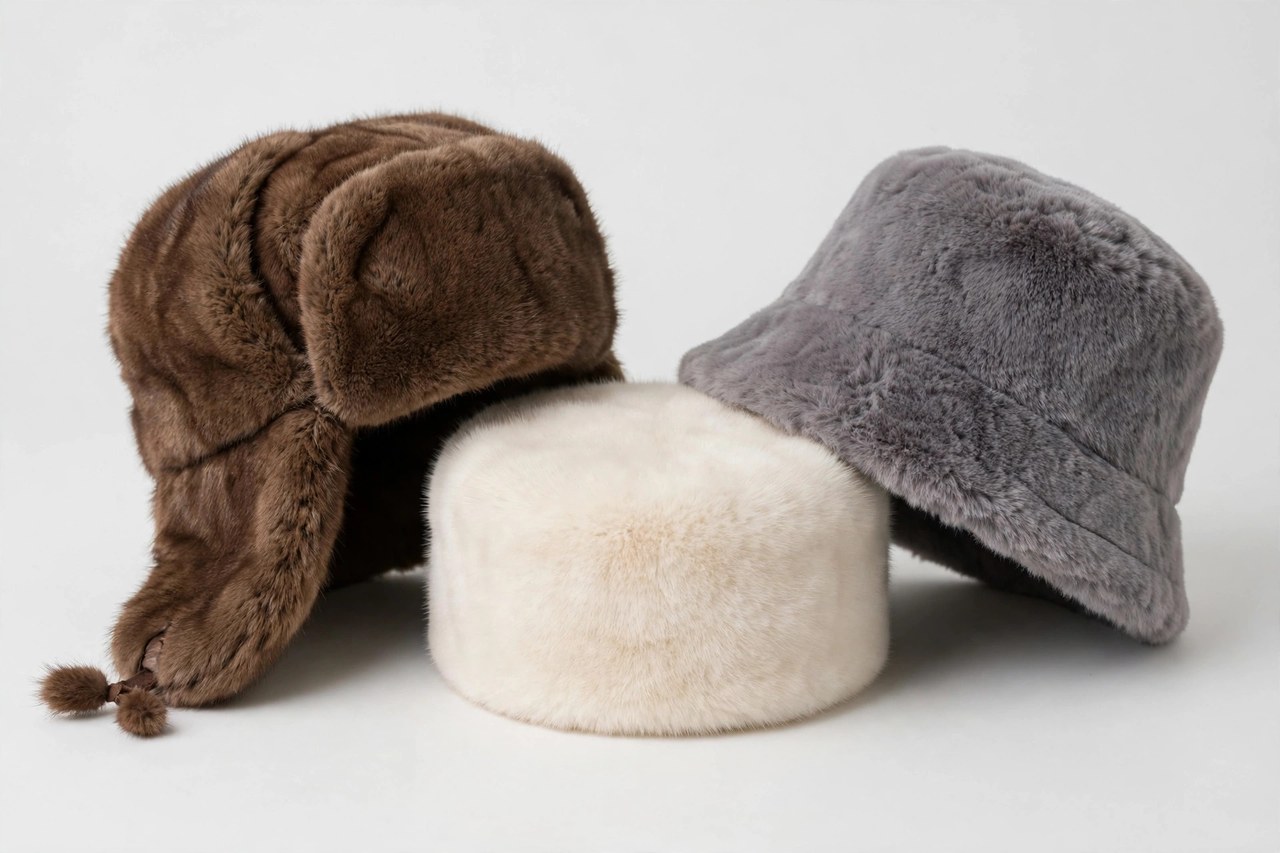
A hat is a head covering worn for protection against weather, for ceremony, for safety or as a fashion accessory — and the fur hat is the weather-protection kind at its most serious. Where a knit hat insulates with trapped air in yarn, a fur hat brings the original technology: an animal's own two-layer winter coat, perfected by evolution and unmatched for warmth in deep cold.
This guide covers how fur insulates, the classic fur hat styles (ushanka above all), real versus faux in headwear, and fitting and care. It is the companion to our fur coats guide.
How Fur Defeats the Cold
Fur is a thick growth of hair that covers the skin of many animals; it consists of a combination of oily guard hair on top and thick underfur beneath. The guard hair keeps moisture out and sheds wind and snow; the underfur acts as an insulating blanket that keeps the animal warm — and in a hat, keeps the wearer warm by exactly the same arrangement.
This two-layer system is why fur outperforms most synthetics at rest in severe cold, and why fur hats remain standard issue in genuinely cold climates rather than mere fashion. In headwear the common furs are fox, rabbit, mink (for smaller, finer hats), sheepskin/shearling, and astrakhan, alongside convincing faux versions of all of them.
The Classic Styles
The ushanka is the emblematic fur hat: a Russian fur cap with ear flaps that can be tied up to the crown, or fastened at the chin to protect the ears, jaw and lower chin from the cold. The flaps can also be bent back and tied behind the head — called ‘ski-style’ — offering less protection but much better visibility, essential for high-speed skiing. It is the most functional hat design in this guide and, in fashion terms, unmistakable.
Around it: the pillbox (small, neat, dressy, the mink classic), the tall Cossack style, the trapper hat (ushanka's North American cousin, often shearling or faux with a fabric shell), fur headbands and earmuffs for milder cold, and fur-trimmed hats where a band of fox or rabbit does the warming and the decorating at once. Women's fur hats come in a wide variety of style options within these families.
Real Fur vs. Faux in Hats
Headwear is where faux fur makes its strongest case: a hat is a smaller, shorter-season purchase, faux versions in fox and mink effects are convincing, and they tolerate snow, storage and travel without a furrier. Real fur's advantages narrow to extreme-cold performance and longevity — a real ushanka outlasts decades of winters.
Judge faux hats by pile density and whether the underfur layer is simulated at all; judge real ones by evenness, lustre and leather suppleness, as with coats. Either way, a fur hat is a statement of scale: it frames the face completely, so try before you buy, with your usual hairstyle and coat.
Fit and Care
Fit should be snug without pressure: a fur hat that perches will blow off and chill; one that grips will headache. Measure head circumference above the ears and compare with the maker's sizing, allowing for the pile's thickness — fur compresses slightly in wear. Ear flaps should cover the ears fully when down, or the design's whole point is lost.
Care mirrors coats at small scale: shake out snow and let the hat dry naturally at room temperature (never on a radiator), brush the pile with the grain, store on a stand or stuffed to hold shape, away from moths and crushing. Faux needs only the brushing and the stand. Kept so, a fur hat is a buy-once winter fixture, like the coats on our fur coats page.
More Fur & Winter Guides
Photos


Looking for Women's Clothing Stores?
This guide helps you choose women's fur hats. To browse where to buy, visit our women's clothing store directory, where you can find retailers that carry them.