The Silhouette
The New Look and the Hourglass
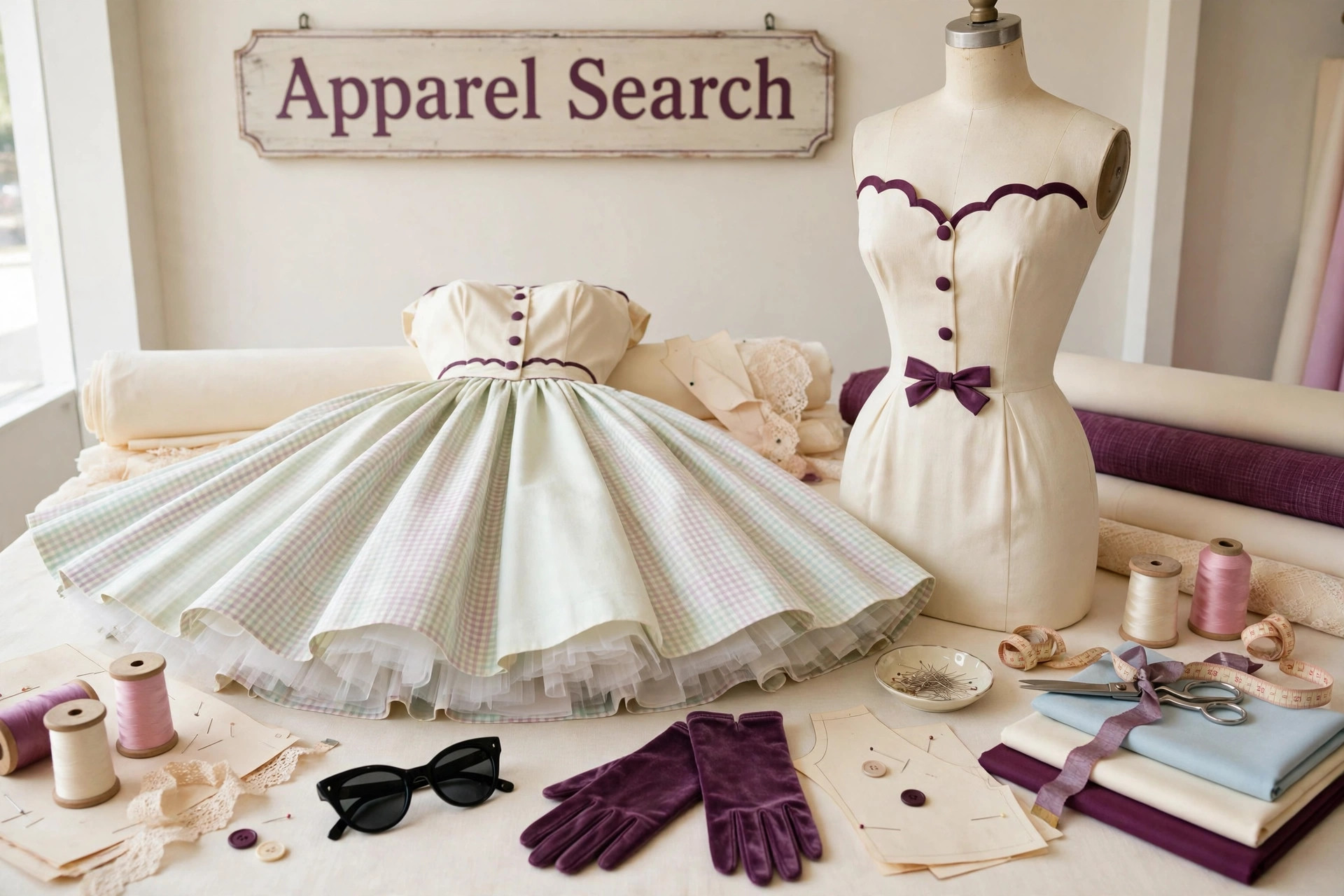
In February 1947 Christian Dior showed a collection of tiny waists and enormous skirts, and fashion pivoted on the spot. After years of rationed cloth, the New Look spent fabric like a celebration — a day skirt could hold ten yards — and its silhouette, christened the hourglass, ruled the decade: shoulders soft, bust lifted, waist cinched down with belts and foundation garments, hips amplified by petticoats under full skirts or sculpted by pencil skirts that forced the famous wiggle walk. Femininity was not suggested; it was engineered.
The decade held a second, sleeker line alongside the full skirt. The wiggle dress and the slim sheath pared the hourglass to its outline, and late-decade sack and trapeze dresses began loosening the waist altogether — the first move toward the 1960s. A teenage wardrobe also appeared for the first time as its own market: ponytailed girls in circle skirts, bobby socks and saddle shoes were the decade's other fashion public, and rock and roll gave them a uniform of their own.
The Key Pieces
Circle Skirts, Twinsets and Capris
- The full-skirted dress — fitted bodice, nipped waist, skirt swirling from petticoats; the swing dress guide covers its cut and modern versions.
- The wiggle dress — the hourglass with the volume removed: sheath-fitted, knee-length, worn with heels and confidence.
- The twinset — matching cardigan and short-sleeved sweater, the decade's polished casual uniform with pearls.
- Capri pants and pedal pushers — cropped trousers that made pants acceptable leisure wear for women, worn with ballet flats.
- Cat-eye glasses, headscarves and short gloves — the finishing system; no outfit left the house unaccessorized.
- The poodle skirt — the teenage emblem: a felt circle skirt with an appliquéd poodle, worn for dancing.
Underpinning it all was structure the modern wardrobe has forgotten: girdles, conical bras and crinoline petticoats. Vintage buyers meet them immediately, which is one reason the women's vintage fashion guide treats fifties sizing and foundations at length.
Fabrics & Color
Cotton Prints and Cocktail Satin
The fifties ran on cotton for day — gingham, polka dots, florals and novelty prints by the yard — and on satin, taffeta, lace and tulle for evening. Postwar synthetics joined in: nylon and the new easy-care blends promised wash-and-wear modernity to a generation of suburban homemakers. Color split between candy pastels — powder pink, mint, baby blue, lemon — and the sophisticated register of charcoal, black and red. Matching was a discipline: bag, shoes, gloves and hat were bought as a set, and a contrasting accent was a decision, not an accident.
The decade also invented the teenager as a fashion customer. Before the fifties, young women had dressed as smaller adults; now high-school girls had their own styles, their own magazines and their own budget culture — circle skirts and sweaters for school, saddle shoes and bobby socks, ponytails tied with scarves. Their mothers wore the shirtwaist and the cocktail sheath; their daughters wore the poodle skirt and, increasingly, jeans. Fashion has marketed to a youth generation of its own ever since, and the split between the grown-up silhouette and the teenage one — visible in every shop today — begins in this decade.
Wearing It Today
The 1950s Now: One Full Skirt, Modern Manners
No decade is quoted more at weddings, parties and on dance floors, because no decade photographs more kindly: the nipped waist and full skirt flatter nearly every body and move beautifully. The modern way in is proportion without the foundation garments — a fit-and-flare dress does the hourglass unaided — and restraint with the accessories, keeping one period signal (cat-eye sunglasses, a headscarf, red lipstick) rather than the full set.
Men's fashion ran a parallel polish — compare the 1950s men's fashion guide — and the decade's loosening end leads straight into the 1960s guide. The whole row is indexed at the fashion by decade guide.
More to Explore
Good to Know
Common Questions
What was the New Look?
Christian Dior's 1947 collection, named by a fashion editor who called it the New Look on sight. It proposed rounded shoulders, a cinched waist and a very full, long skirt after years of short, square utility clothing — using lavish yardage as a deliberate statement that rationing was over. Within two seasons its hourglass proportions had reset the fashionable silhouette worldwide.
Did women really wear poodle skirts every day?
No — the poodle skirt was a teenage novelty, mostly for dances and parties, and the appliqué was as often a record, a cat or initials as a poodle. Adult day dress was the shirtwaist and the full-skirted cotton dress; the poodle skirt survives as the decade's mascot because it is charming, easy to make and unmistakably fifties at a glance.
How do I get the 1950s silhouette without a girdle?
Modern fit-and-flare dresses build the shape into the cut: a fitted bodice, a defined waist seam and a skirt with enough volume — sometimes a light built-in petticoat — to stand away from the hips. A wide belt on a shirt dress achieves the same proportion. The period silhouette came from foundations; the modern version comes from pattern cutting, and it is far more comfortable.
What shoes go with 1950s styles?
For full skirts, the period choices were heeled pumps for dress and ballet flats or saddle shoes for casual wear; wiggle dresses took the highest heels of the decade, including early stilettos. Today, a mid-heel pump or a flat with a pointed toe keeps the proportion without the pain — the skirt does the theatrical work, so the shoes can stay simple.
Search Apparel Search