The Silhouette
Shoulders as a Statement
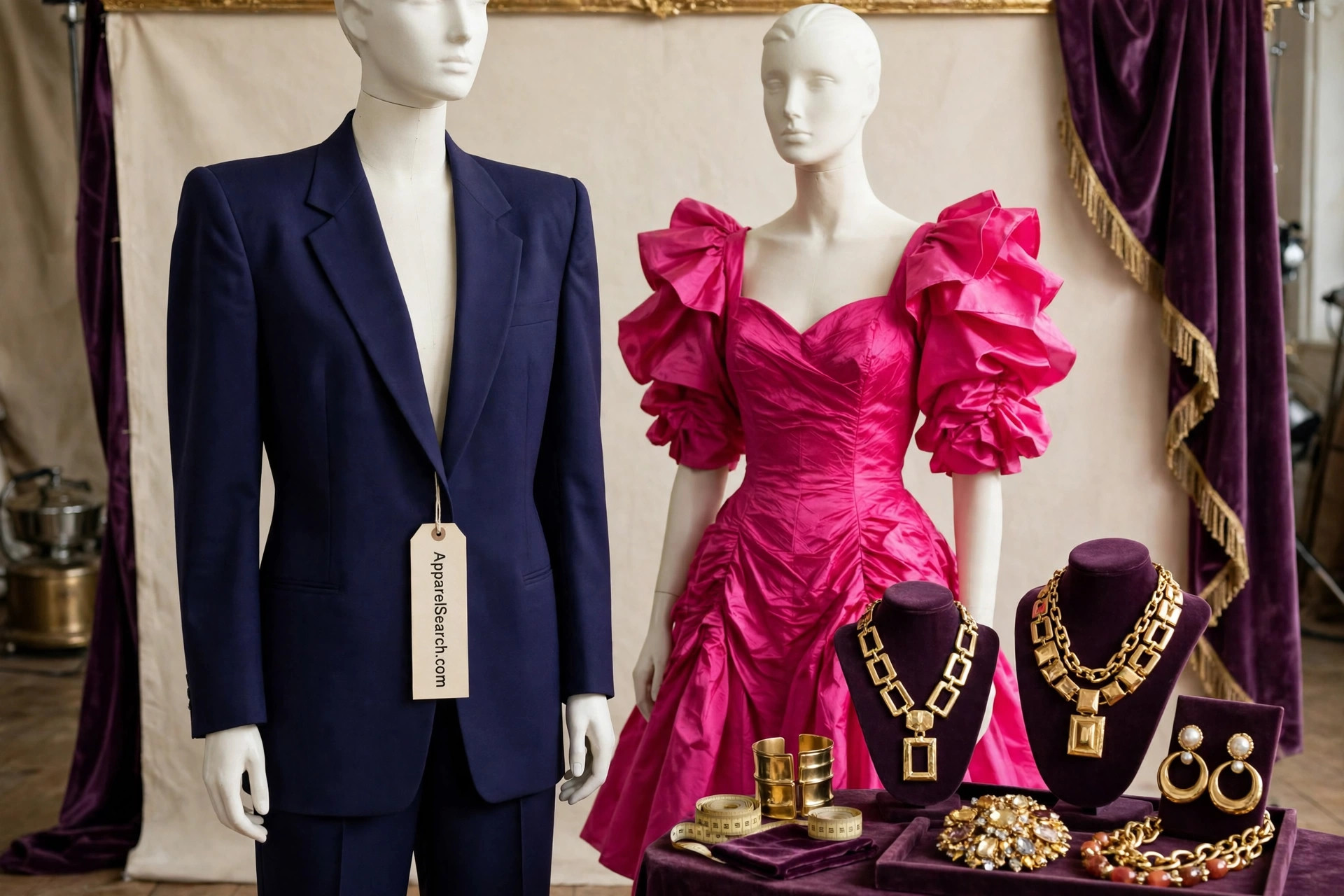
The 1980s built its silhouette from the top down. Shoulder pads — in suits, dresses, even T-shirts — widened the upper body into an inverted triangle that tapered to a belted waist and a narrow skirt or tapered trouser. The geometry was a message: as women entered management in large numbers, the working wardrobe borrowed the broad-shouldered authority of the man's suit and exaggerated it. Designers codified the look as power dressing, and by mid-decade the strong shoulder was as natural in an evening dress as in a boardroom.
But the eighties were never one wardrobe. Running beside the executive triangle were the decade's tribes: punk's leather and torn denim, carried over from the late seventies underground that the punk fashion term page traces; new wave's sculptural black and neon; hip-hop's sportswear and gold; and the aerobics studio's leotards, leg warmers and leggings, which permanently moved athletic clothing toward the street. The decade's breadth is catalogued on the 1980s fashion term page.
The Key Pieces
Suits, Statement Jewelry and Leggings
- The power suit — padded shoulders, nipped waist, knee-length skirt or tapered trousers, worn with a silk blouse, court shoes and a briefcase.
- The oversized blazer — sleeves pushed up, worn over everything from dresses to jeans; the decade's most borrowed menswear.
- Big costume jewelry — door-knocker earrings, chunky gold-tone chains, wide belts with statement buckles; accessories scaled up to match the shoulders.
- The cocktail dress — taffeta, sequins, pouf skirts and dramatic sleeves; evening wear as spectacle.
- Leggings and stirrup pants — the aerobics crossover that previewed athleisure by three decades.
- Acid-wash and stonewash denim — jeans processed pale and worn with everything, including more denim.
Hair matched the clothes for scale — permed, backcombed and lacquered — and makeup followed: strong blush, frosted shadow, and lipstick worn as punctuation.
Fabrics & Color
Taffeta, Lycra and Neon
The eighties loved sheen: silk and silk-look synthetics for power blouses, taffeta and satin for evening, sequins everywhere after dark. Lycra changed the decade's body-conscious clothes, putting stretch into leggings, body suits and swimwear. Color divided into two camps — the executive palette of navy, burgundy, black and cream, and the pop palette of neon pink, electric blue, acid yellow and purple, often worn together with the color-blocking the decade made a signature. Logos grew large, too: designer names moved to the outside of garments and stayed there.
Label culture deserves its own note, because the eighties industrialized it. Designer jeans, logo-printed sportswear, status handbags and conspicuous branding turned clothing into a legible price tag, and a generation learned to read net worth off a stranger's outfit at a glance. Fashion had always signaled status; the eighties made the signal literal, printed it across the chest and charged extra for the printing. Streetwear and luxury fashion still run on the circuitry this decade wired — the logo drop, the collaboration, the queue — which is why the eighties keep returning not just as shapes but as a whole way of selling clothes.
Wearing It Today
The 1980s Now: Keep the Shoulder, Edit the Rest
Fashion revives the eighties more often than any other recent decade, because its signals are strong and modular. The padded shoulder returned to blazers and dresses in the 2010s and never entirely left; a chunky gold-tone earring or a wide belt performs the same reference at accessory scale. The editing rule is subtraction: the original decade wore the shoulder, the hair, the jewelry and the color all at once, and modern wear keeps one or two at full volume.
The reaction came fast — read the 1990s guide for the decade that stripped all of this away — or compare the men's version in the 1980s men's fashion guide. The full row is indexed at the fashion by decade guide.
More to Explore
Good to Know
Common Questions
Why did 1980s clothes have such big shoulder pads?
Shoulder pads built the decade's inverted-triangle silhouette, widening the shoulders so the waist and hips read narrower — and they carried a social signal. As more women entered corporate management, the broad shoulder borrowed the visual authority of the traditional man's suit. Pads migrated from suits into dresses, blouses and knitwear, becoming so standard that garments were sold with removable pads as a selling point.
What is power dressing?
Power dressing was the 1980s doctrine of dressing for corporate authority: a tailored, shoulder-padded suit, quality fabrics, restrained but expensive-looking accessories and immaculate grooming, adapted from menswear and popularized by bestselling dressing-for-success books. Its softer version — suit, silk blouse, court shoes — became the default professional uniform for a generation of women executives.
How do I wear 1980s style without it looking like a costume?
Choose one signal at full strength: a strong-shouldered blazer with modern jeans, or vintage costume earrings with a simple dress, or a wide statement belt over a plain knit. Costume happens when every signal fires at once — shoulder, neon, big hair, logo and frosted makeup together. The decade's own stylists knew the pieces were loud; the modern edit is volume control.
Did everyone in the 1980s dress in neon and sequins?
No — neon and sequins were the pop and evening registers of the decade. Daytime professional dress was comparatively sober: navy, grey, burgundy and black suits, cream blouses and pearls. The loudest images survive because they photographed well, but the decade's lasting influence is arguably the quiet part: the tailored working wardrobe and leggings' march from the gym to everywhere.
Search Apparel Search