The Silhouette
Two Reactions to the Eighties
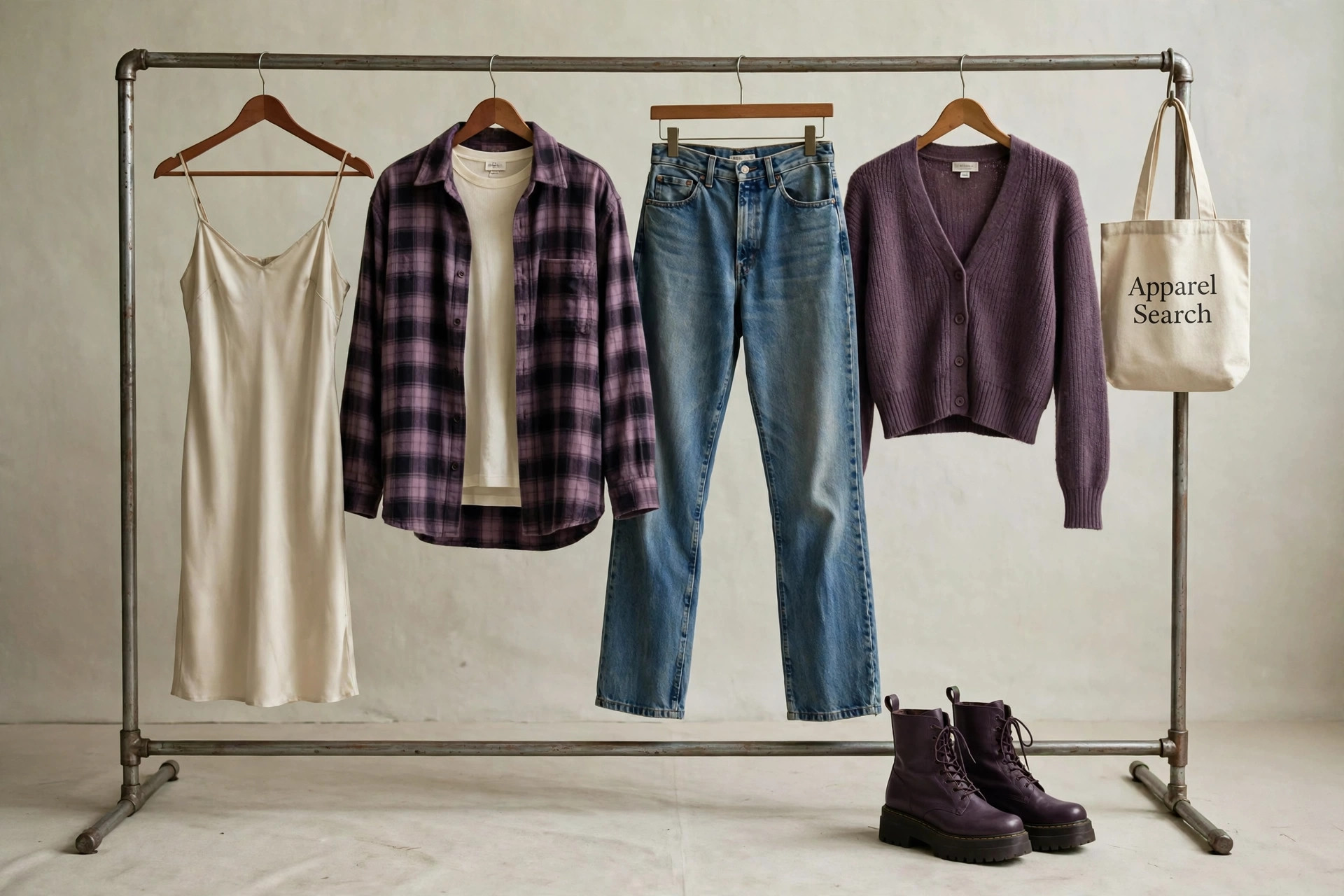
The 1990s began as a rejection. Out went the shoulder pads, the sequins and the executive polish of the 1980s; in came clothes that looked deliberately unconsidered. The decade split its answer in two. Minimalism — led by designers who stripped fashion to line and cloth — produced the slip dress, the bias-cut skirt, the narrow trouser suit and a palette of black, white, grey and beige: nothing to date, nothing to shout. Grunge, arriving from Seattle's music scene, produced the opposite uniform from the same impulse: thrift-store flannel shirts, ripped jeans, thermal layers and heavy boots, an anti-fashion that fashion promptly adopted at designer prices — a story the grunge fashion term page tells in full.
By the decade's end the two had merged into the modern default: jeans, a plain tee or fine knit, a simple jacket, minimal jewelry. The 1990 fashion history page documents the decade's turning points, including the supermodel phenomenon that made a handful of faces the era's true silhouette-setters.
The Key Pieces
Slips, Flannel and Straight-Leg Denim
- The slip dress — bias-cut, spaghetti-strapped, worn alone, over a tee, or under a cardigan; the decade's signature garment.
- The flannel shirt — plaid, oversized, open over a band tee or tied at the waist; grunge's flag.
- Straight-leg and baggy jeans — dark, unadorned denim replaced the eighties' acid wash; hems pooled over boots.
- Combat boots and chunky shoes — heavy footwear grounded both the grunge and the minimalist looks.
- The cropped cardigan and baby tee — small tops against the decade's longer, looser bottoms.
- The minimalist trouser suit — narrow, unlined, in black or stone; the office answer to power dressing.
Accessories shrank to match: thin chokers, tiny backpacks, small oval sunglasses and a single silver ring where the eighties would have worn a fistful of gold.
Fabrics & Color
Matte, Dark and Deliberately Plain
Nineties fabric was matte and honest-looking: washed silk and rayon for slips, cotton flannel, thermal waffle knits, dark denim and plain wool suiting. The palette is the surest way to date the decade — black, charcoal, stone, olive, burgundy and faded plaid, with white T-shirts as the universal base. When color appeared it was often a single flat note — a red slip dress, a cobalt knit — against the neutral field. Logos, huge in the late eighties, went quiet again, then returned at the decade's very end as streetwear rose.
The decade's faces mattered as much as its clothes. The supermodel era — a small group of models so famous they became the culture's style reference — put a uniform of a different kind on display: off duty, the look was jeans, a white tee, a black blazer and boots, polish reduced to grooming and fit. That off-duty uniform may be the nineties' most copied outfit, because it taught a generation that style could mean subtraction. Heroin-chic controversies and the waif look shadowed the decade's middle years, and fashion's own argument about them pushed the pendulum toward the healthier, more various casting that followed — a reminder that every decade's silhouette is also an argument about bodies.
Wearing It Today
The 1990s Now: It Never Left
Of all the decades in this series, the nineties need the least translation, because the modern wardrobe is largely built from its pieces: the slip dress over a tee, straight jeans and boots, a flannel in autumn, a black trouser suit. Wearing the decade today is mostly a matter of proportion — small top, longer bottom, chunky shoe — and of the decade's studied plainness: one texture at a time, jewelry minimal, hair and makeup quieter than the clothes.
The nineties close the women's row that begins with the 1920s; compare the two and the century's argument — ornament versus restraint — is complete. The men's version is the 1990s men's fashion guide, and the full index is the fashion by decade guide. True nineties pieces are now vintage themselves, and the women's vintage fashion guide covers buying them.
More to Explore
Good to Know
Common Questions
What is the most iconic 1990s outfit?
The slip dress is the decade's single most recognizable garment — bias-cut, calf-length, worn with boots or strappy sandals, sometimes over a white T-shirt. Its opposite number, the grunge uniform of flannel shirt, ripped jeans and combat boots, runs a close second. Together they define the decade: one silhouette for the minimalists, one for the refusers, and most wardrobes held both.
Why did fashion become so plain in the 1990s?
It was a direct reaction to eighties excess — recession, a new generation of designers, and a youth culture that treated obvious designer dressing as embarrassing all pushed the same way. Plainness became the luxury signal: perfect cut and cloth, no visible effort. The supermodel era kept glamour alive on the runway, but everyday fashion chose the black slip dress over the sequined pouf.
Are 1990s clothes considered vintage now?
Yes — vintage is generally counted from about twenty years old, so nineties garments qualify, and the best of them (slip dresses, dark straight-leg denim, minimalist suiting) are actively collected. Check the usual vintage points: rayon slips for seam stress, elastic for perishing, and sizing, which ran smaller than today's vanity-sized equivalents.
How do I tell grunge from ordinary casual clothes?
Grunge is a specific recipe, not just casualness: an oversized plaid flannel, visible layering (thermal under tee under flannel), distressed or ripped dark denim, and heavy boots, all of it looking thrifted rather than bought as an outfit. Modern casual borrows the pieces separately; grunge wore them together, deliberately unpolished, as a statement against fashion itself.
Search Apparel Search