Women's One-Piece Racerback Swimwear Guide
The racerback one-piece is the athlete's swimsuit: shoulder straps that converge between the shoulder blades, leaving the shoulders completely free to stroke, reach and race.
Shop Women's Racerback Swimsuits Now
Shop Women's Racerback Swimsuits on Amazon Shop Women's Racerback Swimsuits on eBayThe Amazon and eBay links on this page are affiliate links. If you make a purchase through them, Apparel Search may earn a commission.
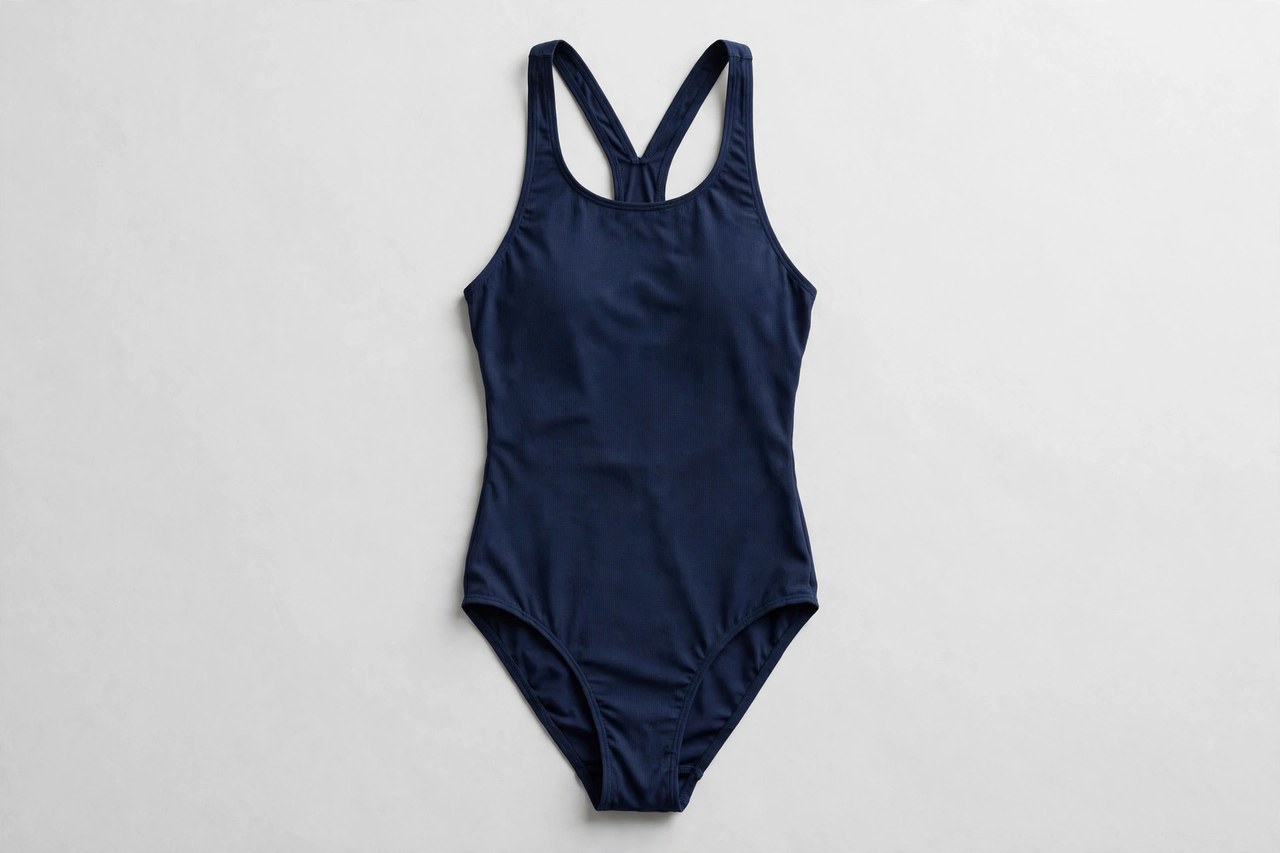
A racerback swimsuit is defined by its back: the two shoulder straps angle inward and join or converge between the shoulder blades, in the shape borrowed from racing singlets and athletic tanks. The construction leaves the shoulder blades and the outer shoulders entirely uncovered, which is exactly what a swimmer needs — nothing crosses the muscles that drive the stroke. Among one-piece swimsuits, the racerback is the performance cut, built for training, lap swimming, swim fitness and competition rather than for decoration.
This is a strictly product-focused guide to the garment itself: how a racerback suit is constructed, which fabrics survive daily chlorine, how the cut differs between training suits and competition suits, and how to size a suit that must fit like a second skin without restricting breathing or stroke. Construction, fabric and fit are the whole subject here, because in a performance swimsuit they are what you are buying.
Racerback Construction
The key pattern piece is the back panel. In a conventional one-piece, two separate straps run over the shoulders parallel to the spine. In a racerback, the straps are cut on an inward diagonal and meet at a central panel or junction high between the shoulder blades. That junction anchors the suit: the straps cannot slip off the shoulders mid-stroke, the neckline stays seated during turns and dives, and the armholes are cut high and close so no fabric scoops water at the catch of each stroke.
Details vary by purpose. Training racerbacks use a moderate junction with wider, comfortable straps and a mid-height back opening, balancing security with easy on-and-off over hundreds of wears. Competition-style racerbacks sit tighter, with thinner straps and a higher cut of leg, minimizing drag and fabric weight. Front construction is usually plain and lined, sometimes with a built-in shelf for structure, and seams are flat-locked or bonded so nothing raised rubs during long sessions. Leg openings are typically moderate — high enough for freedom of kick, low enough for secure coverage in and out of the pool.
Fabrics: Surviving Chlorine
Fabric is where training suits live or die. The standard athletic blends are polyester with elastane and PBT (polybutylene terephthalate) blends. Polyester and PBT resist chlorine far better than nylon: a nylon-elastane suit in daily pool use can lose its stretch and fade within a season, while a polyester training suit keeps its fit and color through hundreds of hours. The trade-off is hand feel — polyester suits feel firmer and slightly less silky than nylon, which is precisely the firmness that keeps them snug.
Check three specifications when buying for regular swimming. Elastane content: around 15 to 22 percent gives compression without constriction. Lining: a full front lining extends the suit's life and keeps the fabric opaque when wet. UPF rating: for outdoor pools, a UPF 50 rating in the fabric protects the back and shoulders the racerback cut leaves exposed. Colors behave differently too: dark solids hide chlorine fading longest, while bright prints disguise it — either strategy beats a pale solid, which shows fade first.
Sizing and Care for Lap Swimming
Performance suits are sized by bust or by torso measurement in racing sizes, and they should feel snug and compressive on dry land — fabric relaxes slightly in the water, so a suit that feels merely comfortable in the changing room will feel loose by the third lap. The straps should not dig, the leg openings should stay seated when you simulate a tumble turn's tuck, and you should be able to take a full deep breath without the neckline pulling down. If you swim with a long torso, look for long-torso sizing rather than sizing up, which adds width you do not need.
Care decides whether the fabric engineering survives. Rinse the suit in cold fresh water immediately after every swim — chlorine left in the fibers keeps working for hours. Wash occasionally by hand with a mild suit-specific wash, never with detergent containing bleach, and never wring a suit hard; roll it in a towel instead. Dry flat or hanging away from heat and sun, and rotate two suits if you swim daily, giving each a full day to recover its stretch. Followed consistently, this routine doubles the working life of a training suit.
Related Women's Guides
Photos

More to Explore on Apparel Search
Looking for Women's Clothing Stores?
This guide helps you choose women's one-piece racerback swimsuits. To browse where to buy, visit our women's clothing store directory, where you can find retailers that carry them.