Women's One-Piece Scoop Back Swimwear Guide
The scoop back is the classic one-piece silhouette: a rounded, open U of a back that balances support at the front with ease of movement and a clean, traditional line.
Shop Women's Scoop Back Swimsuits Now
Shop Women's Scoop Back Swimsuits on Amazon Shop Women's Scoop Back Swimsuits on eBayThe Amazon and eBay links on this page are affiliate links. If you make a purchase through them, Apparel Search may earn a commission.
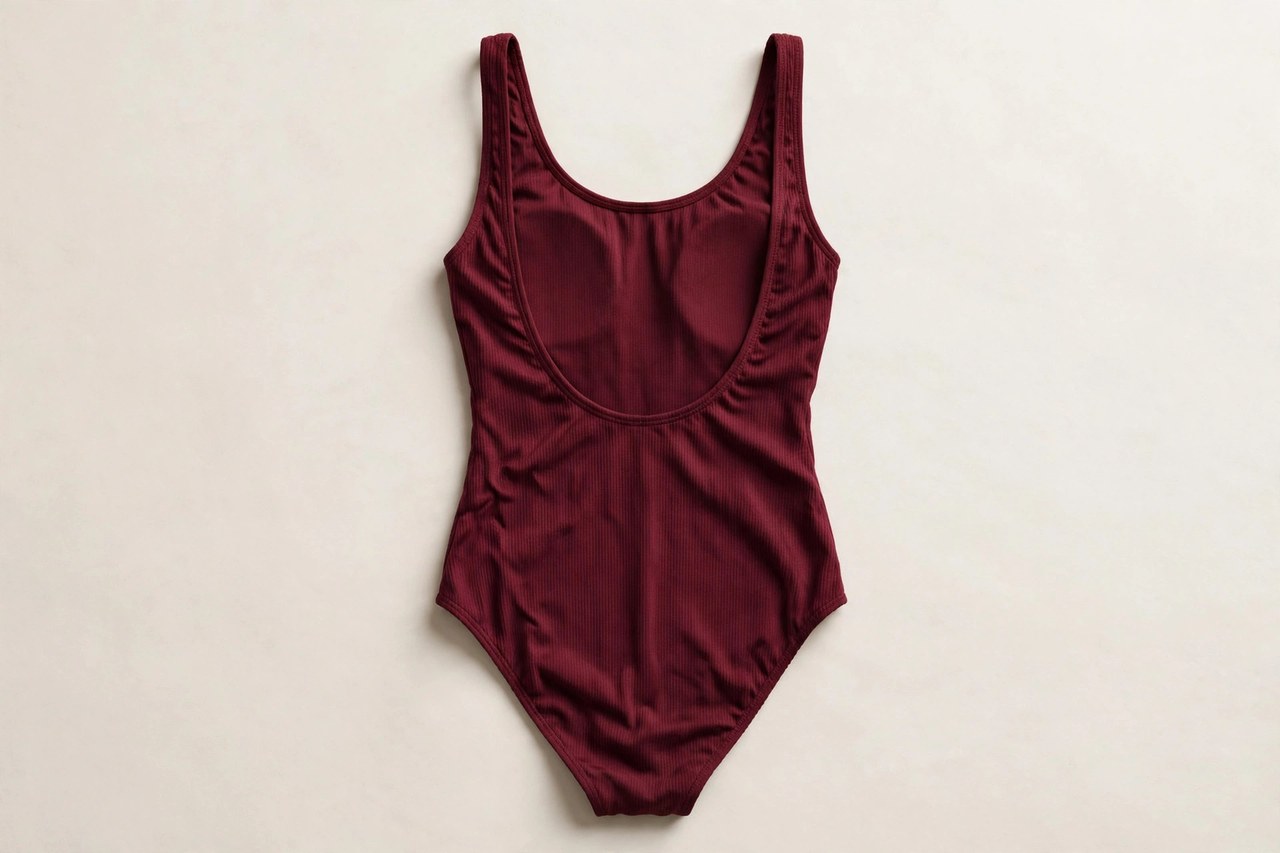
The scoop back one-piece is the swimsuit most people picture when they picture a swimsuit: two shoulder straps, a smooth front, and at the back a single deep, rounded scoop — a U-shaped opening that dips down the back and leaves it largely open. It is the oldest construction in modern swimwear, predating the racerback and the athletic cuts, and it endures because it solves the basic bargain of a one-piece better than any rival: security and coverage at the front, freedom and simplicity at the back.
This guide stays strictly with the product: how the scoop back is cut and why its depth matters, how strap and front details change the garment's support, which fabrics and linings to look for, and how to size and care for a scoop back suit. Whether the suit is destined for a resort pool, a beach week or gentle water exercise, these construction facts are what separate a good scoop back from a disappointing one.
Scoop Depth and Strap Construction
Scoops are cut at three depths, and the depth is a functional choice, not just a look. A high scoop ends just below the shoulder blades: the most secure and supportive cut, favored for water aerobics and active swimming, because the back band sits high and anchors the straps. A moderate scoop ends mid-back and is the classic all-purpose depth. A low scoop dips toward the waist: the most open and elegant line, and the least anchored — a low scoop suit is a lounging and light-swimming garment, and its straps need to be well-fitted to stay put.
Straps complete the engineering. Wide straps distribute weight and suit larger busts and long days; standard straps are the middle ground; adjustable straps (with sliders, like bra straps) let you tune the scoop's height and the front's lift, and are the single most useful feature in the category. At the back, some scoop suits add a small clasp or a horizontal strap across the scoop to keep the sides from spreading — a detail worth looking for in low-scoop styles. All straps should lie flat and be bar-tacked or double-stitched where they join the body of the suit.
Fronts, Support and Fabrics
The scoop back is worn with every kind of front, and the front decides the suit's character. Plain scoop or square necklines give the classic, sporty one-piece. Sweetheart and ruched fronts add shaping through gathered fabric. Wrap and surplice fronts create a V that lengthens the torso visually. Support inside ranges from a simple shelf lining, through soft molded cups, to underwire construction in suits built for fuller busts — match the support to your needs rather than to the photograph, because a scoop back suit offers no back-band adjustment to compensate.
Fabrics are the standard swimwear blends, chosen by use. Nylon-elastane feels silkiest and drapes best, suiting holiday and occasional swimming. Polyester-elastane resists chlorine and sun fade, suiting regular pool use. Stretch content between about 15 and 25 percent balances hold and comfort. Check for a full front lining (better suits line the whole body), smooth flat seams at the leg openings, and leg cuts in the moderate range — the scoop back silhouette pairs with a classic mid-height leg, though high-cut and boyshort-leg versions exist for different coverage preferences.
Sizing and Caring for a Scoop Back Suit
Size a scoop back suit by torso length as much as by bust. Because the back is open, a too-short torso shows up as straps that dig and a scoop that rides up higher than designed; a too-long torso lets the scoop sag and the straps slip. Many ranges now offer long-torso sizes — if you are tall or between sizes, that option usually fits better than going a size up. On fitting, raise both arms overhead and bend forward: the straps should stay on the shoulders and the leg openings should stay seated.
Care follows the standard swimwear routine, with one scoop-specific note. Rinse in cold water after every wear, hand wash gently with mild soap, and dry away from sun and heat. The note: hang the suit by its middle, folded over a rail or hanger, not by its straps — a wet suit is heavy, and hanging it by the straps stretches the very elastic the scoop design depends on, drop by drop, until the back no longer sits where it was cut to sit. Rotate suits on a multi-day trip for the same reason, letting elastane recover between wears.
Related Women's Guides
Photos

Looking for Women's Clothing Stores?
This guide helps you choose women's one-piece scoop back swimsuits. To browse where to buy, visit our women's clothing store directory, where you can find retailers that carry them.