Women's Short Sleeve Tops Guide
Short sleeve tops are the general category of women's tops with short sleeves, spanning woven blouses, knit tees, henleys and structured tops in every fabric.
Shop Women's Short Sleeve Tops Now
Shop Women's Short Sleeve Tops on Amazon Shop Women's Short Sleeve Tops on eBayThe Amazon and eBay links on this page are affiliate links. If you make a purchase through them, Apparel Search may earn a commission.
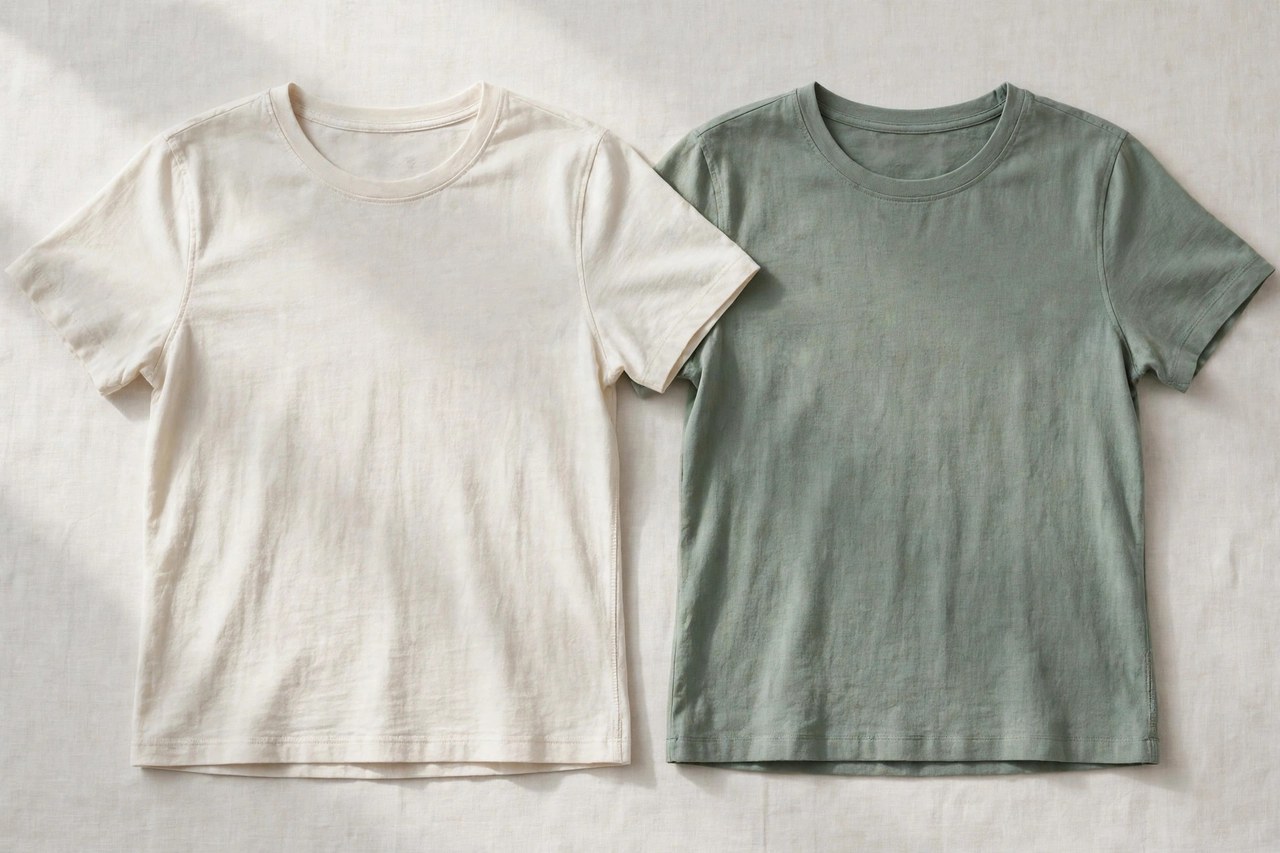
Short sleeve tops are the general category of women's tops with short sleeves, spanning woven blouses, knit tees, henleys and structured tops in every fabric. Tops is the umbrella page for the short sleeve section: it sorts woven from knit, tailored from relaxed, and links the shirt, tee and henley guides for their specifics.
This guide covers short sleeve tops in the order a careful buyer needs it: what the garment is made from, how it is constructed, how it should fit, how to choose it for real use, and how to care for it so it lasts. Apparel Search has published guides to women's clothing for decades, and this rebuilt page keeps the subject focused — measurable details, named materials and checks you can perform in a shop or on a parcel's arrival, rather than general fashion language.
Fabrics and Construction
Short sleeve garments divide first by fabric family: woven fabrics give structure, collars and a tailored finish, while knits give stretch, softness and a pull-on ease. In short sleeve tops, the fabric's weight matters more than its name — a featherweight jersey or voile behaves like a different garment from a mid-weight poplin or ponte in the same pattern. Look for opacity (hold the fabric over your hand against the light), recovery in knits (stretch and release a sleeve hem; it should return cleanly), and seam finishes that will survive frequent washing, because short sleeve tops are among the most washed garments in any wardrobe.
The sleeve itself is the construction signature. Set-in sleeves with a shaped cap sit neatest and suit smarter styles; raglan and dropped shoulders read relaxed; cuffed, banded, flutter and puff forms change the silhouette at the arm more than any other single detail. The shoulder seam should land at the shoulder point in tailored styles — a seam drifting down the arm makes the whole top look borrowed. Across all short sleeve tops, where the sleeve ends relative to the upper arm and how the shoulder seam sits decide whether the top reads neat or sloppy. Neckline finishing — ribbing, binding, facing or a collar — decides how the garment survives the wash, since necklines stretch in wear and are pulled over the head daily.
Fit and Sizing
Fit in short sleeve tops turns on three points: the shoulder, the sleeve opening and the body length. The sleeve opening should allow two fingers' ease around the arm without gaping wide when you raise it; the body should skim or follow as the style intends without pulling across the bust or riding up at the hem; and the length should be judged against the trousers and skirts you will pair it with — a top that only works tucked is a different purchase from one cut to wear loose. Knits forgive; wovens report every sizing error, so in woven styles the garment measurements matter more than the label size.
Size for the fullest point the garment covers and let a tailor-grade detail — a dart, a shaped seam — do the refining, rather than sizing down and straining the fabric. Between sizes in a knit, the smaller often settles better after the fabric relaxes; between sizes in a woven, the larger is almost always right, because ease is what allows a woven short sleeve top to move with the arm instead of binding at the biceps. Check the fit raising your arms and sitting, as with any top: a hem that stays placed through both is the practical definition of your size.
Choosing and Wearing
A short sleeve wardrobe works as a system: the tailored woven for structure, the fine knit for layering, the relaxed tee or top for off-duty hours. short sleeve tops earns its place by covering its role better than the neighboring categories — which is why this section separates shirts, tees, henleys and general tops rather than treating 'short sleeve' as one garment. In outfits, the sleeve length sets the formality dial more than wearers expect: a cuffed, set-in sleeve under a jacket reads as a complete top, while the same body with a soft banded sleeve reads as a base layer, and both judgments happen before color is even noticed.
Buy for wash frequency and climate: breathable natural fibers and open weaves for heat, denser knits and lined wovens where air conditioning and shoulder seasons dominate. Color strategy is simple at this scale — a base of neutrals that layer under everything, then a small number of colors that work with your most-worn bottoms. In practice, rank the checks above in the order your own use demands — frequency of wear first, then weather, washing facilities and budget — because that order differs by household, and it is the real reason two careful buyers can correctly choose differently from the same shelf. The test of a good short sleeve top is invisibility of effort: it should be the garment you stop noticing ten minutes after dressing, in fit, in temperature and in how it sits under or over its partners.
Washing and Keeping Shape
Short sleeve tops live in the laundry more than in the wardrobe, so care is mostly washing well. Sort by fabric and color, wash knits gently and dry them flat or on low heat to protect neckline ribbing and sleeve bands from growing, and wash wovens inside out to preserve their face and buttons. Close buttons and zips before washing to stop them snagging knits in the same load. Treat the underarm area — the highest-wear zone in any short sleeve garment — promptly after wear in warm weather, because set-in perspiration marks are the usual reason an otherwise sound top is retired.
Store knits folded, not hung, so the shoulders do not grow points; hang wovens on shaped hangers that support the shoulder line. Press or steam before wear rather than after washing, and check sleeve hems and neckline stitching each season — both are early-failure points that a few stitches repair invisibly. Whites and pale tops stay bright washed separately with an oxygen-based agent where the fabric allows. A top cared for this way keeps its fit and neckline for years, which matters disproportionately in a category you wear several times a week.
Related Women's Guides
More to Explore on Apparel Search
Women’s Clothes Guide by Letter: Women's Apparel Directory N · Women's Clothes Directory O · Women's Clothing Directory P · Women's Apparel Directory Q · Women's Fashion Directory R · Women's Clothes Directory T
References & Further Reading
Looking for Women's Clothing Stores?
This guide helps you choose women's short sleeve tops. To browse where to buy, visit our women's clothing store directory, where you can find retailers that carry them.