Women's Spandex Swimwear Guide
Spandex swimwear is swimwear built on elastane — the fiber invented in 1958 that lets a suit stretch, hug the body and recover its shape in the water.
Shop Women's Spandex Swimwear Now
Shop Women's Spandex Swimwear on Amazon Shop Women's Spandex Swimwear on eBayThe Amazon and eBay links on this page are affiliate links. If you make a purchase through them, Apparel Search may earn a commission.
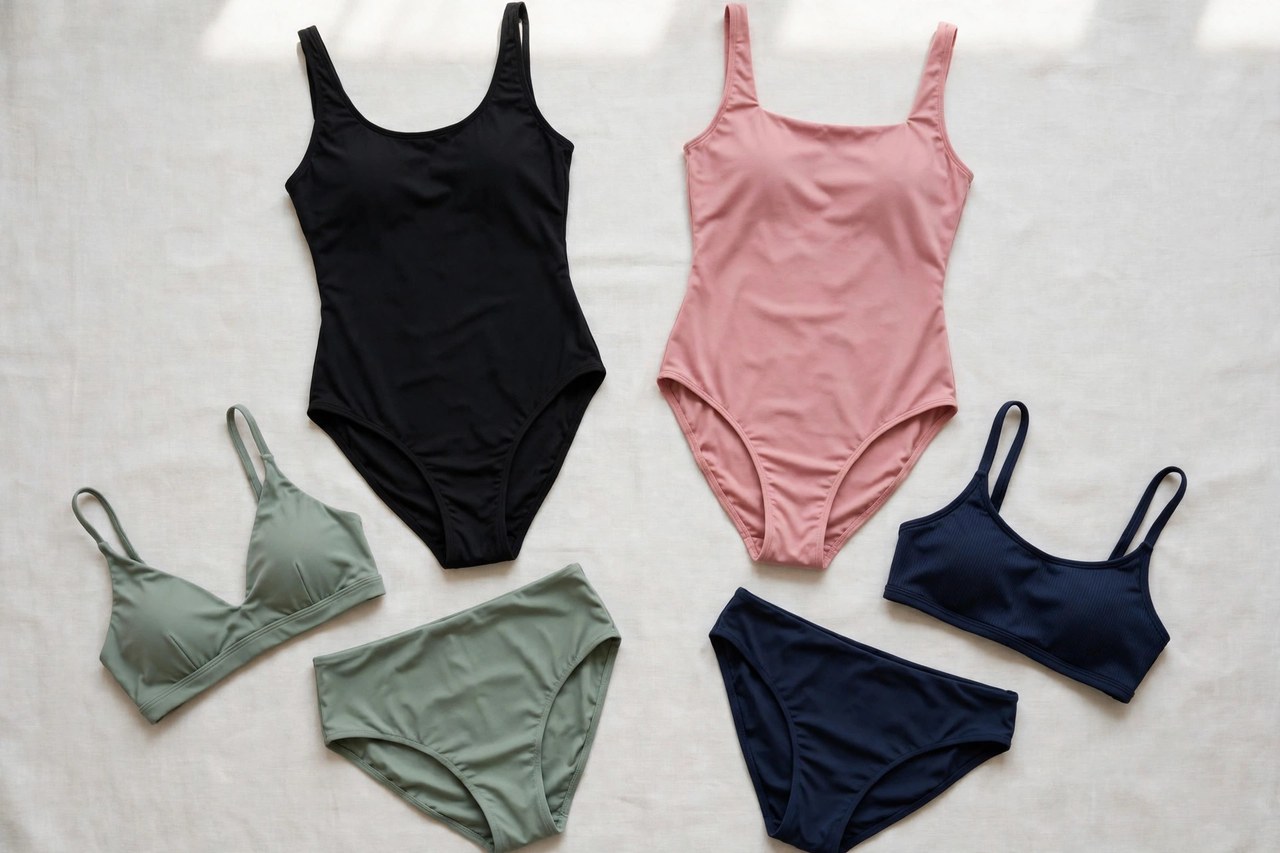
Spandex swimwear is not a style but a fiber technology: suits knitted from yarns that include spandex, the exceptionally elastic synthetic fiber that lets swim fabric stretch over the body and snap back. Spandex is a polyether-polyurea copolymer invented in 1958 by chemist Joseph Shivers at DuPont's Benger Laboratory, created as a rubber replacement that could be spun into fine, durable yarn.
This guide is about the fabric, not the silhouette. It explains the fiber's many names, how much of it a suit actually contains, which companion fibers it is blended with and why, and how stretch behaves in chlorine, sun and salt — the knowledge that lets you read a swimwear fabric label the way a competitive swimmer or a lifeguard does, as a performance specification.
One Fiber, Many Names: Spandex, Elastane, Lycra
Spandex is the preferred generic name in North America — an anagram of “expands.” In continental Europe the same fiber is elastane: élasthanne in France, Elastan in Germany and Sweden, elastano in Spain, elastam in Italy and elastaan in the Netherlands. In the UK, Ireland, Australia, New Zealand and several other markets it is best known as Lycra — which is properly a brand name, made by Invista (formerly part of DuPont). Other producer brands include Elaspan, Creora, ROICA and Dorlastan.
For the shopper, the practical point is that a label reading 18% elastane, 20% spandex or 15% Lycra is describing the same ingredient at slightly different doses. Do not pay a premium for the name; pay attention to the percentage and to the companion fiber. Spandex is almost never used alone in a suit you would buy — a small number of suits approach very high spandex content, but the working norm is a blend, and the blend is where performance is decided.
The Blends: Nylon, Polyester and PBT
Swimwear fabrics combine spandex with nylon, polyester, or engineered synthetics such as Poly PBT or XLA. Nylon-spandex is the softest and most common in fashion swimwear, with a smooth hand and rich color, but standard nylon degrades faster in chlorine. Polyester-spandex is the durable workhorse: polyester resists chlorine and UV far better, holds prints bright, and is standard in training and lifeguard suits, at a slightly firmer hand feel.
Percentage tells you the suit's character. Around 10–15% elastane gives comfortable recreational stretch. 18–25% produces the firm, body-hugging fit of lap-swimming and competitive suits, where the fabric's compression and recovery matter stroke after stroke. All of these materials absorb very little water and dry quickly, stay flexible, and conform to the body — the properties that are the reason natural fibers essentially disappeared from swimwear once spandex blends arrived.
Stretch in Competition and Everyday Swimming
Spandex is a vital component in competitive swimwear, where suits are designed to reduce drag: a high-elastane knit compresses the body's soft contours into a smoother shape, and specialty low-resistance fabrics are engineered to minimize skin drag through the water. Racing suits push the technology furthest, with bonded seams and woven high-stretch panels, but the same fiber logic scales down to the fitness swimmer who simply wants a suit that stays in place through a full session of laps.
For recreational suits, stretch does quieter work: it lets one pattern fit many bodies, keeps leg openings and straps seated without binding, and lets the suit recover overnight instead of bagging at the seat — the classic failure of an aging suit, and almost always a sign the elastane has finally given out. When you try a spandex suit, stretch a handful of fabric and let go: quality knit recovers instantly and completely, while tired or cheap fabric returns slowly and stays slightly grown. That two-second test predicts the suit's whole future.
Chlorine, Sun and Care
Spandex's enemies are chlorine, heat, UV and oils. Standard elastane breaks down in pool chlorine over a season; suits labeled chlorine-resistant use a more resistant elastane type or polyester-rich blends to slow the process. Sunscreen and body oils accelerate the damage, so apply sunscreen and let it absorb before putting the suit on, and rinse the suit in cool fresh water as soon as possible after every swim — rinsing is the highest-value care step there is.
Wash by hand in cool water with mild soap, never wring hard, and dry in shade away from heat; a dryer is an elastane execution chamber. Rotate two suits for frequent swimming so each gets at least a day of rest for the fibers to recover. Retire a suit when the fabric feels thin or crunchy, when the stretch no longer recovers, or when it has gone slightly transparent against the light — by then the 1958 miracle fiber has done a full season's honest work and earned its replacement.
Related Women's Guides
Photos


Looking for Women's Clothing Stores?
This guide helps you choose women's spandex swimwear. To browse where to buy, visit our women's clothing store directory, where you can find retailers that carry them.